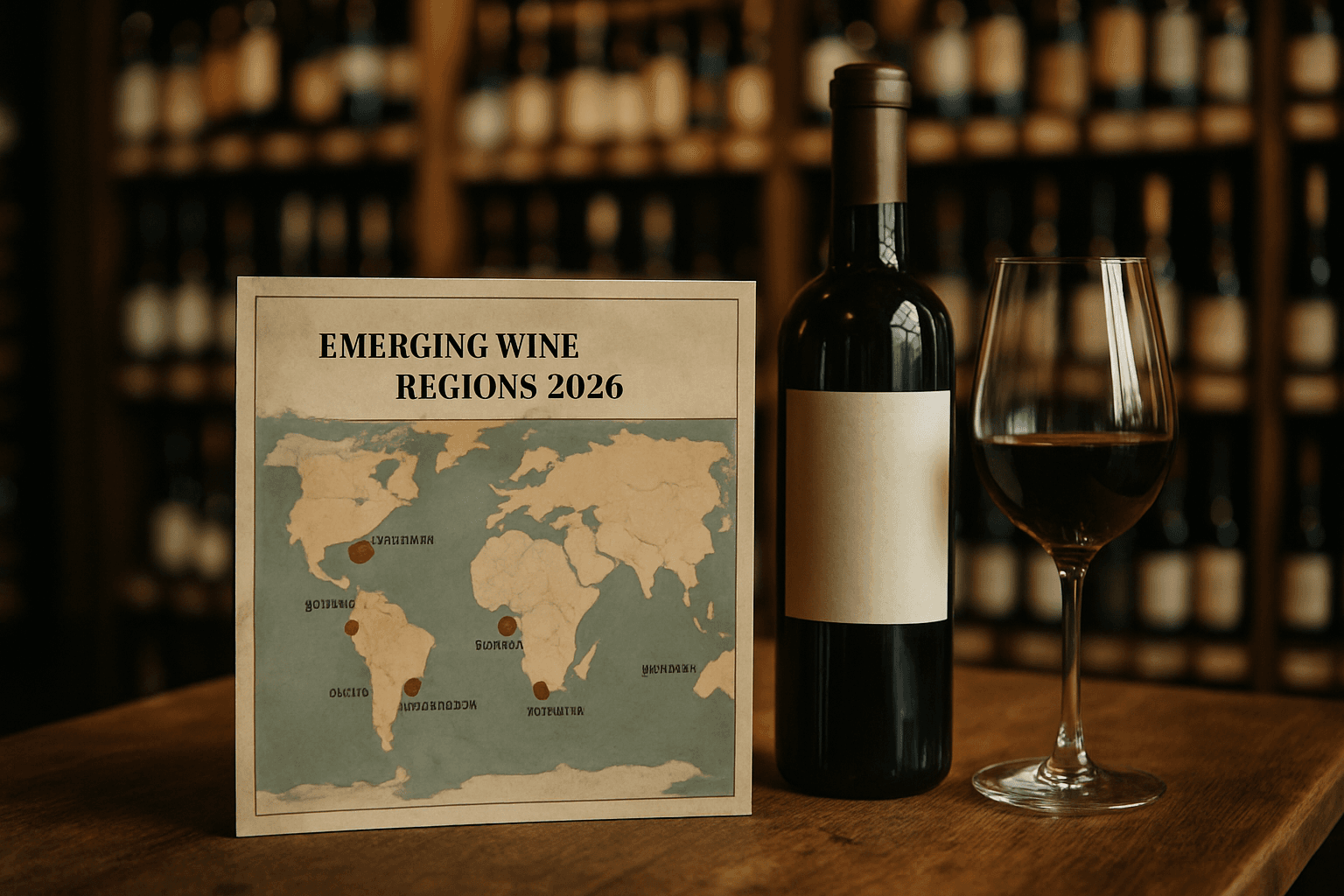
Emerging Wine Regions 2026: A Liquor Store Buyer's Guide to Stocking Wines That Beat the Provençal Rush
By Intentionally Creative10 min read
Listen to this article13:57
Schedule a free strategy call and Intentionally Creative will build a custom plan for you.
Schedule Your Free Strategy CallFree audit. No commitment.
Get a Free Audit. No commitment.
Discover emerging wine regions 2026 that liquor store buyers should stock now. From Mt. Etna to Oregon, learn which wines will attract quality-focused customers.
Wine consumers aren't drinking less—they're drinking smarter. Walk into most liquor stores today and you'll see the same Provençal rosés, the same Tuscany standbys, the same Napa Cabernet picks lining the shelves. Meanwhile, your customers are quietly getting bored. They're asking questions like "What else is there?" and "I want something I haven't had before." They're willing to spend on quality, but they want discovery over familiarity. The problem? Most retailers are still stocking what everyone else stocks, leaving a gap between what customers crave and what's actually on the shelf.
That's where emerging wine regions 2026 come in. From volcanic slopes in Sicily to the Willamette Valley, from Portugal's underrated Dão to the wildcards of Slovenia and Uruguay, there's a wave of regions producing wines that check every box your customers are looking for—distinctive character, compelling stories, and price points that don't require a second mortgage. The question isn't whether these regions are worth exploring. It's whether your store will be the one that gets there first.
Here's the reality that makes 2026 different: the wine market is shifting in ways that create real opportunity for stores willing to diversify. Tariff pressures are reshaping European import economics. Consumer behavior is evolving toward buying fewer bottles with higher expectations per bottle. And the regions you've been meaning to explore? They're ready for retail now. This guide walks you through the emerging wine regions worth stocking this year, what makes each one sellable, and how to build a stocking strategy that actually works for your store.
Picture your wine aisle from a customer's perspective. They've been buying the same French Burgundy for years, watching the price creep up with every tariff adjustment. They still want that experience—minerality, elegance, that satisfying weight on the palate—but the numbers aren't adding up anymore. Now imagine they turn down your Burgundy aisle and spot a bottle from Oregon's Willamette Valley. The shelf talker reads: "Willamette Valley—serious white Burgundy alternative." They pick it up. They read about volcanic soils and cool-climate Chardonnay. They put it in their basket. That's the moment smart stocking pays off.
Stop leaving online sales on the table. Here are the 10 most costly e-commerce mistakes liquor stores make and how to...
This isn't just a hypothetical. Wine consumers are actively seeking alternatives to their old favorites, and the timing has never been better. As SevenFifty Daily reports, the industry is seeing a phase where customers buy fewer bottles but demand more from each one—making every SKU on your shelf need to justify its space. Regions like Mt. Etna in Sicily, which appears among the most exciting wine regions to follow in 2026, are perfectly positioned to capture these quality-conscious buyers. Oregon's growing reputation for Chardonnay, Portugal's Dão producing elegant reds, and emerging players from Slovenia, Canada, and Uruguay are all attracting attention because they deliver something memorable without the premium price tag of traditional European bottles.
The competitive landscape is shifting, too. Tariff-driven price shifts on European imports are reshaping the market in 2026, according to Big Hammer Wines. When classic European regions become more expensive, alternative wine regions suddenly look more attractive to both you and your customers. Smart liquor store owners are using this moment to diversify their selections before prices stabilize. Stocking wine from emerging regions now lets you capture curious shoppers while maintaining healthy margins. When classic European wines eventually make their comeback, you'll have built relationships with new suppliers and captured customers who discovered something unexpected in your aisle—and came back for more. The window for advantage is open. Emerging wine regions in 2026 are ready to fill the gap.
If you're only going to add one new region to your inventory this year, make it Mt. Etna. According to industry sources, Sicily's volcanic giant ranks among the top wine regions to follow in 2026—and for good reason.
Discover the top SEO mistakes liquor stores make and proven fixes. Learn local SEO tactics to boost visibility and dr...
The volcanic soils of Mt. Etna create wines with a distinct minerality and complexity that simply can't be replicated elsewhere. This isn't just marketing speak—it's a tangible product difference your customers can taste and your staff can explain in under 30 seconds. That volcanic terroir angle is your secret weapon. Customers remember a story, and "volcano-grown" sells itself. It gives your team an effortless conversation starter that positions your store as genuinely knowledgeable rather than just listing tasting notes.
Etna Rosso and Etna Bianco hit a sweet spot that works across your customer base. You're looking at approachable price points that appeal to adventurous beginners curious about trending regions, while also catching the attention of seasoned collectors seeking something outside the usual French and Italian classics. What makes this especially valuable in the context of emerging wine regions 2026: Etna wines deliver discovery value without requiring your customers to take a real price risk. They're distinctive enough to spark conversation yet accessible enough for everyday enjoyment.
For your liquor store wine buying guide approach, stocking Mt. Etna wines checks multiple boxes—trend alignment, storytelling potential, and cross-segment customer appeal. It's the kind of calculated bet that makes your selection feel curated rather than cluttered.
Discover why BevNET Live NYC 2026 (June 10-11) is the must-attend event for liquor store owners. Learn about the 1:1 ...
Of all the regions making waves, Oregon deserves special attention—not for its famous Pinot Noir, but for something that might surprise you: Chardonnay. The Willamette Valley has moved beyond its Pinot Noir reputation, mastering barrel fermentation and developing the balance that serious wine enthusiasts seek. This evolution makes Oregon a genuine player in the premium white wine conversation.
Here's where Oregon becomes a smart buy for your floor: French imports face tariff-driven price shifts in 2026. Burgundy prices climb while demand stays strong. Oregon Chardonnay offers your customers a credible quality alternative at more accessible price points—without requiring you to navigate supply uncertainty. For your liquor store wine buying guide approach, consider placing Oregon Chardonnays adjacent to your Burgundy section with a simple shelf talker: "Willamette Valley—wine regions to watch 2026 for serious white Burgundy alternatives." That positioning tells the story without you saying a word. The sommelier crowd is already looking for Oregon. Make sure your shelves are ready.
When buyers think Portugal, Vinho Verde often dominates the conversation. But if you're building a serious emerging wine regions 2026 strategy, two other Portuguese appellations deserve serious shelf space.
Dão delivers structured reds made from Touriga Nacional and Tinta Roriz that offer genuine complexity. For wine enthusiasts seeking Old World character without Old World prices, these bottles answer the call. Position Dão alongside your Burgundy and Bordeaux alternatives—customers hunting for distinctive terroir-driven reds at non-Napa premiums will find their match here.
While Dão serves your educated collectors, Lisboa covers your everyday-drinking value tier. These wines provide reliable quality at price points that move quickly—perfect for weekly promotions, mix-and-match bundles, or gift packs where customers want something interesting without breaking the budget. Together, Dão and Lisboa let you cover two distinct selling moments from a single country, simplifying procurement while expanding your liquor store wine buying guide appeal across customer segments.
When everyone else is stocking the same Provençal rosés and Tuscany standards, you have a chance to capture the curious buyer. Emerging wine regions 2026 include countries like Slovenia, Canada, and Uruguay—nations with growing quality reputations but minimal retail presence in most American shops.
Slovenian orange wines and Canadian Icewine offer novelty that sparks conversation. Customers shopping your aisles aren't just looking for familiarity—they're looking for discovery. These bottles become storytelling opportunities: the staff pick with a narrative, the "I found something new" conversation starter.
Smart inventory management means testing demand before scaling up. Dedicate one endcap section to "Discover" wines, rotating selections periodically to gauge customer response. This approach lets you experiment with emerging wine regions without committing to bulk buys that might sit on shelves. Start with two to three SKUs from each region. Track sell-through rates during the rotation. If a Slovenian white moves quickly, expand that category next quarter. If Canadian Icewine stalls, you've only risked a few cases—not a full pallet. This strategy transforms your liquor store wine buying guide into an evolving roadmap, keeping your selection fresh while minimizing risk on unproven regions.
Some regions aren't just emerging—they're about to blow up. Getting ahead of that curve is how you build a reputation as the store that knows what's next.
Santorini's volcanic vineyards and Austria's Grüner Veltliner country are regions worth visiting—and increasingly worth stocking. Assyrtiko from Santorini is gaining sommelier attention, making early stocking a smart move for any liquor store wine buying guide. The volcanic terroir story practically sells itself, and customers are hungry for wines with a sense of place.
Central Otago (New Zealand) appears among the world's top wine destinations for 2026, signaling growing prestige that will drive consumer interest. As wine regions to watch in 2026 go, Central Otago offers your store a chance to get ahead of the curve on quality Pinot Noir. While most shops focus on Marlborough Sauvignon Blanc, stocking Central Otago positions you as the destination for adventurous wine drinkers. Travelers who've visited will return home looking for retailers who carry their discoveries—and you'll be ready.
These three emerging wine regions 2026 deliver on story, prestige, and margin potential. Start small, build the category, and watch your inventory stand out from the Provençal rush.
Here's your emerging wine regions 2026 stocking strategy—broken down into steps you can act on this quarter.
The wine market is shifting, and the stores that adapt now will be the ones customers remember. Emerging wine regions 2026 aren't just a trend to watch—they're an opportunity to differentiate your shelves, capture curious buyers, and build margins that don't depend on classic European pricing. Start with Mt. Etna for storytelling appeal, add Oregon for the Burgundy-conscious crowd, cover your value tiers with Portugal, and experiment with the wildcards to see what your customers discover. Your wine buying guide should evolve with the market, not chase it. Stock smart, train your team, and make 2026 the year your selection stood out from every other aisle in town.
10+ years helping liquor retailers and beverage brands grow through data-driven digital marketing. Learn more
Intentionally Creative specializes in digital marketing strategies that drive real results. Let us show you what's possible.
Schedule a Call