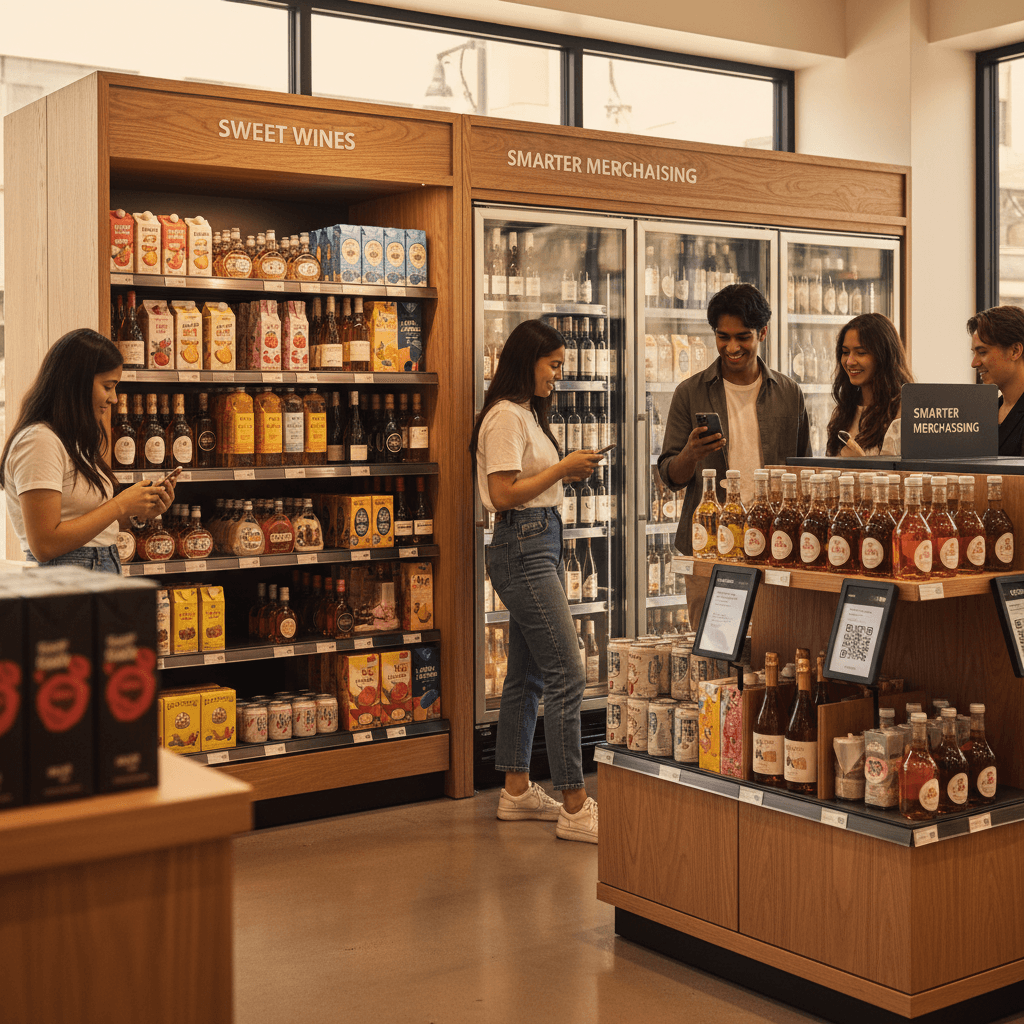
Gen Z Wine Trends Liquor Retail Owners Need to Know: Sweet Wines, Smarter Merchandising, and Winning Younger Shoppers
By Intentionally Creative10 min read
Listen to this article12:59
Schedule a free strategy call and Intentionally Creative will build a custom plan for you.
Schedule Your Free Strategy CallFree audit. No commitment.
Get a Free Audit. No commitment.
Gen Z wine trends are reshaping liquor retail. Learn how sweet wine entry points and approachable merchandising can help your store win younger shoppers.
The wine aisle has a youth problem — but it's not the one you think. The real issue isn't that Gen Z won't buy wine. It's that most liquor stores are still selling it like every customer grew up watching Sideways and subscribing to Wine Spectator. Meanwhile, a 25-year-old is standing in your store right now, staring at 200 bottles with zero idea where to start, and walking out with a four-pack of canned spritzes instead.
Understanding Gen Z wine trends in liquor retail isn't optional anymore — it's the difference between a wine section that grows and one that slowly gathers dust. This generation is entering peak legal-drinking age right now, and their preferences are reshaping every beverage category they touch. The stores that figure out what they actually want — and how they actually shop — will own the next decade of wine sales.
This post breaks down exactly what's happening, what's working, and what you can do about it starting this week. No theory. No fluff. Just the data, the strategy, and the practical moves that turn curious younger shoppers into repeat wine buyers.
You've probably seen the headlines: "Gen Z is the sober generation." If you've let that narrative influence how you stock your wine aisle, it's time to reconsider.
10 wine club marketing tactics that reduce the 40% year-one cancellation rate and boost member spending at your liquo...
Yes, Gen Z drinks less on average than Boomers or Gen X did at the same age. But less isn't none — and the gap isn't as dramatic as the clickbait suggests. NIQ data confirms Gen Z is still purchasing alcohol, just with different preferences and decision-making criteria than older generations. They're not swearing off the bottle. They're being pickier about what's in it.
Their hesitation is rooted in health and wellness awareness, not abstinence. They want to know what's in their glass, what the brand stands for, and whether the occasion actually calls for a drink. That's intentionality, not sobriety.
Here's the nuance that matters for your business: overall U.S. wine consumption volume is declining, but Millennial and Gen Z participation is actually increasing (Wine Enthusiast, WineDeals). Food & Wine reports Gen Z wine consumption is rebounding in 2025, with lighter and sparkling styles leading the charge.
Discover how Provence transformed into a lifestyle brand. Learn provençal wine marketing tactics to boost regional Fr...
These younger drinkers represent the only realistic path to reversing wine's volume decline. Writing them off means writing off your wine aisle's future. The first step? Accepting that they're still buying — they're just buying differently.
So if Gen Z is still buying wine, why aren't they buying more of it from you? The answer might be staring back at you from your own shelf talkers.
The way most liquor stores sell wine hasn't meaningfully changed in 20 years. But the customer walking through your door absolutely has.
Learn how to advertise a liquor store online using Reddit. 8 proven strategies to reach local buyers Reddit's communi...
That 92-point shelf talker? It means almost nothing to a 24-year-old browsing your wine section. Gen Z doesn't read Wine Spectator. They don't care what Robert Parker thinks. They discover products through TikTok, Instagram, peer recommendations, and pure visual appeal. Your merchandising needs to reflect that reality.
So what does work? Sustainability, authenticity, and aesthetic matter more than credentials.
In practical terms, "authenticity" means transparent sourcing information on the shelf, clean label positioning, and eye-catching design that doesn't look like every other Cabernet in the aisle. It means stocking approachable sweet wines without burying them in the back corner. It means merchandising that feels curated, not clinical.
Independent retailers who shift from points-based marketing to lifestyle and values-based messaging will capture this audience before big-box competitors even notice the opportunity. That's your advantage — use it.
Now that you know how they decide, let's talk about what they're actually reaching for. And this is where it gets actionable.
The bottles driving Gen Z's wine rebound aren't the same ones your Boomer customers reach for. Lighter, sparkling, and sweet styles are leading the charge — and that's a signal you can act on right now.
If you're rethinking your approach to younger wine shoppers, start with what's already working. These are the bottles they actually pick up, buy again, and recommend to friends:
None of these are surprises. Years of White Claw, hard seltzers, and flavored RTDs have trained Gen Z palates to expect approachability and flavor first. Sweet wines positioned near those categories — not buried in your traditional wine aisle — could capture serious crossover attention.
Here's the merchandising insight too many retailers miss: Gen Z doesn't know what "Piedmont" means. They don't care. They want to know three things — Is it sweet? Is it sparkling? Is it under $15?
Better merchandising gets them to the shelf. But to really connect with this generation, you need to think beyond the product itself and into the moment they're shopping for.
Here's a Gen Z wine trend liquor retail owners keep overlooking: younger shoppers don't start with "I want a Pinot Grigio." They start with "I'm going to a picnic Saturday."
Gen Z's drinking occasions skew heavily toward brunch, pregames, casual get-togethers, and outdoor hangs — not the classic bottle-of-red-with-steak-dinner setup. Lighter and sparkling styles are tailor-made for these daytime moments, which is a big reason they're leading the category's recovery with younger drinkers.
Start with occasion-based displays: brunch bundles, picnic packs, party-starter endcaps. This is smart merchandising that practically sells itself.
On social media, stop posting bottle shots. Show your wines in context — a Moscato in a cooler, a canned spritz at a rooftop hangout.
Train staff to ask "What's the occasion?" instead of "What varietal?" That one question changes everything about how you connect with younger shoppers — and opens up bundled upsells (sparkling wine + mixer + snack) that build bigger baskets naturally.
All the merchandising in the world won't matter if the human interaction falls flat. And for Gen Z, that interaction is make-or-break.
This generation is already intimidated by wine. They're interested — the data shows their participation is growing — but they feel like outsiders in the category. Your staff either fixes that or makes it worse.
A team member who opens with "Do you prefer Old World or New World?" will lose a younger shopper before the conversation starts. That's not a question — it's a quiz.
Train your people to ask human questions instead:
These feel like conversation. That matters with a generation that values authenticity over authority.
Give your staff bridge recommendations that connect what Gen Z already drinks to wines they haven't tried yet:
The best merchandising happens through people, not just shelf placement.
The goal isn't turning twenty-somethings into wine connoisseurs. It's getting a bottle in their hand they'll actually enjoy — and come back to buy again. Conversion first, education later.
10+ years helping liquor retailers and beverage brands grow through data-driven digital marketing. Learn more
Organize accordingly. Shelf talkers that say "sweet and bubbly" will outsell ones that say "DOCG" every single time with this demographic.
And here's the margin angle worth noting: many of these approachable sparkling and sweet wines carry stronger margins than the prestige bottles collecting dust on your top shelf. You're not trading down — you're trading smarter. This category deserves a front-of-store spotlight, not a bottom-shelf afterthought.
You know what they want to drink. Now let's make sure they can actually find it — because right now, your layout might be working against you.
Most wine sections are organized by country or grape variety. That makes sense if your customer already knows they want a New Zealand Sauvignon Blanc. It makes zero sense if they're 24 and don't know Sauvignon Blanc from Sangiovese.
Create a dedicated "New to Wine?" or "Easy Sippers" endcap that groups approachable wines by flavor profile — sweet, bubbly, fruity — instead of by region or varietal. This removes the intimidation factor immediately and is one of the simplest layout changes you can make. Think of it as a curated entry point. You're not dumbing anything down. You're making the first purchase easier.
Stock that section with wines that have modern, Instagram-friendly label designs. Gen Z judges wine the same way they judge everything else — visually, and fast.
Position sparkling Moscato, fruit-forward rosé, and wine cocktails near your RTD and flavored malt beverage cooler. The shopper browsing seltzers and canned cocktails is your highest-probability wine convert. Meet them where they already are.
Replace "Staff Pick — 91 Points, Wine Spectator" with "Sweet & Bubbly — Perfect for Brunch" or "If You Like Hard Seltzer, Try This." Speak to the occasion and the flavor, not the credential.
Build small seasonal or occasion-based displays: "Brunch Wines," "Patio Season Picks," "Girls' Night Favorites." Major alcohol brands are already shifting marketing dollars toward daytime and brunch occasions to align with how Gen Z actually socializes. If the brands are moving that direction, your shelf strategy should follow.
Intentionally Creative specializes in digital marketing strategies that drive real results. Let us show you what's possible.
Schedule a CallStaff enthusiasm and a genuine "I actually love this one" will outsell any shelf talker or 92-point score with this crowd. Every single time.
The data is clear: overall wine volume is declining, but Gen Z is leaning in, not out. They're buying alcohol — just with different expectations than Boomers or even Millennials. The traditional wine playbook won't reach them.
Sweet and approachable wines, occasion-based merchandising, and staff who can make genuine recommendations — that's the formula. Not intimidation. Not shelf talkers with tasting notes nobody reads.
The independent stores that adapt to Gen Z wine trends in liquor retail now — before the big chains catch up — will lock in loyalty with a generation still forming its brand preferences. And that's the real opportunity: these customers don't have a go-to store yet. They don't have a go-to bottle yet. The retailer who makes their first wine experience easy, enjoyable, and judgment-free wins a customer for years — not just one transaction.
Start this week. Move one sweet wine display to your endcap. Train one team member on beginner-friendly recommendations. Measure what moves. Scale what works.
And if you want help building a merchandising or digital marketing strategy designed to connect with younger shoppers and grow your wine sales? That's exactly what we do at Intentionally Creative. Let's talk.