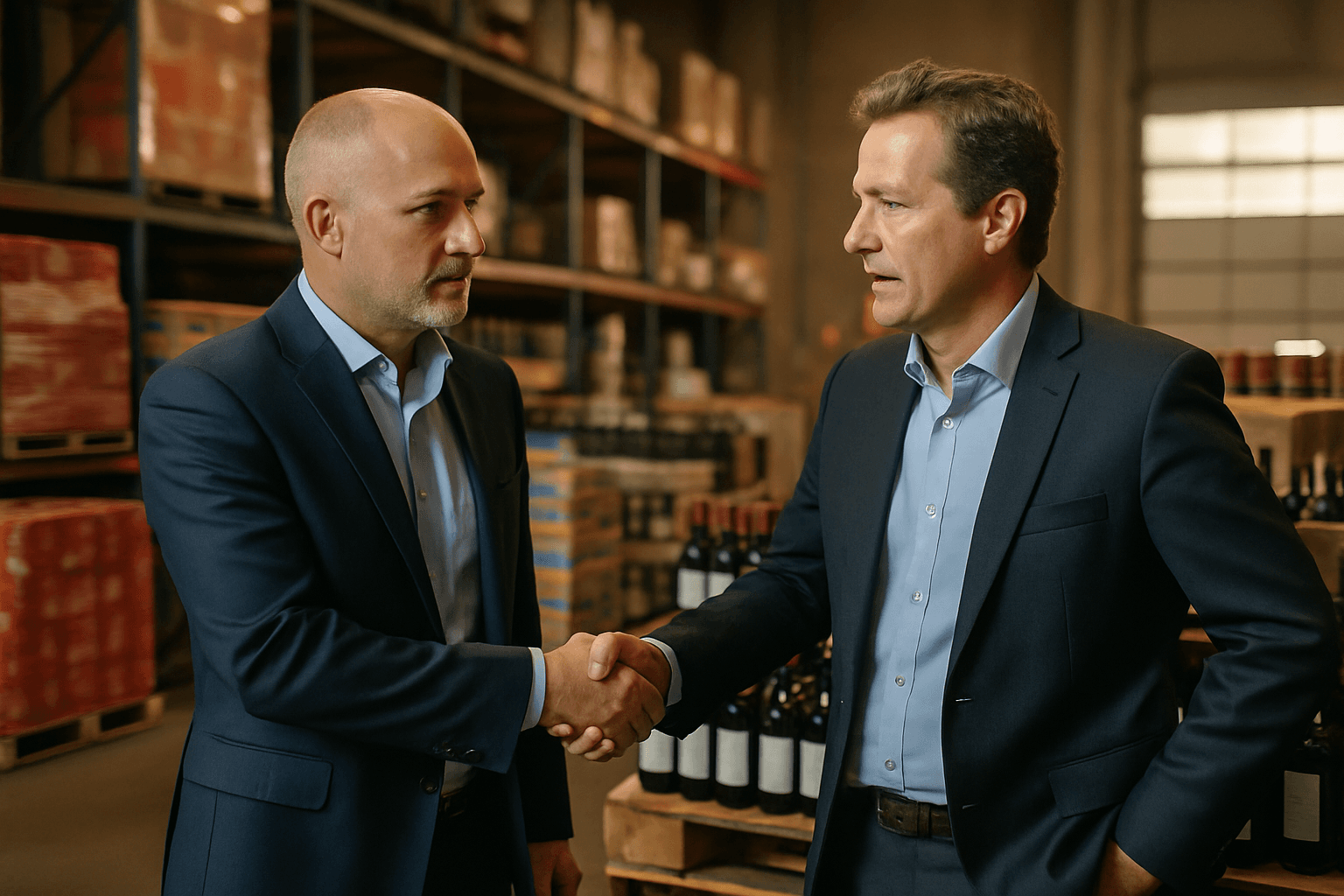
Southern Glazer's Acquires Clare Rose: What Liquor Distributor Consolidation Means for Your Store's Negotiating Power
By Intentionally Creative10 min read
Listen to this article13:12
Schedule a free strategy call and Intentionally Creative will build a custom plan for you.
Schedule Your Free Strategy CallFree audit. No commitment.
Get a Free Audit. No commitment.
Liquor distributor consolidation is accelerating. Here's what the Southern Glazer's Clare Rose acquisition means for independent retailers' leverage and strategy.
The biggest players in beverage alcohol distribution are getting bigger — fast. And if you own or operate an independent liquor store, the deals being cut in boardrooms hundreds of miles away are about to show up in your margins, your delivery schedules, and your ability to push back when terms don't work for you.
Liquor distributor consolidation has been reshaping the wholesale tier for over two decades, but 2026 is shaping up as an inflection point. Southern Glazer's — already the nation's largest wine and spirits distributor — just agreed to absorb Long Island's dominant distributor and its beer portfolio. Reyes Beverage Group is swallowing markets from RNDC at a staggering clip. The middle tier of the three-tier system is shrinking in real time, and independent retailers are the ones left with fewer cards to play.
This article breaks down what's happening, why it matters even if you're nowhere near Long Island, and — most importantly — what you can actually do about it. No hand-wringing. No doom and gloom without a plan. Just a clear-eyed look at the landscape and five concrete strategies to protect your store's negotiating position as the big get bigger.
On March 19, 2026 , Southern Glazer's Wine & Spirits announced an agreement to acquire substantially all assets of Clare Rose Inc., the leading beverage alcohol distributor on Long Island, New York.
If your first reaction is "I'm not on Long Island, so who cares?" — stick with us. This one has ripple effects.
Discover the 7 essential marketing budget benchmarks for liquor stores. Learn how top performers allocate spend for m...
The deal doesn't just hand Southern Glazer's another wine and spirits territory. It includes the opportunity to distribute Anheuser-Busch's full product portfolio across the Long Island market. That's a major cross-category expansion for a company historically focused on wine and spirits — and it signals a strategic push into beer distribution that could reshape competitive dynamics nationwide.
This isn't an isolated event. It's the latest chapter in a sustained wave of consolidation that has dramatically reduced the number of independent wholesalers operating in the U.S. Just look at the parallel: Reyes Beverage Group, the nation's largest beer distributor, recently acquired five additional markets from RNDC — bringing their total to 11 markets absorbed from a single competitor .
The pattern is clear. Fewer distributors. Bigger territories. More leverage on their side of the table.
The Clare Rose deal isn't just news for analysts to chew on. It directly affects the options, pricing, and negotiating power available to store owners like you. Let's break down what that actually looks like.
Discover the 10 most costly alcohol marketing compliance mistakes liquor stores make and actionable strategies to mai...
The Clare Rose deal isn't happening in a vacuum. It's one move on a chessboard where every major player is grabbing territory — and the board is getting smaller for everyone else.
While Southern Glazer's locks down Long Island, Reyes is simultaneously expanding its footprint through those RNDC market acquisitions. Read that again: one mega-distributor has bought 11 markets from another mega-distributor.
RNDC and Southern Glazer's have been the chief rivals driving extreme liquor distributor consolidation over the past decade, swallowing up regional wholesalers and redrawing the map. Now Reyes is muscling into that same race on the beer side, creating a three-headed oligopoly that controls an enormous share of what flows into your store.
Southern Glazer's isn't shy about where this is headed, either. The company has publicly stated it expects "continued consolidation" across all tiers of the beverage alcohol industry. That's not speculation — it's strategy announced out loud.
Discover 7 proven distribution strategies for liquor stores facing supply chain changes. Boost your liquor delivery m...
Here's the context that matters for your business. The U.S. alcohol industry operates on a three-tier system: producers make it, distributors move it, and retailers (that's you) sell it. By law, you generally must buy through that middle tier — the distributor. You can't just call up a distillery and place an order.
That's why consolidation at the wholesale level specifically squeezes retailers. Over the last 20 years, the number of beer and beverage alcohol distributors has dramatically shrunk, consolidating around just three giants: Southern Glazer's, RNDC, and Reyes. Fewer distributors means fewer options, less competition for your business, and less leverage when you sit down to negotiate pricing, delivery terms, or promotional support.
When the middle tier consolidates, retailers feel it — whether they realize the cause or not.
Let's cut straight to it: what does all this consolidation look like when you're sitting across the table from your rep?
Fewer distributors competing for your business means less incentive for any single distributor to offer you favorable pricing, flexible delivery terms, or meaningful promotional support. It's basic economics. When you had three distributors vying for your shelf space, you could negotiate volume discounts, push back on delivery windows, and credibly threaten to shift business if service slipped.
Now? Your negotiating power shrinks with every acquisition announcement. Harder to negotiate. Less flexibility. Fewer alternatives if your primary distributor starts taking your account for granted.
Here's the counterargument, and it's fair: consolidated distributors can offer operational efficiencies, wider brand selection, and technology investments that smaller wholesalers simply couldn't afford. You might get more brands from one rep, streamlined ordering, better data tools.
But those broader portfolios also mean fewer distribution partners available to you — fewer reps to play off each other. And here's what the trade press won't tell you plainly: those efficiency gains tend to flow to the distributor's bottom line, not yours. The savings from scale rarely show up as better pricing on your invoice.
More brands from one source sounds convenient. Having that source be your only option? That's a vulnerability.
The good news? Some retailers and wholesalers aren't waiting around to find out how this plays out. They're already adapting.
You're not powerless. Here's how to protect your position.
When the largest wine and spirits distributor in the U.S. sits across the table from a single independent store, the math isn't in your favor. But when you negotiate as a block of 15, 30, or 50 stores? That's a conversation worth having. Collective purchasing power is the most direct counterbalance to liquor distributor consolidation. If no group exists in your market, start one.
Track sales velocity by SKU, margin by category, and distributor performance metrics — fill rates, delivery accuracy, rep responsiveness. Your negotiating power lives and dies by data. When you can prove your value as an account with hard numbers, you become much harder to dismiss or deprioritize.
Even if one mega-distributor handles 70% of your volume, actively cultivate relationships with smaller and specialty distributors for the rest. This keeps options open and sends a clear signal: you're not a captive account. Staying current on distributor expansion news helps you anticipate which relationships might shift and plan accordingly.
Stores with loyal customers and strong foot traffic are accounts distributors want to keep happy. Invest in marketing, tastings, events, and community presence so you're a priority — not an afterthought.
Southern Glazer's own leadership has been clear: they expect liquor distributor consolidation across all three tiers — production, distribution, and retail. The Clare Rose acquisition isn't a one-off. It's the latest move in a structural shift that's been building for two decades.
Keep your eye on these developments:
Here's the hard truth: the retailers who start building their negotiating leverage now — before their market gets directly affected — will be in the strongest position. Waiting until your primary distributor gets acquired is too late to build alternatives.
Start diversifying your supplier relationships today.
Distributor consolidation is not a trend that's going to reverse itself. The economics are too compelling for the big three, the regulatory environment permits it, and every deal — from Clare Rose on Long Island to RNDC's market divestitures — makes the next one more likely. The wholesale tier you depend on by law is consolidating around fewer and fewer players.
10+ years helping liquor retailers and beverage brands grow through data-driven digital marketing. Learn more
Consolidation isn't just boardroom news — it's already changing how business gets done on the ground. Here's what's happening and what you can learn from it.
In California, smaller wholesalers have responded to consolidation by forming alliances — essentially banding together to negotiate better terms and compete with the giants .
The logic is simple: collective volume equals collective leverage.
Independent liquor retailers should be studying this model closely. Buying groups, co-ops, and informal alliances among store owners in the same region can replicate this dynamic. When you negotiate as a block of 15 stores instead of one, you start showing up differently on a distributor's priority list — and your leverage increases significantly.
Retailers in markets already reshaped by consolidation are making several tactical moves worth noting:
The retailers who thrive won't be the ones who wait. They'll be the ones who adapt now.
Intentionally Creative specializes in digital marketing strategies that drive real results. Let us show you what's possible.
Schedule a CallFranchise laws, territory protections, and distribution regulations vary by state and are often the last line of defense for independent retailers. Your voice matters in those rooms. Use it.
With those strategies in place, let's look at what's likely coming next — because this story is far from over.
But consolidation doesn't have to mean capitulation. The independent retailers who come out of this shift in the strongest position will be the ones who acted early: building buying groups, tracking their data, diversifying their supplier relationships, investing in their stores as community destinations, and staying loud in the regulatory conversations that shape their markets.
You can't stop the big from getting bigger. But you can make sure your store is too valuable, too informed, and too well-connected to be treated as an afterthought.
Want to stay ahead of these shifts? Subscribe to our newsletter for ongoing coverage of distributor consolidation and actionable strategies for independent retailers. And if you're already feeling the squeeze in your market, reach out — we help independent retailers build the strategy and visibility they need to compete in a consolidating world.