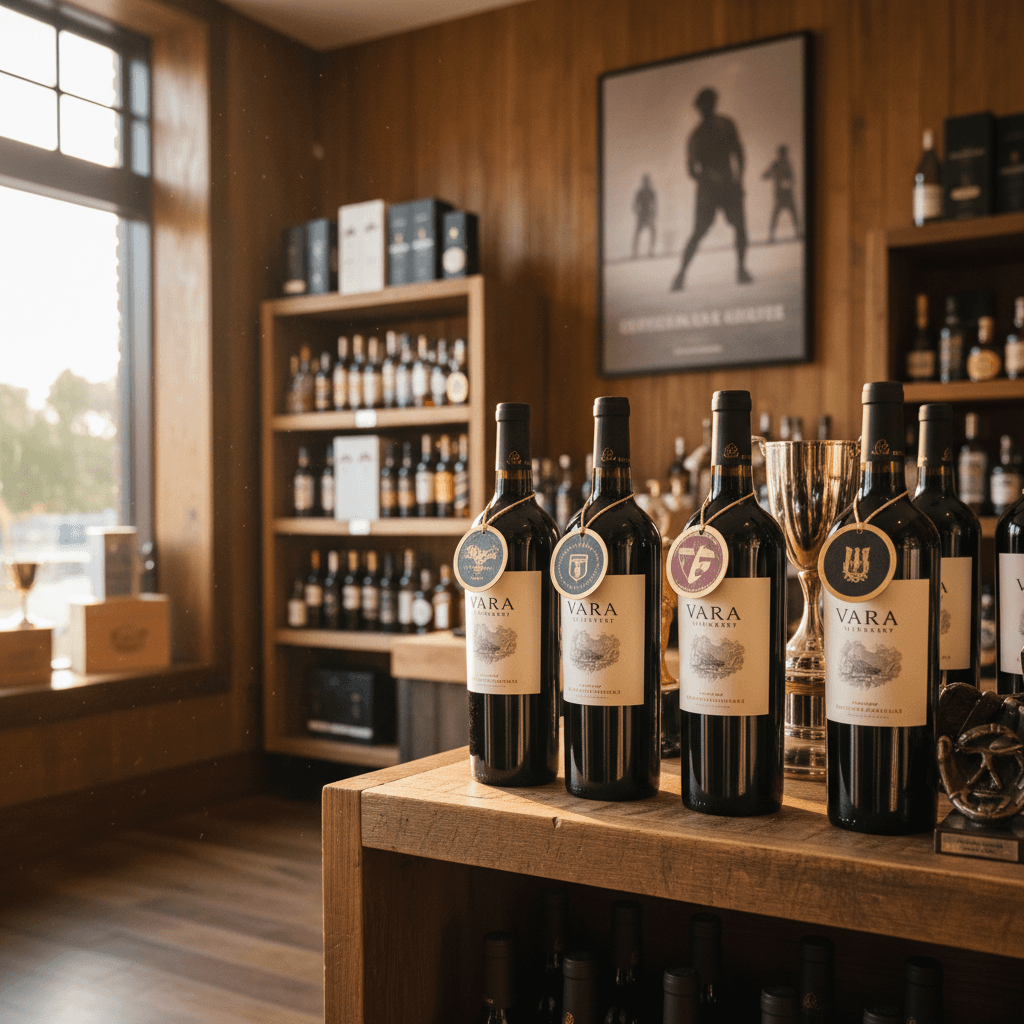
Vara Winery's Sports Partnership Model: What Liquor Retailers Can Learn From Brand-Team Sponsorships for Local Event Marketing
By Intentionally Creative13 min read
Listen to this article16:20
Schedule a free strategy call and Intentionally Creative will build a custom plan for you.
Schedule Your Free Strategy CallFree audit. No commitment.
Get a Free Audit. No commitment.
Discover how liquor store event marketing can borrow from the $725M sports sponsorship playbook. Actionable strategies for independent retailers.
Picture this: it's the Sunday before the Super Bowl, and every liquor store in town is fighting for the same customer. Most of them are running the same tired discount on the same case of beer. But one store down the street? They've got a local winery pouring samples, a "Watch Party Kit" display that practically sells itself, and a line of customers who came in for the tasting and left with $80 in their bags. That store didn't outspend the competition. They out-thought them — by borrowing a page from the same playbook that drives hundreds of millions in alcohol-industry sports sponsorships every year.
Here's the thing about liquor store event marketing: most independent retailers know it works, but few treat it as a real strategy. It stays stuck in the "nice to have" column, somewhere between updating the website and fixing the back door. Meanwhile, the biggest spirits brands on the planet are proving — with serious money — that tying your product to sports culture is one of the most reliable ways to drive sales. The gap between what they're doing and what you could be doing is smaller than you think.
This post breaks down exactly how that sports-sponsorship model works, how regional brands like Vara Winery are already running it at a local scale, and how you can adapt the same strategies for your store — quarter by quarter, channel by channel, without blowing your budget. Let's get into it.
When the biggest names in spirits write checks this large, it's worth asking what they know that you don't — and how you can use it.
Last year, alcohol brands poured an estimated $725 million into sponsorships across major sports leagues. That's reportedly more than the retail sector spent, more than insurance, and even more than non-alcoholic beverage companies — the brands that literally have their logos on stadium cups.
Discover how Provence transformed into a lifestyle brand. Learn provençal wine marketing tactics to boost regional Fr...
The momentum isn't slowing down. In 2024 alone, the spirits-sports collaboration trend expanded across multiple high-profile partnerships spanning football, Formula One, hockey, and beyond. Deals now link spirits brands to sports teams at every level of competition, from the NFL down to minor league clubs. Brands aren't spending here on a hunch — they're following the data.
Here's what matters for you: this isn't just a big-brand play. The sheer volume of investment tells us something fundamental — sports culture and alcohol purchasing behavior are deeply linked. That connection doesn't stop at the national level. It trickles directly into your local market, your neighborhood, your store.
If major brands are investing this heavily to reach consumers in emotional, high-energy moments, independent liquor retailers can ride that same wave through local event marketing — without the million-dollar budget. Winery partnerships, taproom collaborations, game-day activations — the playbook scales down beautifully.
The question isn't whether it works. It's whether you're going to let the big brands have all the fun.
Navigate liquor advertising regulations with confidence. Learn federal TTB rules, state-specific alcohol marketing la...
So the national picture is clear: sports and spirits are a proven combination at the highest levels. But what does this actually look like when you strip away the stadium naming rights and multimillion-dollar media buys? Turns out, some brands are already answering that question — and their approach maps directly onto what independent retailers can do.
You don't need a seven-figure budget to play this game. Some of the smartest sports-and-spirits marketing is happening at the regional level — and it's built on relationships, not reach.
Vara Winery's approach flips the script on how most people think about brand-team deals. Instead of chasing national media buys, Vara focuses on regional team affiliations and genuine community engagement. It's partnership marketing built for local relevance — showing up where their actual customers gather, cheer, and spend.
This community-first model is exactly what makes it adaptable for independent retailers. When a brand like Vara aligns with a regional sports moment, they're not broadcasting to millions of strangers. They're deepening relationships with the people who already walk through their doors. That's the foundation of effective event marketing.
DTC spirits brands are reshaping liquor retail competition. Learn how direct-to-consumer models work and what they me...
Vara isn't alone. Regional brands like La Pulga and The Original Pickle Shot are executing sports partnerships right alongside major spirits companies — and gaining traction. Smaller brands are proving this model works in markets far from Madison Avenue.
Even the giants validate the approach. Diageo's FIFA World Cup 26™ deal is designed to connect at local and regional levels — not just national ones. When a company that size prioritizes local activation, it tells you everything about where the ROI actually lives.
The bottom line for retailers: you don't need to sponsor the Super Bowl. You need to align your store with the sports moments your community already cares about. Sponsor the little league tournament. Partner with the local soccer club. Set up a tasting at the watch party. That's where your customers are — and that's where your marketing dollars work hardest.
Now that you've seen the model in action — from Vara's community-first approach to regional brands punching above their weight — the next step is making it work inside your four walls. The good news? You already have most of what you need. You just have to think less like a shopkeeper and more like a sponsor.
The brands spending hundreds of millions on sports sponsorships aren't just slapping logos on jerseys. They're engineering moments — and the tactics translate directly to your store.
The Super Bowl is the obvious anchor — it consistently tops nationwide TV ratings and drives massive liquor retail sales. But if you're only planning for one weekend in February, you're leaving money on the table.
Here's a practical framework: map your local sports calendar — pro teams, college matchups, even high school playoff runs that get the whole town buzzing. Identify four to six key moments per year and build campaigns around each one. Think March Madness watch-party bundles, baseball opening day promotions, or a college rivalry week featuring local craft spirits.
This mirrors exactly how national sponsorship deals work — brands pick their moments strategically and show up with intention.
Most retailers capitalize on major sports moments with end-cap displays and call it a day. The sponsorship model suggests going further.
Brand activation events — tastings, samplings, experiential marketing — are proven strategies for increasing visibility, building loyalty, and driving long-term sales. Sports tie-ins amplify all of it. Set up a tasting station with game-day cocktail recipes. Run a bracket-style competition between bourbons. Partner with a local vendor for a tailgate sampling event in your parking lot.
Local event marketing doesn't require a stadium. It requires energy, timing, and a reason for people to walk through your door instead of scrolling past it.
Of course, even the best in-store activation falls flat if nobody knows about it. The brands spending millions on sports sponsorships understand this instinctively — they never rely on a single channel. Your promotions shouldn't either.
Here's something most independent retailers overlook: that $725 million in sports sponsorship spending is flowing whether you tap into it or not. As a retailer, you're the last mile between that massive investment and the consumer who actually opens their wallet. That gives you real leverage.
Don't wait for your distributor rep to suggest something. Come with a specific proposal:
"We want to host a tasting event tied to the Isotopes' home opener on April 12th. Can your brand provide product samples, signage, or a brand ambassador for two hours?"
That's it. Specific, actionable, easy to say yes to. Reps field vague requests constantly — a concrete pitch tied to a real date stands out.
Frame this as a partnership opportunity, not a handout. You bring:
In return, ask for product samples, branded signage, staff support, or co-op advertising dollars.
Also: stock sports-branded products prominently — team-labeled wines, co-branded spirits. These products practically market themselves during game season. Use them as anchor products that pull customers toward your bigger event strategy.
You've got the tactics. You've got the partnership model. Now you need a calendar to tie it all together. The brands that win at sports sponsorship don't wing it — they plan by the quarter. Here's how to do the same.
The connection between sports and spirits is undeniable. But energy without a plan is just chaos. Here's a practical, quarter-by-quarter approach that keeps things focused and profitable.
Q1 (January–March): This is your opening sprint. The Super Bowl is the single biggest event for liquor retail sales — treat it accordingly. Build displays around beer, ready-to-drink cocktails, and party-size spirits. Then ride the momentum into March Madness watch-party promotions. These two events alone can anchor your entire first quarter.
Q2 (April–June): NBA and NHL playoffs bring engaged fans back to bars and living rooms. The Kentucky Derby is a natural fit for bourbon and mint julep kits. As baseball season kicks off, lean into warm-weather cocktail kits and lighter spirits. This is where winery partnerships shine — think rosé and patio season tie-ins.
Q3 (July–September): The summer sports lull is your planning window. Negotiate with distributors, lock in co-marketing commitments, and prep your football season playbook. Smart retailers use this downtime to secure the deals that fund Q4.
Q4 (October–December): Your highest-volume window, period. NFL, college football, the World Series, and holidays all collide. Layer sports promotions on top of holiday campaigns for maximum impact. There's no shortage of local tie-ins to build around.
The key insight from the brand sponsorship world is specificity. Derby means bourbon. Super Bowl means volume formats. Playoffs mean premium upgrades for watch parties.
The most important rule: keep it manageable. Pick 4–6 anchor events per year and execute them well. A killer Super Bowl activation and a standout Derby display will outperform twenty half-hearted game-day promos every time. You're running a store, not a sports network. Focus beats frequency.
10+ years helping liquor retailers and beverage brands grow through data-driven digital marketing. Learn more
National brands don't put all their sponsorship dollars into one channel. They're everywhere — on screens, in venues, across social feeds. Your event marketing strategy should work the same way, just at a scale that fits your budget.
Start where the purchase happens. Build themed displays around upcoming matchups — think local team colors, game-day essentials front and center. Shelf talkers that reference your city's team ("The official pregame pour for [Team] fans") create an emotional hook that generic price tags never will.
Bundle strategically. A spirits pack with mixers and garnishes marketed as a "Watch Party Kit" gives customers a reason to spend more while solving a problem for them. They're not just buying bourbon — they're buying a ready-made experience.
Here's a move most retailers miss: call your distributors and ask what co-branded materials, display funding, or promotional support they can offer. Many brand sponsorship programs include retail-level assets that go unclaimed simply because nobody asked.
Post countdown content before big games. Run geo-targeted ads during game weeks — even a modest budget reaches fans actively searching for watch-party supplies in your area. Partner with local food influencers to create content featuring products from your store. This kind of collaboration content performs well because it feels authentic, not like an ad.
But here's the channel most retailers underuse: email and SMS. Your existing customer list is your most cost-effective tool. A simple "Game Day Deals" text the morning of a big matchup can drive significant same-day foot traffic for pennies per message.
The momentum behind sports-and-spirits marketing is only growing. Your job is to ride it across every channel you've got.
By now you might be thinking: this all sounds great, but who's paying for it? Fair question. Here's where the math gets interesting — because you don't have to foot the entire bill yourself.
Intentionally Creative specializes in branding strategies that drive real results. Let us show you what's possible.
Schedule a CallThe sports-sponsorship model succeeds because it meets consumers exactly where their attention and emotions already live. And as a local retailer, you have something national brands would write seven-figure checks to replicate — geographic proximity to your customers. You're not buying awareness from a billboard 200 miles away. You're the store on the way to the stadium, the shop next to the sports bar, the place everyone stops before the watch party.
Liquor store event marketing doesn't require reinventing the wheel. The biggest brands in the world have already proven the playbook — your job is to run it at your scale.
Start with one. One event, one brand partner, one local sports moment. That's it.
Then follow the steps:
Local event marketing for liquor retailers follows the same logic as a multimillion-dollar sports sponsorship — just applied to your neighborhood, your customers, and your bottom line.
Build from what works. Cut what doesn't. Repeat next season.
Ready to build a local event marketing strategy that actually drives revenue? Intentionally Creative ↗ can help you plan it — from identifying the right brand partners to executing promotions that move product. Let's talk.