35% of Non-Wine-Drinkers Say They Don't Like the Taste: What the Wine Market Council's Latest Consumer Data Means for How You Merchandise and Sample Wine
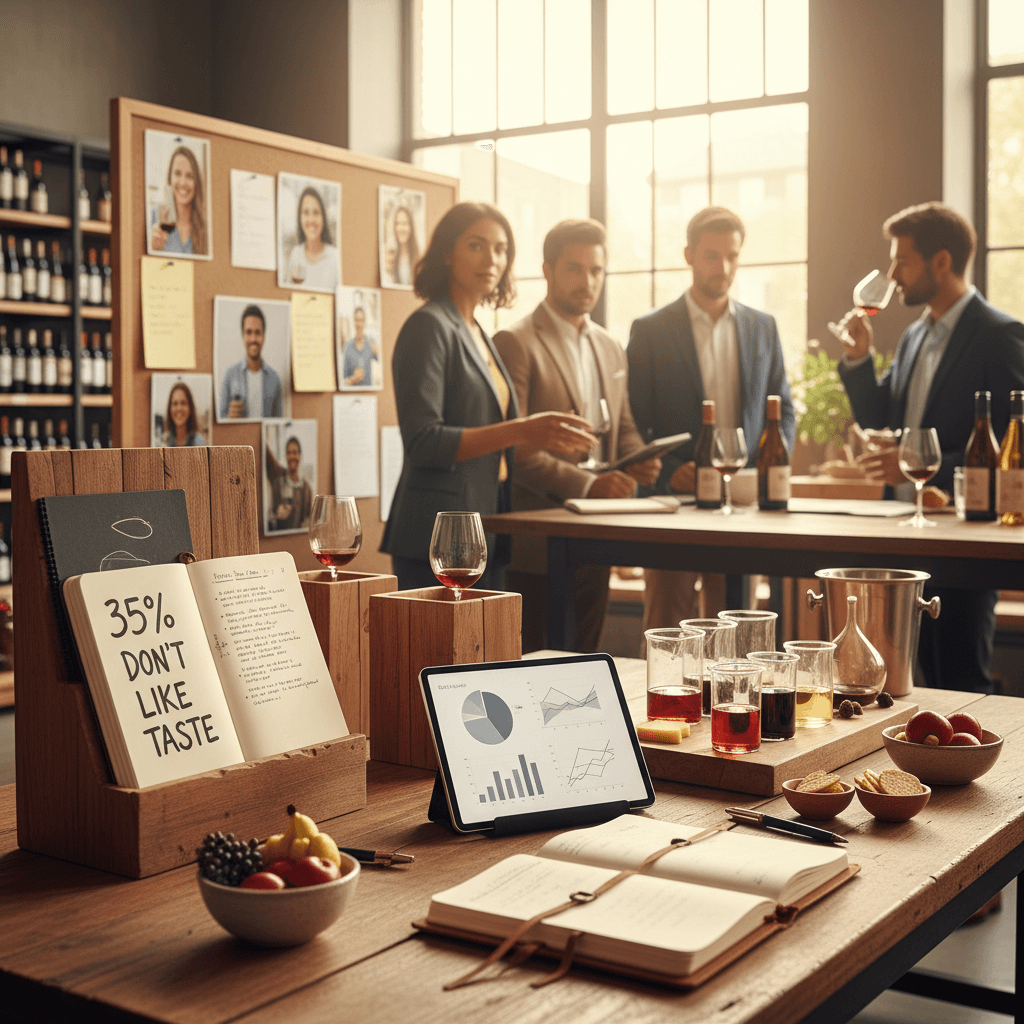
New wine consumer data merchandising insights: 35% of non-wine-drinkers cite taste as their barrier. Here's how to rethink sampling and shelf strategy.
- The Wine Market Council Just Handed You a Roadmap — Here's What the Data Says
- The Wine Market Is Shifting Under Your Feet — And the Numbers Prove It
- Rethink Your Shelves: Wine Merchandising Tips That Convert Taste-Skeptical Shoppers
- Your Sampling Program Is Your Best Conversion Tool — If You Do It Right
- Use Technology to Match Hesitant Shoppers with the Right Bottle
You're staring at a wine aisle that's underperforming, and you're pretty sure the answer isn't another Pinot Grigio endcap. You're right — but the real answer might surprise you. It's not about what you're stocking. It's about who you're ignoring and why they walked past your wine section in the first place.
The Wine Market Council just released consumer data that puts a hard number on the problem: 35% of people who don't drink wine say it's because they don't like the taste. Not the price, not the intimidation factor — the taste. That single data point should change how you think about your shelves, your sampling table, and your growth strategy for the rest of this year. Because in a market where wine sales are sliding, cannabis beverages are gaining ground, and your core customer is aging out, the retailers who win will be the ones who use wine consumer data merchandising insights to convert skeptics — not just serve loyalists.
This post breaks down exactly what the Wine Market Council's latest research means for independent liquor retailers: what's shifting in the market, how to rethink your shelf layout, how to build a sampling program that actually converts, and a five-step action plan you can start this month. Let's get into it.
The Wine Market Council Just Handed You a Roadmap — Here's What the Data Says
Here's a number worth sitting with: 35% of non-wine-drinkers say they don't like the taste of wine.
Not the price. Not the pretension. Not the confusing labels. The taste.
Discover how Provence transformed into a lifestyle brand. Learn provençal wine marketing tactics to boost regional Fr...
That stat comes from the Wine Market Council's consumer attitudes study — and before you shrug it off as just another survey, let's talk about why this one matters.
The 35% Taste Barrier: What It Actually Means
That 35% represents a massive, actionable opportunity. These aren't teetotalers. They're not anti-alcohol. They're people who tried wine at some point, decided it wasn't for them, and moved on. But taste isn't a permanent identity — it's a solvable merchandising and sampling problem. The right wine, presented the right way, at the right moment can change someone's mind.
And you need to be changing minds right now. Value-tier wine sales (bottles under $11 per 750ml) have taken double-digit hits recently . Cannabis beverages are carving out serious market share . Overall alcohol consumption is sliding as more Americans moderate their drinking. You cannot afford to leave conversions on the table.
Why This Study Carries More Weight Than Most
The Wine Market Council's consumer research isn't a one-off poll. This survey has been conducted regularly since 1997 , making it one of the longest-running and most comprehensive sources of wine consumer data available to retailers. When this study identifies a trend, it's backed by nearly three decades of context.
Independent stores can capture Syrah's momentum with smart displays, staff storytelling, and Old World/New World tast...
So what do you do with this data? That's exactly what we're breaking down — what the findings mean for your shelves, your sampling strategy, and your bottom line.
The Wine Market Is Shifting Under Your Feet — And the Numbers Prove It
Before we get to tactics, let's make sure we're all looking at the same landscape. The taste barrier doesn't exist in a vacuum — it's colliding with three other market shifts that make it even more urgent to act.
Millennials Are Now Your Biggest Wine-Buying Cohort
Millennials now account for 31% of U.S. wine consumers, officially surpassing Baby Boomers as the largest wine-drinking cohort in the country. If your merchandising still targets Boomers by default — heavy Cab Sauv endcaps, old-school shelf talkers, loyalty to legacy brands — you're optimizing for a shrinking audience. The growth customer is younger, more exploratory, and harder to impress with a gold medal sticker.
White Wine Is Winning the Volume War
Here's one that surprises a lot of store owners: white wines have overtaken reds in U.S. still wine sales by volume — 48.5% vs. 45.1%, according to NielsenIQ data . Lighter, more approachable styles are what the market is actually buying. Your sampling strategy should reflect that reality, not the assumption that everyone wants a bold red.
Discover how Uruguay's emerging wine export strategy can help independent liquor stores market lesser-known wine regi...
Cheap Wine Is Losing — Fast
Value-tier wines — bottles priced under $11 per 750ml — have seen double-digit volume declines . Price-driven promotions alone aren't moving the needle anymore. Consumers, especially younger ones, are trading up or trading out of wine entirely. When you pair that with the 35% taste barrier, you're looking at a merchandising problem, not just a marketing one.
Connect these three trends and you get a clear merchandising brief: your most likely new wine buyer is younger, prefers lighter styles, and is willing to spend more per bottle — if the experience justifies it. That's who your floor should be built for.
Now let's talk about how to actually build it.
Rethink Your Shelves: Wine Merchandising Tips That Convert Taste-Skeptical Shoppers
If taste is the number-one barrier keeping people out of the wine category, then your shelf layout needs to solve for taste discovery, not geography or grape variety. Most of these shoppers don't know what Sauvignon Blanc means. But they absolutely know they like citrus, peach, or something fizzy and sweet.
That gap between what you're communicating and what they're looking for? That's where you're losing sales. Let's fix it.
Lead with Approachable Styles, Not Regions
Stop organizing your wine wall exclusively by country or varietal. Non-wine drinkers don't browse by region — they browse by vibe. White wines are already outselling reds by volume, so lean into that momentum. Feature moscatos, lighter whites, and fruit-forward rosés where curious shoppers can actually find them.
And here's the premiumization angle: don't lead with the cheapest bottles. Value-tier wine is in freefall. Lead with the $12–$20 range instead. A better first impression creates a better chance at a repeat customer.
Create a "New to Wine" Destination in Your Store
Build a dedicated "Start Here" endcap featuring approachable styles organized by flavor profile. Think about how craft beer retailers merchandise gateway IPAs — by taste and approachability, not by brewery region. Convenience stores are already revamping their beverage strategies using data-driven approaches to drive discovery. Independent retailers should be doing this even better.
With millennials now the largest wine-buying cohort, this kind of wine consumer data merchandising isn't optional — it's overdue.
Use Shelf Talkers That Speak Flavor, Not Terroir
Your signage should describe what the wine tastes like in plain language. Not "notes of minerality with a long finish." Instead:
- "Crisp and lemony"
- "Smooth with a hint of vanilla"
- "Fizzy and sweet like a peach soda"
Speak directly to what hesitant shoppers actually care about: flavor. Drop the jargon. Every shelf talker is a mini sampling moment — it lets someone "taste" the bottle before they buy it.
Of course, shelf talkers can only do so much. At some point, you need to actually put wine in someone's glass. That's where your sampling program comes in — and it might be the single most powerful tool you have for cracking that 35% taste barrier.
Your Sampling Program Is Your Best Conversion Tool — If You Do It Right
Here's the thing about that 35% who say they don't like the taste: you can't argue them out of it. No shelf talker, no staff recommendation, no discount sticker will override someone's lived experience with a wine they didn't enjoy. But you can pour them something that changes their mind.
That's why in-store sampling isn't a cost center — it's a conversion strategy. And when you build it around actual consumer data, it becomes one of the highest-ROI moves an independent retailer can make.
Why In-Store Sampling Directly Addresses the Taste Barrier
The Wine Market Council research is clear: taste is the number-one barrier keeping non-wine-drinkers out of the category. Sampling is the only tactic that addresses that objection head-on. Every other marketing effort — signage, social posts, promotions — is working around the problem. Sampling solves it in real time, one sip at a time.
What to Pour: Build Your Sampling Menu Around the Data
Smart sampling starts with what's already selling. White wines are leading the volume charts, so lead with whites. Add a rosé and a moscato — both are approachable for people whose taste preferences lean toward lighter, sweeter, or fruit-forward flavors. Include one soft, fruit-forward red. Skip the tannic Cabernet for first-timers. You're not educating palates here — you're converting skeptics.
Sampling Logistics That Actually Work for Independent Retailers
You don't need a sommelier. You need a trained staff member with a simple flavor-focused script: "This one's crisp and citrusy — kind of like a hard seltzer but more complex." That framing meets people where they are.
Target weekends when younger shoppers are actually in the store. Theme it: "Wine for Beer Lovers" or "Wine for Seltzer Drinkers" tastings generate social media buzz and draw in exactly the non-wine-drinkers you want to convert. Promote it on Instagram the Wednesday before.
Keep a simple feedback card at the table: "Which was your favorite? Want us to text you when it's on sale?" That turns a tasting into a data-collection and retention tool. And with today's affordable digital tools, even small retailers can send a personalized follow-up email suggesting similar wines based on what someone liked at the tasting. That post-sampling touchpoint is where casual sippers become repeat buyers.
Speaking of technology — your sampling table isn't the only place where digital tools can close the taste gap. Let's talk about what happens between tastings.
Let our team show you what's possible.
our team specializes in digital marketing strategies that drive real results. Let us show you what's possible.
Schedule a CallUse Technology to Match Hesitant Shoppers with the Right Bottle
If taste is the barrier, the fix is straightforward: help people find a taste they actually like — faster. Technology lets you do exactly that, without adding staff.
Digital Flavor Profiling: Simpler Than You Think
AI and digital recommendation tools are reshaping alcohol retail, but you don't need a six-figure budget to get started. An iPad kiosk near your wine section asking "What flavors do you usually enjoy?" — sweet, tart, fruity, dry — can recommend 3–4 bottles on the spot. That's it. That simple interaction converts a hesitant browser into a buyer.
Think of it this way: technology scales what your best floor employee already does. It just keeps working when that employee is helping someone else.
How Data-Driven Merchandising Closes the Taste Gap
When you layer wine consumer data merchandising onto these tools, the results compound. The Wine Market Council research tells you what the barriers are. Your kiosk data tells you which flavor profiles move product in your store. Over time, you're building a feedback loop — stocking smarter, sampling smarter, and converting skeptics based on actual taste preferences rather than guesswork.
This is how you sell wine to people who think they don't like wine — at scale, without adding headcount.
All of these tactics — smarter shelves, better sampling, technology-assisted discovery — serve a bigger strategic purpose. Let's zoom out.
The Bigger Picture: Why Converting Non-Wine-Drinkers Is a Survival Strategy
The wine category isn't just softening — it's facing pressure from every direction. If you're waiting for the pendulum to swing back on its own, you'll be waiting a long time.
Consumers Are Drinking Less — and Expecting More
The moderation trend isn't a blip — it's a generational shift. Millennials are driving the wellness movement, which means fewer occasions, smaller pours, and higher expectations for every glass. When someone does choose to drink, they want it to be worth it. That's actually good news for retailers who can guide shoppers to the right bottle.
The Competitive Threats You Can't Ignore
Cannabis-infused beverages, RTDs, and hard seltzers have all carved share directly from wine's plate. Every one of those products makes "trying something new" effortless — grab, crack, sip. Wine needs to match that ease of entry.
In a shrinking market, growth comes from exactly two places: getting current wine drinkers to trade up (premiumization) and converting non-wine-drinkers into wine drinkers. The Wine Market Council research gives you the playbook for that second strategy. When 35% of non-wine-drinkers say they simply don't like the taste, that's not a dead end — it's a diagnosis.
Retailers who treat wine as a static category — same shelves, same signage, no sampling — are going to lose share to every competitor that makes discovery easier and more enjoyable. Wine consumer data merchandising, guided by real research on taste preferences, turns a defensive position into an offensive one.
The data exists. Here's how to start using it — this month.
Your Action Plan: 5 Things to Do This Month Based on the Wine Market Council Data
Data means nothing if it sits in a PDF. Here's how to put the research to work in your store this month:
- Audit your wine section. Is it organized for discovery — or only for people who already know what they want? Add flavor-based signage ("Crisp & Refreshing," "Bold & Smooth") and create an approachable entry point near the front. Smart wine consumer data merchandising starts with how your shelves talk to shoppers.
- Schedule a sampling event within 30 days. Lead with whites (they're outselling reds by volume), rosé, and a fruit-forward red. Theme it explicitly for non-wine drinkers — because 35% of them say taste is the barrier, and one good sip changes that.
- Train your staff to ditch the jargon. "This tastes like peach with a little honey" beats "Viognier from the Northern Rhône" every time. Print a one-page cheat sheet connecting varietals to simple flavor descriptions. Your team becomes the bridge between a hesitant shopper and their first bottle purchase.
- Test one piece of technology. It doesn't have to be expensive. A printed flavor quiz on a clipboard or a QR code linking to "Find Your Wine" recommendations near the display gives hesitant shoppers a low-pressure way in. Millennials — now the largest wine-buying cohort — expect this kind of guided experience.
- Track what converts. Use sampling feedback cards and POS data to connect your sampling strategies to actual sales. Which approachable wines move after tastings? Double down on those. Kill what doesn't work. This is how you build a merchandising strategy based on evidence, not gut feel.
The Bottom Line
The Wine Market Council's data isn't telling you wine is dying. It's telling you exactly where wine is losing — and handing you the blueprint to win those customers back. Thirty-five percent of non-wine-drinkers rejected the taste, not the category. That means the right bottle, the right shelf talker, the right two-ounce pour at a Saturday tasting can turn a "no thanks" into a case purchase over time.
But none of that happens if your store looks the same next month as it does today. The retailers who treat this as an ongoing practice — not a one-time project — are the ones who'll grow while the category around them contracts. Rearrange the shelf. Schedule the tasting. Train the team. Track the results. Then do it again.
The playbook is right here. Now go execute.
Ready to go deeper? If you want help building a wine merchandising and sampling strategy backed by data like this, Intentionally Creative ↗ can help you turn research into revenue. Let's talk.
10+ years helping liquor retailers and beverage brands grow through data-driven digital marketing. Learn more