California's 2025 Grape Crush Is Down 72 Million Cases: What the Supply Shortfall Means for Retail Wine Pricing in 2026
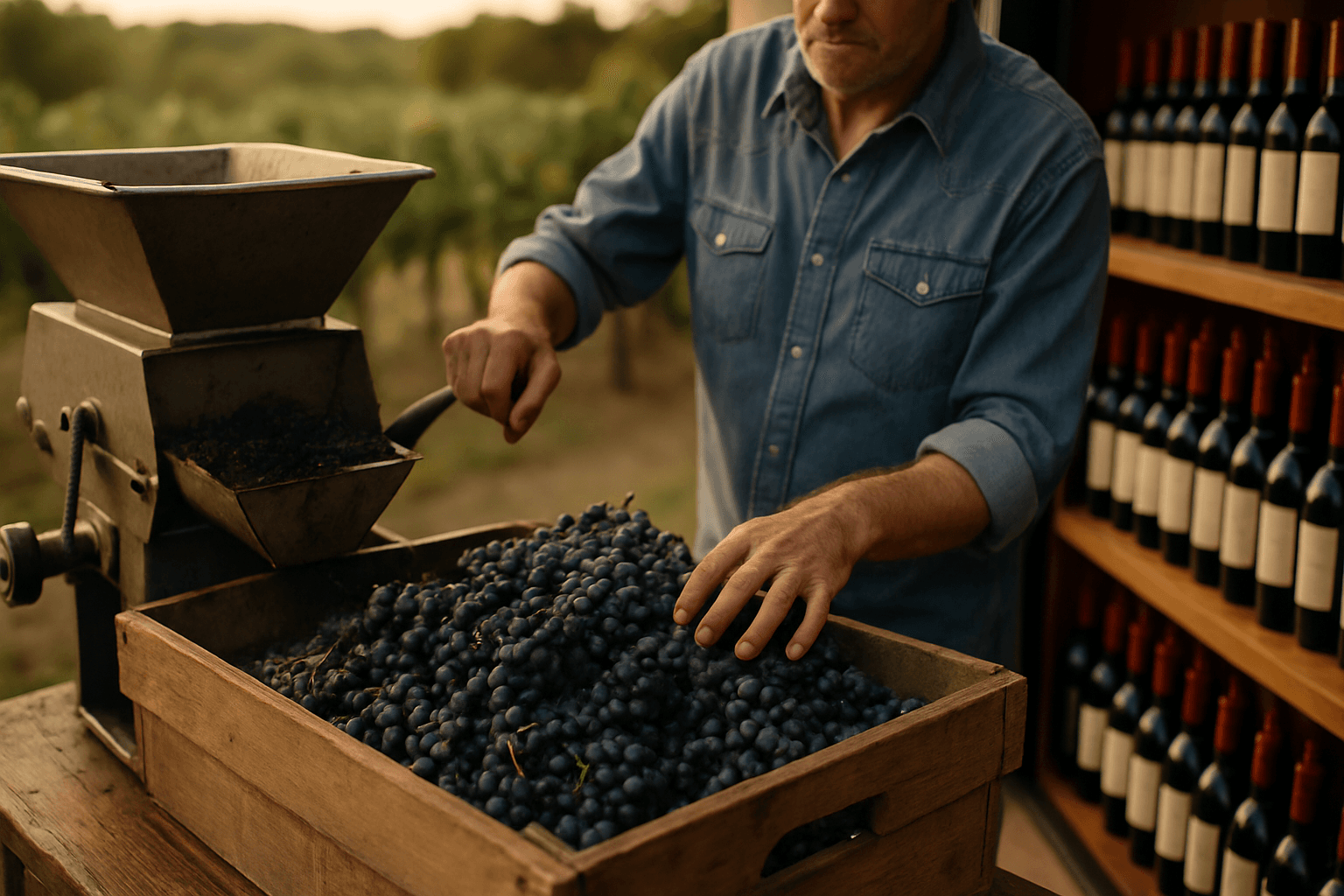
California grape crush 2025 wine pricing outlook: the lightest harvest in 25 years could reshape your shelf strategy. Here's what retailers need to know.
- The Numbers Are In — And They're Historic
- The Paradox: Supply Is Down, But So Are Grape Prices
- Premium vs. Value: Two Very Different Pricing Stories for 2026
- The Structural Shift: 40,000 More Acres Are Coming Out of the Ground
- What This Means for Your Store: A Retail Pricing Playbook for 2026
If you run a liquor store, you probably don't spend your mornings reading USDA crop reports. Fair enough — you've got deliveries to check in and shelves to stock. But this year's California grape crush 2025 wine pricing story is one you can't afford to skip, because it's going to land directly on your invoices, your planograms, and your margins over the next 18 months.
California just posted its lightest wine grape harvest in over 25 years. We're talking 2.6 million tons — a shortfall equivalent to roughly 72 million cases below the five-year average . That's not an abstraction for growers and sommeliers to debate. That's a concrete shift in what you'll be able to buy, what you'll pay for it, and how you'll need to rethink your California wine section heading into 2026.
Here's the twist that makes this especially tricky to navigate: despite the historic supply drop, grape prices actually fell. That contradiction — less wine, lower prices — is the key to understanding what's really happening and what's coming next. Let's break it down so you can make smart moves while your competitors are still catching up.
The Numbers Are In — And They're Historic
What the 2025 Crush Report Actually Says
The financial picture is just as stark as the volume numbers. Total 2025 crop value fell to $2.414 billion — down 16% year-over-year and a full 22% below the five-year average. Statewide average grape prices dropped to $978.60 per ton, a 3.8% decline from 2024, with red wine grapes taking a harder hit (down 4.4%) than whites (down 0.9%).
Discover how Provence transformed into a lifestyle brand. Learn provençal wine marketing tactics to boost regional Fr...
That combination of lower volume and lower prices signals deep financial stress rippling across the entire California wine supply chain, from growers pulling out vines to wineries tightening production runs.
How the Shortfall Stacks Up
Here's the context that matters: production is now down roughly 33% from the 2020–2021 pandemic peak . Remember those years? Consumers were pantry-stuffing wine like it was toilet paper. That surge inflated both demand and supply expectations across the industry. Wineries planted more. Distributors stocked deeper. Retailers expanded shelf sets.
Now the pendulum has swung hard in the other direction. This isn't a blip — it's a structural correction that's been building for several seasons.
Independent stores can capture Syrah's momentum with smart displays, staff storytelling, and Old World/New World tast...
And here's why you should care even if you've never set foot in a vineyard: the crush report's impact doesn't stay in the fields. It follows the bottle. When supply contracts this dramatically, it becomes a pricing, inventory, and margin story — one that will start showing up on your shelves and in your wholesale invoices throughout 2026. The stores that plan ahead will be the ones that protect their margins.
The Paradox: Supply Is Down, But So Are Grape Prices
Here's where the California grape crush 2025 wine pricing story gets weird — and where most surface-level analysis gets it wrong.
You'd expect grape prices to spike when supply drops this sharply. They didn't. They actually fell. So what broke the Econ 101 formula?
Discover how Uruguay's emerging wine export strategy can help independent liquor stores market lesser-known wine regi...
The Demand Crisis Hiding Inside the Supply Crisis
An estimated 30% of California's total wine grape crop went unsold in 2025 . That's the real story buried inside the supply shortage headlines.
Put simply: wineries aren't buying because consumers aren't drinking as much wine. Growers are stuck with fruit nobody wants, even though there's less of it to go around.
Making matters worse, U.S. wine exports totaled just $805 million in 2025, down a brutal 35% year-over-year . That export channel historically absorbed excess domestic inventory. Now that pressure valve is essentially closed.
The retail takeaway worth remembering: Low grape prices today don't guarantee low bottle prices tomorrow. The economics are shifting underneath the surface in ways that cheap fruit can't fix.
Premium vs. Value: Two Very Different Pricing Stories for 2026
The pricing picture isn't one story — it's two. And if you're planning your shelves for next year, you need to understand both.
Why Napa and Premium Tiers May Hold Steady
Despite the supply shortfall, Napa Valley grape prices barely flinched. At $6,767 per ton — down just 2.6% — Napa growers are essentially holding the line. That tells you something important about the premium tier: brand equity is a hell of a buffer.
Producers paying top dollar for Napa fruit have the margin cushion to absorb a lighter harvest without passing pain to retail. Consumers spending $25+ on a bottle aren't as price-sensitive either. So if your premium California section is heavy on established Napa and Sonoma labels, expect relative stability. No panic needed.
Where Value-Tier Wine Gets Volatile
The $8–$15 shelf? That's where it gets interesting — and potentially messy.
This tier runs on thin margins, weaker brand loyalty, and producers who are fully exposed to the tug-of-war between falling supply and softening demand. When average grape prices drop 3.8% but total crop value craters 16%, someone's getting squeezed.
One nuance worth flagging for category managers building 2026 planograms: the gap between white grape prices (down just 0.9%) and reds (down 4.4%) could mean different pricing trajectories by varietal — something to watch closely as wholesale pricing develops.
The actionable takeaway: If you carry a deep California value-wine selection, expect SKU disruptions and selective cost increases on specific labels — even while the broader market looks soft. Now's the time to identify which suppliers are most exposed and start those conversations early.
The Structural Shift: 40,000 More Acres Are Coming Out of the Ground
The supply picture is about to get permanently tighter — and that's the part that should really get your attention.
Vineyard Removal Is Accelerating
California is on track to raze another 40,000 acres of vineyards, dropping total planted acreage to around 590,000 . These aren't temporary fallows. Growers are making permanent exit decisions, and the math behind those decisions is brutal:
- Water costs keep climbing, especially in the Central Valley.
- Labor shortages show no sign of easing.
- Grape prices keep falling — making it harder to justify the investment.
- Domestic wine consumption continues its multi-year decline.
When crop value drops 22% below the five-year average, growers aren't planting new blocks. They're pulling vines and planting almonds — or selling to developers.
What Fewer Acres Mean for 2027 and Beyond
Here's the critical connection for retail wine pricing in 2026 and beyond: new vines take three to five years to produce commercial fruit. Every acre ripped out today is production capacity that cannot come back before 2028 at the earliest.
The current supply shortage is masked by leftover bulk inventory and unsold grapes sitting in the system. That oversupply is creating closeouts and deals you're probably already seeing from distributors. Enjoy them — and consider buying deep.
Those deals may represent the last wave of cheap California inventory before structural scarcity reshapes pricing for years to come. The discounts hitting your inbox in late 2025 could look very different from the allocation lists hitting it in 2028.
Let our team show you what's possible.
our team specializes in digital marketing strategies that drive real results. Let us show you what's possible.
Schedule a CallWhat This Means for Your Store: A Retail Pricing Playbook for 2026
All of this — the paradox, the tier split, the vineyard removals — adds up to a concrete set of decisions you need to make. The impact on your shelves won't arrive all at once, so think about it in two phases.
Short-Term Opportunities to Capture Now
Right now through mid-2026, you're actually in a buying window. Wineries and distributors are still sitting on excess 2023–2024 vintage inventory they need to move. That means closeout deals, volume discounts, and promotional pricing on California labels that won't last.
Lean into this. Whether you use the margin to pad your bottom line or pass savings along to drive foot traffic, this is the moment to stock up on key California SKUs. If you have strong distributor relationships, use them — lock in pricing or volume commitments before the 2025 vintage shortage becomes the dominant wholesale conversation.
One bright spot worth watching: white wine and rosé. With white grape prices holding steadier than reds and consumer interest in lighter styles growing, California whites could see less disruption than the red category.
Medium-Term Risks to Plan Around
Late 2026 into 2027 is where the crush report impact gets real. As the lighter 2025 vintage works through the pipeline — and vineyard acreage continues to shrink — expect tighter allocations on popular California labels and cost increases, particularly in the value tier where margins are already thin.
Start planning your hedge now. Consider expanding shelf space for Oregon, Washington, and imported wines. RTD cocktails and spirits can absorb some of that displaced consumer spending too. Category diversification isn't just smart merchandising — it's insurance against California-specific supply disruption.
A 22% drop in total crop value doesn't stay invisible at retail forever. The stores that plan now will be the ones with options later.
The Bigger Picture: Is California Wine in a Permanent Correction?
Post-Pandemic Demand Reset
Let's call it what it is: the pandemic wine boom created artificial demand signals, and the industry overbuilt against them. Consumers were drinking more at home, buying up, and experimenting freely. Growers planted accordingly. Now the hangover has arrived.
Production is falling. Prices are falling. Exports are falling. Acreage is falling. But this doesn't mean California wine is dying. It means the market is right-sizing. Retailers who understand this transition — and plan for potential SKU gaps and pricing shifts — will outperform those caught flat-footed.
What the Smart Money Is Watching
Three data points matter going forward: 2026 crush report volumes, the pace of vineyard removals, and whether domestic wine consumption stabilizes or keeps sliding. That's where the California wine supply shortage story either deepens — or bottoms out.
Bottom Line: Plan for Volatility, Not Panic
Here's the tension at the heart of the California grape crush 2025 wine pricing landscape: the lightest harvest in over 25 years, yet falling demand is simultaneously pushing grape prices down. That creates a strange retail environment where closeout deals and tight allocations will sit on the same shelf.
Your three moves for navigating 2026:
- Buy smart on closeouts now — surplus inventory from soft demand won't last.
- Diversify beyond California — Oregon, Washington, imports, and alternative categories.
- Lock in pricing on must-have SKUs before the 2025 vintage shortage hits the wholesale pipeline.
The retailers who read the data early protect their margins. This is that early read.
Complicated doesn't mean unmanageable. It means the retailers who do the homework gain an edge over those who wait for their distributor rep to break the news. You've now got the data, the context, and a concrete playbook. The question is what you do with it.
If you're rethinking your wine category strategy for 2026 and want help turning market data into shelf-level decisions, get in touch with the Intentionally Creative team ↗. We help liquor retailers build smarter strategies — so shifts like this one become opportunities, not surprises.
10+ years helping liquor retailers and beverage brands grow through data-driven digital marketing. Learn more