Napa Green Certified Wines Are Hitting the Bulk Market: What This Means for Your Private Label and Sourcing Strategy
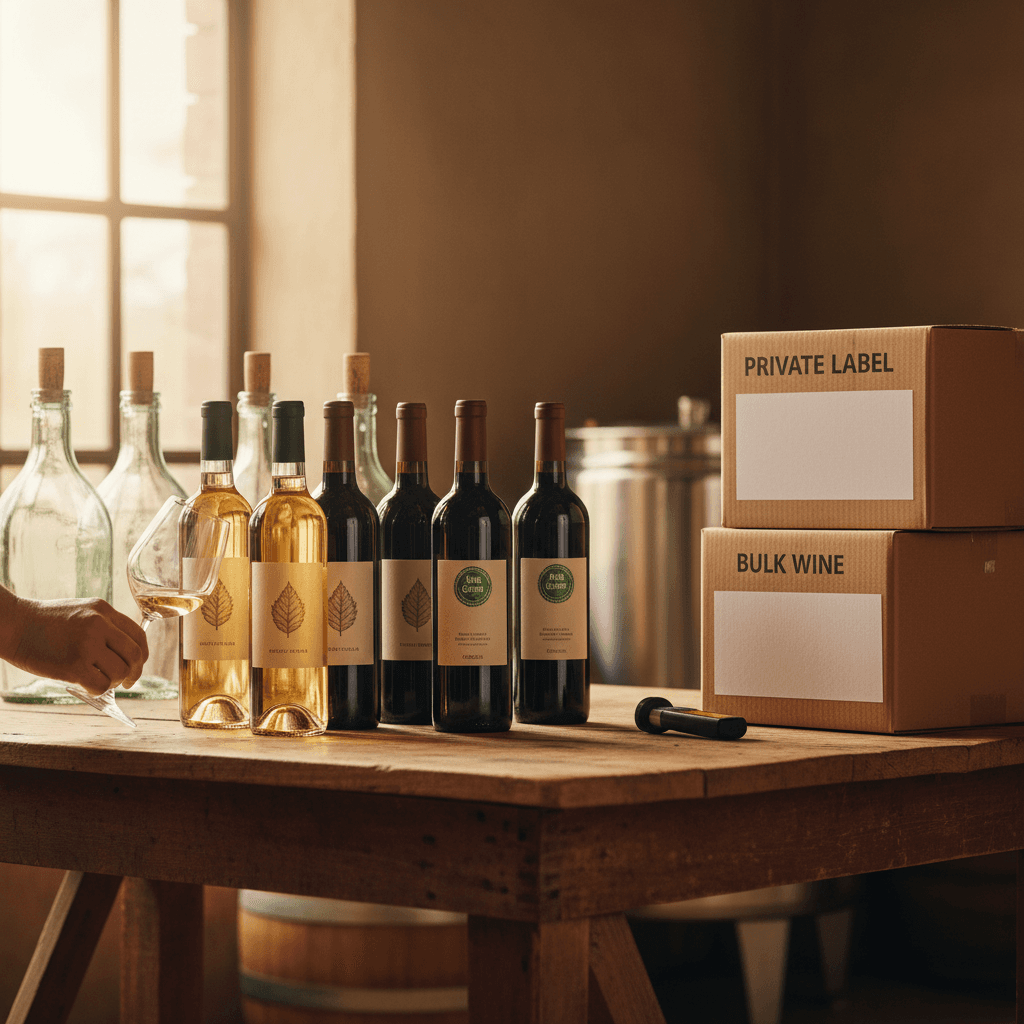
Napa Green certified wines are entering the bulk market — and most don't carry the logo. Here's how smart retailers can leverage sustainability certifications.
- Sustainability-Certified Wine Is Flooding the Market — Without the Label to Prove It
- What Napa Green Certification Actually Covers (Plain English Version)
- The Bulk Market Opportunity: Certified Sustainable Wine at Non-Premium Prices
- Beyond Napa Green: A Quick Guide to Wine Sustainability Certifications That Matter
- How to Build a Private Label Sourcing Strategy Around Sustainability Certifications
There's a quiet shift happening in the bulk wine market right now, and most liquor retailers haven't caught it yet. Napa Green certified wines — produced under some of the most rigorous sustainability standards in American winemaking — are entering the bulk market in significant volume. But here's the twist: almost none of them carry the certification on the label. That disconnect between what's in the bottle and what's on the bottle is creating a rare opening for retailers who pay attention.
If you run a private label program — or you've been thinking about starting one — this is the kind of sourcing advantage that doesn't come around often. We're talking about verified, third-party-certified sustainable wine from Napa Valley, available at bulk pricing, with a consumer-ready story that nobody else is telling yet. The wineries producing this juice aren't marketing the sustainability angle. Which means you can.
In this piece, we're going to walk through exactly what Napa Green certification means, why so much certified wine is hitting the bulk market without any sustainability branding, and how you can build a private label sourcing strategy that turns this gap into margin. Let's get into it.
Sustainability-Certified Wine Is Flooding the Market — Without the Label to Prove It
Here's a stat that should stop you mid-sip: Of the 50 Napa Green certified wineries currently operating, only 3 — that's 6% — actually display the certification logo on their labels. That means 94% of certified sustainable wine from these producers hits shelves, distributor warehouses, and bulk markets with absolutely zero visible sustainability branding.
Let that sink in. We're talking about wine from 101 certified member vineyards covering 6,000 acres — operations rigorous enough to have eliminated glyphosate entirely — and almost none of it tells the consumer that story at point of sale.
Discover how Provence transformed into a lifestyle brand. Learn provençal wine marketing tactics to boost regional Fr...
The Gap Between Certification and Consumer-Facing Branding
Why the disconnect? Most wineries pursue Napa Green certification for operational reasons — water conservation, soil health, regulatory compliance, community credibility. The certification is real. The farming practices are verified. But translating that into consumer-facing branding costs money, requires label redesigns and TTB approval, and frankly, many producers don't see the ROI on their own branded bottles.
The result? A bulk wine market flooded with sustainability-certified juice that carries no premium positioning. And the supply is only growing — Napa Green's membership now represents a significant share of the region's vineyard acreage. [VERIFY: Napa Green claims 94% of Napa vineyards and wineries are certified. Cross-check against total number of Napa operations — 101 vineyards and 50 wineries may not equal 94% of the region. Clarify whether this figure includes participants at various stages of certification or only fully certified members.]
Why This Matters More for Retailers Than for Wineries
This creates a massive, under-leveraged opportunity for anyone with a private label program. Certified sustainable bulk wine is available right now without the premium price tag that consumer-facing certification logos typically command. For independent retailers, this disconnect is the opening you've been waiting for: a premium sustainability story at bulk market pricing.
What Napa Green Certification Actually Covers (Plain English Version)
Now that you understand the market gap, let's make sure you understand exactly what you'd be sourcing — because the credibility of your private label claims depends on it.
Independent stores can capture Syrah's momentum with smart displays, staff storytelling, and Old World/New World tast...
Napa Green is a climate action non-profit — not a marketing agency, not a trade group — that offers soil-to-bottle sustainability certification exclusively for Napa Valley. We're talking regenerative farming practices, carbon reduction, water stewardship, and habitat preservation. It's specific, it's rigorous, and it's increasingly relevant to how you think about sourcing.
Vineyard Certification vs. Winery Certification — They're Not the Same
Here's where sourcing gets tricky, and where a lot of private label programs stumble on sustainability claims.
Napa Green certifies vineyards and wineries separately. Vineyard certification covers grape growing — soil health, pest management, water use in the field. Winery certification covers the production facility — energy consumption, waste diversion, water use in the cellar. Currently, 101 vineyards and 50 wineries hold certification, but those aren't always the same operations.
Before you print "sustainably produced" on a private label bottle, verify which certification applies to your source. Does the vineyard hold it? The winery? Both? Getting this wrong doesn't just risk consumer trust — it risks legal exposure. When evaluating sustainability certifications for your retail program, specificity is everything.
Discover how Uruguay's emerging wine export strategy can help independent liquor stores market lesser-known wine regi...
The Glyphosate Milestone That Changed the Game
Of all the data points in the Napa Green program, this one sells: every single one of those 101 certified member vineyards — spanning 6,000 acres — has completely eliminated glyphosate, the active ingredient in Roundup.
That's not an aspiration. It's done.
For consumers who've been reading headlines about herbicide residues for years, "glyphosate-free" is a concrete, verifiable claim that actually moves the needle. And for retailers stocking these wines on private labels, it's the kind of straightforward proof point that belongs on your shelf talkers, not buried in fine print.
The Bulk Market Opportunity: Certified Sustainable Wine at Non-Premium Prices
So you know what the certification covers and why it's credible. Now let's talk dollars and cents.
Why Certified Wineries Aren't Chasing the Consumer Sustainability Premium
Most Napa Green certified wineries don't need a sustainability logo to sell bottles. Their brand identity and price positioning are already locked in — they're moving wine at $40, $80, $100+ based on reputation, vineyard prestige, and decades of brand equity. The certification validates what they're already doing operationally. But slapping a green logo on a luxury label? That's not their play.
Their sustainability story lives in their practices, not their packaging.
What This Means for Wholesale and Bulk Sourcing Economics
When those same certified wineries have excess production — and they do — that juice hits the bulk market at bulk pricing. No brand premium attached. The sustainability credentials travel with the wine, but the $75 price tag doesn't.
For retailers building a private label program, this is where it gets compelling. You can source certified wine at bulk rates and build a private label line with a legitimate, third-party-verified sustainability story at a fraction of branded retail.
The math is straightforward: certified sustainable sourcing + private label margins + a consumer base increasingly willing to pay more for verified sustainability = an ROI case that actually pencils out. This isn't theoretical. It's available inventory, waiting for the right label.
Beyond Napa Green: A Quick Guide to Wine Sustainability Certifications That Matter
Napa Green gets a lot of the headlines, but it's far from the only credibility play in sustainable wine sourcing. If you're building a multi-tier private label program — or sourcing from regions beyond Napa Valley — understanding the full landscape gives you a serious edge.
SIP Certified, Organic, Biodynamic, and LEED — What's What
Here's the quick breakdown:
- Napa Green covers vineyard and winery practices exclusively in Napa Valley — 101 certified vineyards and 50 certified wineries as of late 2025.
- SIP Certified (Sustainability In Practice) is third-party verified with strict standards across social responsibility, water conservation, pest management, and energy efficiency. It's particularly strong for sourcing from California's Central Coast and other regions outside Napa.
- USDA Organic means no synthetic pesticides or fertilizers — a familiar label consumers already trust from the grocery aisle.
- Demeter Biodynamic goes further than organic with holistic farming requirements. Niche, but it commands premium pricing.
- LEED certifies the winery facility itself — energy-efficient buildings, not necessarily the farming practices.
And don't sleep on Sonoma County: the Sonoma County Winegrowers program reports 99% of its vineyards are certified sustainable under their own standards [VERIFY: Confirm this refers to the Sonoma County Winegrowers' sustainability program, not Napa Green, and verify the 99% figure is current]. That opens a massive certified-sustainable sourcing corridor right next door to Napa.
Which Certifications Carry the Most Weight with Consumers
Here's the honest truth: consumer research consistently shows sustainability influences purchasing decisions, but most shoppers cannot distinguish between certifications. They see a logo and a story — not a standards document.
That complexity is actually your opportunity. Retailers who understand the distinctions can curate private label tiers — a Napa Green line, an organic line, a SIP Certified line — each telling a different but credible sustainability story at different price points.
Your job isn't to turn customers into certification experts. It's to tell a clear, honest story on your shelf tags and marketing materials. Pick the certification that matches your sourcing, price your tiers intentionally, and let the story do the selling.
Let our team show you what's possible.
our team specializes in digital marketing strategies that drive real results. Let us show you what's possible.
Schedule a CallHow to Build a Private Label Sourcing Strategy Around Sustainability Certifications
You've seen the opportunity. You understand the certifications. Now let's get practical. The landscape is shifting fast, and having a plan beats having good intentions every time.
Step 1: Verify the Full Chain of Custody
This is where most retailers trip up. Before you put "sustainably produced" on anything, confirm exactly what your bulk wine source has certified. Does the vineyard hold certification? The winery? Both?
Remember: Napa Green certifies vineyards and wineries separately. Your bulk lot might come from a certified vineyard but get processed at a non-certified facility, or vice versa. Document the full chain. If a compliance question ever comes up, you want receipts, not guesses.
Step 2: Match Certification Claims to Your Customer Base
Not every sustainability story lands the same way. If you're selling to eco-conscious millennials in Portland or Brooklyn, lead with the regenerative farming practices and glyphosate-free growing. That's what moves the needle for them.
Selling to premium wine collectors? Lead with Napa Valley provenance and quality. Let sustainability be the pleasant surprise, not the headline. Even the producers themselves are still figuring out how to position these certifications — that 6% logo display rate tells you everything. You can be smarter about it.
Step 3: Price It Right — Don't Leave Money on the Table
Sustainability-certified private label wine should command a $2–$4 per bottle premium over non-certified private label at retail. That's your margin opportunity. But — and this matters — it should still significantly undercut branded sustainable wines. That gap is your entire value proposition.
Don't overcomplicate the shelf presentation, either. A clean label, a single-line sustainability callout, and a QR code linking to certification details outperforms a bottle crammed with logos every time.
One more thing: build relationships with bulk brokers who specialize in certified lots now. As demand for certified sustainable wine grows in the private label space, early movers who lock in sourcing agreements will have a clear advantage over retailers scrambling for inventory six months from now.
The Risks: What Could Go Wrong (and How to Avoid It)
Before you start placing orders, a reality check. Every sourcing strategy has pitfalls, and sustainability claims come with their own set of risks that can bite you if you're not careful.
Greenwashing Pitfalls for Retailers
The biggest risk? Making claims you can't substantiate.
Here's the nuance most retailers miss: your bulk wine might come from a certified vineyard but get processed at a non-certified facility — or vice versa. The gap between certification and communication exists for a reason. Your marketing language needs to be surgically precise.
Consumer and regulatory scrutiny around sustainability claims in wine retail is intensifying. Get this right, and you build lasting trust. Get it wrong, and the reputational damage is hard to undo.
Supply Consistency and Certification Verification
Certification standards evolve. Membership can lapse. Don't assume last year's credentials automatically carry forward — build verification checkpoints directly into your sourcing process. Request current documentation with every purchase order.
The Bottom Line: Certified Sustainable Bulk Wine Is a Strategic Advantage — If You Move Now
The supply side is already locked in. Napa Green's membership covers a significant share of the valley's vineyard acreage, Sonoma's sustainable certification is nearly universal, and the bulk market is flush with certified juice. The real question: which retailers will build a private label strategy around it first?
The opportunity is hiding in plain sight. Napa Green certified wines carry a story consumers already want to buy — verified sustainability, glyphosate-free farming, Napa Valley provenance — but almost nobody is putting that story on the bottle. That's your story to tell on your bottles.
Start small. Source one or two SKUs with verified sustainability certifications, measure sell-through against comparable non-certified SKUs, and let the register data make the argument.
Ready to explore certified sustainable bulk wine for your private label program? Start by identifying brokers who specialize in Napa and Sonoma certified lots, verify the chain of custody on your first sourcing call, and get a test SKU on your shelves this quarter. The inventory is there. The consumer demand is there. The only missing piece is your label.
10+ years helping liquor retailers and beverage brands grow through data-driven digital marketing. Learn more