Switzerland Moves to Restrict Wine Imports: How Protectionist Trade Policies Could Reshape U.S. Retail Pricing and Selection
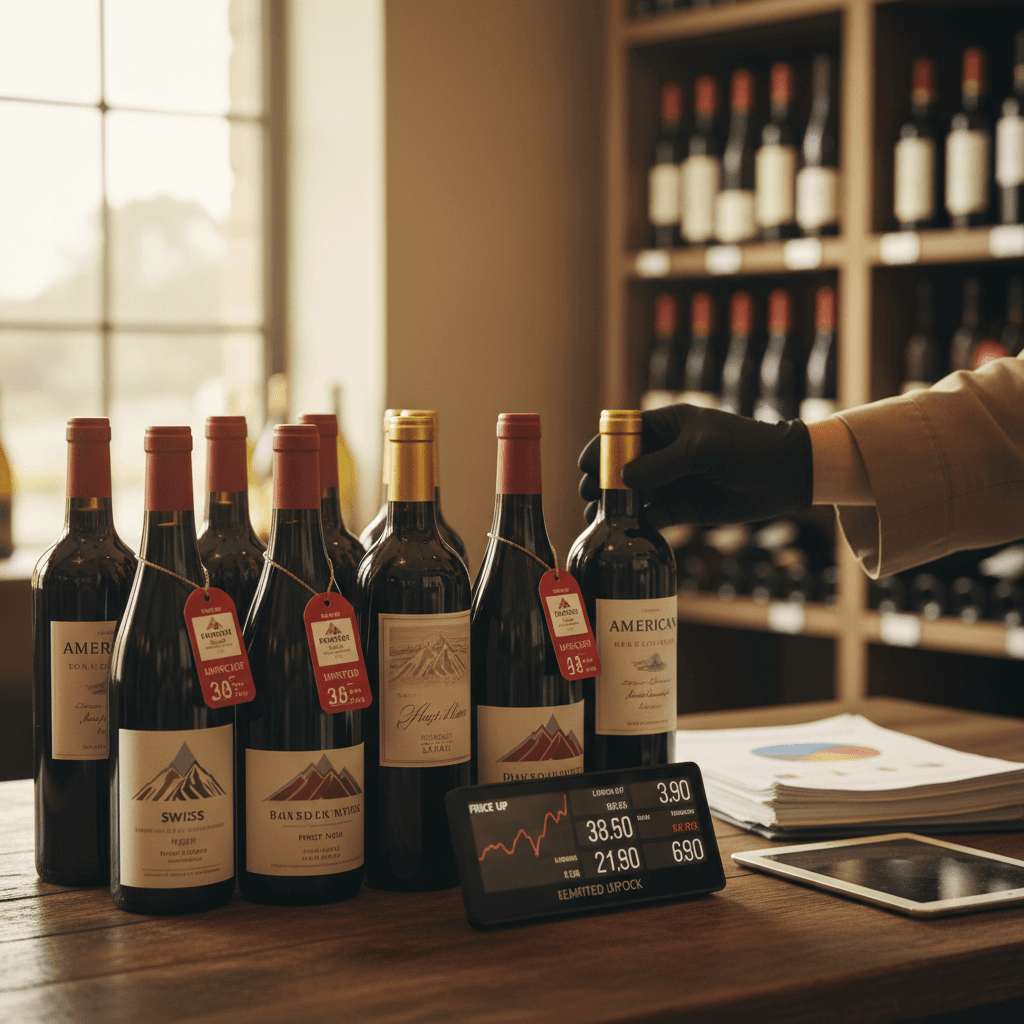
Wine import restrictions impact US retail pricing and selection as Switzerland, Canada, and tariff wars reshape global trade. Here's what store owners need to know.
- The Global Wine Trade Is Fracturing — And Your Shelves Will Feel It
- What Switzerland Is Actually Doing (And Why It Matters Beyond Swiss Borders)
- The Domino Effect: Canada, U.S. Tariffs, and a Growing Pattern of Protectionism
- What This Means for Your Store's Pricing Right Now
- How Wine Selection on Your Shelves Could Change
The global wine trade is splintering — and if you're running an independent liquor store, the consequences are already hitting your shelves, your margins, and your conversations with distributors. From Switzerland tightening import quotas to Canada freezing out American bottles to Washington floating eye-watering tariffs on European wines, a wave of protectionist policies is redrawing the map of who can sell what, where, and at what price.
This isn't a story about diplomats arguing over trade balances in Geneva. It's a story about your next purchase order, your shelf mix next quarter, and whether your customers will still find the bottles they love at prices they'll pay. The numbers are stark — U.S. wine exports down a third, entire trade relationships collapsing overnight, and retail prices climbing even as producers slash their own margins to the bone.
We put together this breakdown so you can see the full picture: what's actually happening, how the dominoes connect, and — most importantly — what you can do right now to protect your business while the ground keeps shifting.
The Global Wine Trade Is Fracturing — And Your Shelves Will Feel It
If you run an independent liquor store, you've probably already noticed it: certain bottles are harder to get, prices are creeping up on imports, and your distributors are being cagier than usual about allocation. There's a reason for that.
Switzerland's recent move to tighten wine import quotas is just the latest domino in a global chain reaction of protectionist trade policies reshaping the wine industry. Canadian provinces have blocked U.S. wines from their shelves. The U.S. itself has floated a proposed 200% tariff on European wines and spirits . And retaliatory measures keep stacking up across the Atlantic.
10 wine club marketing tactics that reduce the 40% year-one cancellation rate and boost member spending at your liquo...
This isn't a blip. It's a pattern — and the wine import restrictions impact US retail in ways that hit your bottom line directly.
Why This Isn't Just a European Problem
It's tempting to shrug off Switzerland's wine import policy as someone else's headache. But protectionist trade policies in the wine industry don't stay contained. They ripple. When one market closes its doors, surplus inventory floods other markets, distorting pricing. When tariffs spike, suppliers pass costs downstream — straight to your register.
A Quick Snapshot of the Numbers
Here's how fast things are moving:
- U.S. wine exports fell 33.5% in 2025 compared to 2024 (U.S. Census Bureau)
- Exports to Canada plunged 76.8%, turning what had been a $459.5 million export market into a shadow of itself
- Italian wine exports to the U.S. fell by €110 million under tariff pressure
- European producers slashed prices up to 26% — yet American consumers still saw 4–5% retail price increases
Those wine retail pricing changes aren't abstract policy debates happening overseas. They're showing up in your margins, your inventory mix, and your customers' willingness to spend.
Discover how Provence transformed into a lifestyle brand. Learn provençal wine marketing tactics to boost regional Fr...
In this post, we'll break down exactly what's happening, why it matters for independent retailers like you, and what you can do about it right now.
What Switzerland Is Actually Doing (And Why It Matters Beyond Swiss Borders)
Now that you've seen the big picture, let's zoom in on the policy that triggered this conversation — because the mechanics of Switzerland's system reveal exactly how these restrictions create downstream chaos for U.S. retailers.
Switzerland isn't banning wine imports. But what it is doing creates a system that effectively walls off one of Europe's wealthiest consumer markets.
How Switzerland's Tariff-Rate Quota System Works
Here's the plain-language version: Switzerland sets a fixed annual volume of wine that can cross its borders at reasonable tariff rates. Once that quota is filled, every additional bottle gets slammed with dramatically higher duties — high enough to make exporting there economically pointless for most producers.
Independent stores can capture Syrah's momentum with smart displays, staff storytelling, and Old World/New World tast...
But the barriers start before a single bottle ships. Swiss wine importers must register with the Swiss Wine Trade Control and obtain a general import permit (called a GEB) from the Federal Office for Agriculture. That's a bureaucratic gatekeeping layer that limits who can even participate.
The result? A tightly managed market where only the largest, most established players can afford to operate.
The Ripple Effect: When One Market Closes, Others Get Crowded
This is where the wine import restrictions impact US retail most directly.
When European producers lose access to Switzerland — or face margins that no longer pencil out — that inventory doesn't vanish. It gets redirected. Often to the U.S., the world's largest wine market by value.
We're already seeing this displacement effect compound existing pressures. European producers have been cutting prices aggressively to move volume, yet those savings aren't reaching American consumers — the margin is getting absorbed across the supply chain by importers, distributors, and retailers all facing their own cost increases.
For independent retailers, this creates a paradox: more European inventory flooding in can temporarily expand your selection, but it also destabilizes pricing and squeezes out the smaller, distinctive labels your customers actually seek out. The producers who survive this environment are the ones with volume — not necessarily quality.
The Domino Effect: Canada, U.S. Tariffs, and a Growing Pattern of Protectionism
Switzerland's quota system is concerning on its own. But when you step back and look at what's happening simultaneously across North America, the pattern becomes impossible to ignore — and much more urgent.
Canada's Ban on U.S. Alcohol: A Case Study in Trade Retaliation
British Columbia's ban on new U.S. alcohol imports effectively cut off American wineries from their largest international market. The collapse was swift: U.S. wine exports to Canada plunged so sharply that a longstanding trade surplus flipped into a deficit. Overall, U.S. wine exports fell by a third in 2025 — that's not a blip, it's an industry in contraction.
For U.S. retailers, this matters because domestic wineries squeezed out of export markets will flood the home market with excess inventory — potentially depressing wholesale prices short-term while destabilizing producers long-term.
The Proposed 200% U.S. Tariff on European Wine
On the flip side, a proposed 200% tariff on European wine and spirits threatens to cripple the very supply chain it claims to protect. Italian producers have already lost significant ground in the American market. Higher costs reduce consumer choice and provoke retaliatory measures abroad. It's a lose-lose cycle where protectionist trade policies punish everyone except the politicians proposing them.
Government-Run Liquor Boards as Trade Weapons
Here's the pattern that deserves more attention: government-run liquor boards in Canada and state import channels in Mexico are already freezing out or deprioritizing certain U.S. brands. Switzerland's quota system mirrors this tactic on the European side.
Alcohol is increasingly a political bargaining chip. Switzerland's move isn't isolated — it fits a growing global pattern where protectionist policies collectively reshape pricing, selection, and supply chains for independent retailers.
What This Means for Your Store's Pricing Right Now
So the dominoes are falling globally. But what does that actually look like on your P&L? Let's get specific.
The headline number — imported wine prices up 4–5% at retail — sounds manageable. It's not the full story.
The Price Squeeze From Both Directions
You're getting hit from two sides simultaneously.
On the import side, tariffs have driven up wholesale costs on European wines. Your distributors are paying more, and they're passing what they can to you.
On the domestic side, your American wine suppliers are getting crushed in export markets. Less export revenue flowing back to domestic producers means less money for quality improvements, marketing support, and the co-op dollars that help your bottom line.
Why the Headline Numbers Understate the Real Impact
European producers actually slashed their own prices by up to 26% to stay competitive in tariff-affected markets. Consumers still saw price increases. That gap didn't vanish — it got absorbed as margin compression across importers, distributors, and retailers.
For independent stores, the math is brutal. You're paying more for imports. Your domestic suppliers are financially stressed. Your customers are increasingly price-sensitive. And behind that modest headline number? SKU rationalization, tighter allocations, and distributor consolidation are quietly reshaping what you can even put on your shelves. These protectionist trade policies aren't just changing prices — they're changing your product mix whether you planned for it or not.
Let our team show you what's possible.
our team specializes in digital marketing strategies that drive real results. Let us show you what's possible.
Schedule a CallHow Wine Selection on Your Shelves Could Change
Pricing is one thing — you can adjust margins, run promotions, negotiate with distributors. But the selection shift that's coming? That's harder to manage, and it strikes at the heart of what makes independent stores special.
The Consolidation of Available Labels
As protectionist trade policies hit the wine industry from multiple angles, distributors are doing what they always do under pressure: consolidating around safe bets. That means high-volume, high-margin labels with enough scale to absorb tariff costs.
For independent retailers, this is a real problem. Those boutique European producers — the small-batch Barolos, the family-estate Burgundies — are exactly what differentiate you from Total Wine or Costco. But they're becoming harder and more expensive to source.
Here's the twist: that displaced European surplus has to go somewhere. Expect a temporary flood of mid-range Italian and French wines into the U.S. market as producers scramble for volume. That creates short-term buying opportunities — but don't mistake a fire sale for stability. With major tariff proposals still in play, long-term pricing remains anyone's guess.
Emerging Opportunities in Overlooked Regions
Trade disruptions historically open doors. South American, South African, Australian, and domestic wines from emerging U.S. regions are positioned to fill gaps — and smart retailers are diversifying sourcing now, not later.
Your selection is your competitive advantage. Proactive curation during these disruptions builds customer loyalty that outlasts any policy cycle. The stores that introduce customers to a great Mendoza Malbec or a Stellenbosch Chenin Blanc today will keep those customers long after these headlines fade.
5 Things Independent Liquor Retailers Should Do Right Now
Understanding the problem is step one. Here's step two: concrete moves you can make this week to get ahead of what's coming.
Actionable Steps to Protect Margins and Selection
The wine import restrictions impact US retail in ways that touch pricing, selection, and supplier relationships all at once. Here's how to stay ahead of it:
- Audit your import-dependent SKUs. Identify which products are most vulnerable to tariff increases or supply disruption. Know your exposure before your distributor breaks the news.
- Talk to your distributors now. Ask specifically about pricing stability on European imports over the next 6–12 months. Get commitments in writing where possible. Ask about incoming surplus inventory that might offer short-term value.
- Diversify your wine regions. Build relationships with producers in Chile, Argentina, South Africa, New Zealand, and emerging U.S. appellations — regions less exposed to the current wave of protectionist trade policies.
- Educate your staff and customers. When a favorite label disappears or prices jump, your team should explain why and recommend alternatives. Turn disruption into a discovery moment.
- Watch the policy calendar. Tariff decisions and quota renewals follow predictable timelines. Subscribe to trade publications like Wine & Spirits Daily, Shanken News Daily, or Wine Business Monthly and set alerts — because the next shift won't wait for you to catch up.
The Bottom Line: Trade Policy Is Now a Retail Strategy Issue
Switzerland's wine import policy isn't an isolated event. It's one piece of a rapidly accelerating global shift toward protectionism in the wine industry — a shift that's already measurable in collapsed export markets, rising import costs, and shrinking margins across the supply chain.
The wine import restrictions impact US retail in ways that touch every part of your business: what you can stock, what you'll pay for it, and how you explain the changes to your customers.
Why Staying Informed Gives You a Competitive Edge
The retailers who treat trade policy as business intelligence — not background noise — will be the ones who protect margins, maintain compelling selections, and earn customer trust through transparency about pricing changes.
The trade landscape will keep shifting. But here's what I know about independent retailers: you've always found ways to turn disruption into opportunity. This time is no different — if you're paying attention.
Start with the five action steps above. Audit your exposure, diversify your sourcing, and make trade policy part of your weekly business review — not something you react to after the fact. Your shelves, your margins, and your customers will thank you.
10+ years helping liquor retailers and beverage brands grow through data-driven digital marketing. Learn more