Vinexpo Asia 2026 Liquor Retail Trends: What U.S. Retailers Need to Know About the Asia-Pacific Drinks Trade
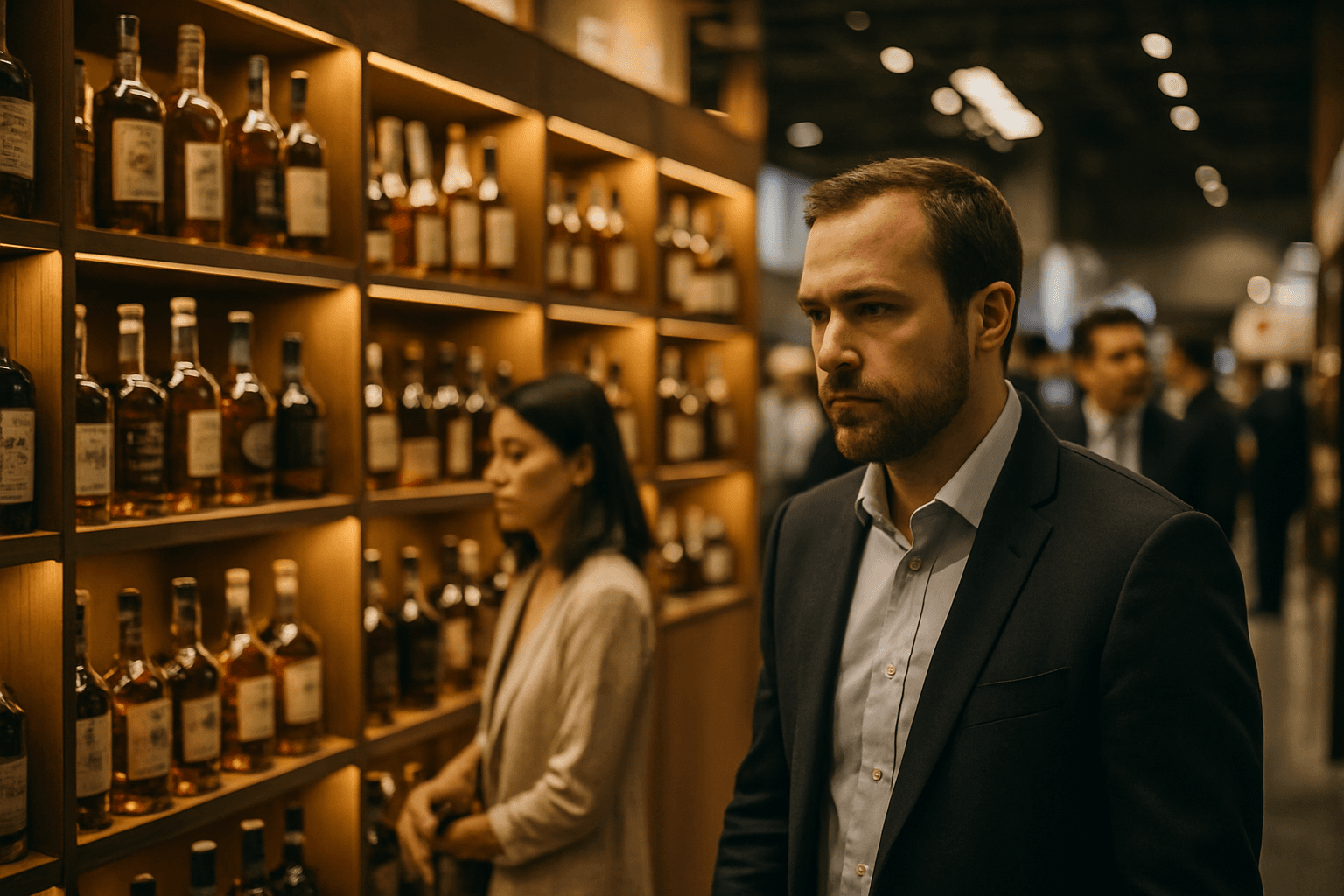
Vinexpo Asia 2026 liquor retail trends reveal key Asia-Pacific shifts in RTDs, premiumization, and imports. Here's what U.S. liquor retailers should watch.
- Why Vinexpo Asia 2026 Matters for U.S. Liquor Retailers (Even If You're Not Going)
- The Big Picture: The Asia-Pacific Drinks Trade Is Shifting — Fast
- RTDs Are the Only Category Growing in APAC — And That Should Get Your Attention
- Beyond Wine: Spirits, Sake, Non-Alc, and the Diversification Trend
- Travel Retail and Duty-Free: The Hidden Channel Shaping Consumer Expectations
The biggest deals shaping your store's shelves next year aren't being made in Kentucky or Napa Valley. They're being made in Hong Kong.
Every May, the global drinks industry converges on Asia to negotiate partnerships, debut new products, and place bets on where consumer demand is heading. And right now, those bets are shifting fast — toward RTDs, premiumization, non-alc, and emerging markets that most U.S. liquor retailers aren't watching closely enough. The Vinexpo Asia 2026 liquor retail trends coming out of this year's event aren't just relevant to importers and distributors. They're a preview of what your customers will be asking for by next spring.
This piece breaks down the key signals — from category growth data to geopolitical risk factors — and translates them into moves you can make in your store this year. No passport required.
Why Vinexpo Asia 2026 Matters for U.S. Liquor Retailers (Even If You're Not Going)
Let's get this out of the way: this article isn't a travel guide. You don't need a passport to benefit from what's happening at Vinexpo Asia 2026. Think of this as your cheat sheet for understanding where the global drinks market is headed — and how to position your store before the wave hits.
What Is Vinexpo Asia and Why Hong Kong?
Vinexpo Asia 2026 runs May 26–28 in Hong Kong, and this year's edition is a big deal. New country and regional pavilions are joining the floor, and major global exhibitors are returning in force — a clear signal of renewed trade confidence in the Asia-Pacific region. Hong Kong has long served as the gateway between Western producers and Asian buyers, and that role is only intensifying. Vinexposium leadership has stated that international trade flows are being "redefined," with Asia remaining a critical market in the global trade balance of wines and spirits. Translation: the deals being made in that convention center will shape what lands on your shelves.
Discover the 7 essential marketing budget benchmarks for liquor stores. Learn how top performers allocate spend for m...
The Ripple Effect: How Asian Trade Shows Shape Your Shelves
Here's the part that matters to you directly. Trends emerging from events like this — new brand partnerships, shifting category priorities, evolving price points — typically filter into U.S. distribution pipelines 6–18 months later. When Asian buyers signal heavy interest in a specific region's wines or a new spirits category, producers adjust their global strategies accordingly. That changes what your distributors pitch you next year.
Consider the data: RTDs are the only beverage alcohol category to record volume growth in APAC in recent years, according to IWSR. Meanwhile, the Asia-Pacific functional beverage market sits at roughly $15 billion. These import-export trends point to broader shifts in consumer preferences that don't stop at borders. The trade opportunities being negotiated this May will ripple outward — and the retailers paying attention now will stock smarter later.
Now that you understand why this event matters from behind your counter, let's zoom out and look at the macro picture driving all of it.
The Big Picture: The Asia-Pacific Drinks Trade Is Shifting — Fast
If you've been watching the global wine and spirits landscape from behind your register, here's the headline: the growth story is changing, and it matters for your shelves.
Discover the 10 most costly alcohol marketing compliance mistakes liquor stores make and actionable strategies to mai...
According to IWSR data, overall beverage alcohol volume growth across Asia-Pacific has stalled. RTDs are the lone category still posting gains. But slowing regional numbers don't tell the whole story. The opportunity isn't vanishing — it's relocating.
Vinexpo Asia 2026 is spotlighting this shift with new country and regional pavilions, and Vinexposium leadership has been clear that the traditional trade map is being redrawn. The question is where within Asia the action is heading.
China's Dominance Is Cooling
China dominated the Asia-Pacific drinks trade conversation for a decade. That era is winding down. Brands that built entire export strategies around Chinese demand are now pivoting — and those pivots ripple all the way back to U.S. retail.
India and Southeast Asia Are the New Growth Engines
India and Southeast Asia are where the momentum is building. Brands are chasing these markets aggressively, which reshapes allocation strategies globally.
Discover 7 proven distribution strategies for liquor stores facing supply chain changes. Boost your liquor delivery m...
What does that mean practically? If a Scotch brand starts prioritizing Indian distribution, your allocation could shrink. Meanwhile, new products — Indian whisky, Southeast Asian craft spirits — may start appearing on U.S. shelves as producers seek additional revenue channels.
Understanding these shifting trade flows helps you plan smarter. Stock accordingly, ask your distributors tough questions, and don't get caught off guard when what's available stateside starts changing.
That geographic shift sets the stage for the single most important category trend coming out of the region — and it's one you're probably already feeling in your own store.
RTDs Are the Only Category Growing in APAC — And That Should Get Your Attention
Here's a stat that should stop you mid-inventory count: according to IWSR, RTDs (ready-to-drink cocktails and beverages) are the only beverage alcohol category recording volume growth in the Asia-Pacific region in recent years. Not wine. Not spirits. Not beer. Just RTDs.
When you're tracking Vinexpo Asia 2026 liquor retail trends, this is the headline that matters most for your store back home.
The Numbers Don't Lie: RTD Volume Growth Stands Alone
While every other category flatlines or contracts across the region, RTDs keep climbing. And the broader context makes this even more compelling — consumer appetite for functional, non-traditional beverages is surging across Asia-Pacific. That momentum is bleeding directly into alcohol. Think hybrid products, functional spirits, and crossover beverages that blur the line between wellness and a night out.
What the Asian RTD Boom Means for U.S. Retail Shelves
This isn't just an overseas trend — it validates what you're already seeing domestically. But here's what's coming next: Asian-inspired RTD formats like chuhai-style drinks, sake-based cocktails, and yuzu-forward beverages are accelerating into U.S. markets. These import-export shifts point toward real opportunities you can act on now.
Your move: If you haven't dedicated meaningful shelf space to RTDs, this global data should push you over the edge. Build an "Asian-Inspired RTD" endcap. Host a tasting event. The growth is already here — your shelves should reflect it.
RTDs may be leading the growth charts, but they're part of a much broader diversification trend that's reshaping the entire trade show floor — and, eventually, your product mix.
Beyond Wine: Spirits, Sake, Non-Alc, and the Diversification Trend
If you think the Asia-Pacific drinks trade is still all about Bordeaux and Burgundy, it's time to update your playbook. One of the clearest trends at Vinexpo Asia 2026 is the hard pivot toward category diversification — and it should reshape how you think about your own shelves.
Be Spirits Hong Kong: A Dedicated Stage for Non-Wine Categories
Vinexposium didn't just tack on a spirits section this year. They launched Be Spirits Hong Kong as a full sub-event covering spirits, beer, cider, sake, mixology, and beverage innovation. That's a deliberate signal: the Asia-Pacific trade conversation is no longer wine-first.
For U.S. retailers, the takeaway is practical. Premiumization is accelerating globally — your customers are trading up, not just in wine but across spirits and sake. Stock accordingly. And the food pairing boom happening across Asia suggests real merchandising opportunities stateside: think spirits-plus-gourmet bundles or sake-and-snack pairings near your checkout.
The No- and Low-Alcohol Segment Goes Mainstream
Vinexposium also launched Be No, a dedicated non-alcoholic beverage showcase treating no- and low-alcohol as a serious trade category. The functional and non-traditional beverage boom across Asia-Pacific is undeniable — and it's validating the same trend building in the U.S.
Bottom line: carrying non-alc is no longer optional. It's a growth category your competitors are already stocking.
There's another channel driving these trends that most independent retailers overlook entirely — but your customers don't.
Let our team show you what's possible.
our team specializes in digital marketing strategies that drive real results. Let us show you what's possible.
Schedule a CallTravel Retail and Duty-Free: The Hidden Channel Shaping Consumer Expectations
Asia-Pacific's duty-free channel is quietly reshaping what your customers want — whether you realize it or not. And that redefinition is playing out most visibly in airport retail.
Why Duty-Free Trends in Asia End Up Influencing Your Walk-In Customers
When travelers discover a premium Japanese whisky or an exclusive Cognac release at Hong Kong International, they come home wanting it. That demand either lands in your store or your competitor's. Duty-free is increasingly the launchpad for brands entering broader distribution, and the opportunities emerging from this channel are real — and time-sensitive.
Premium Packaging and Exclusive Releases: The Halo Effect
Travel retail drives packaging innovation — gift sets, limited editions, smaller formats — that eventually trickles into domestic retail. What's selling in Asian airports today may be what your customers ask for tomorrow.
Practical tip: Follow Asian travel retail news and social media accounts now. Spotting emerging brands before they hit U.S. distribution gives you a competitive edge big-box stores can't match.
Of course, opportunity never comes without risk. Before you start placing orders, here's what could complicate the picture.
Geopolitical Headwinds and Tightening Regulations: The Risks You Should Monitor
The renewed exhibitor interest at Vinexpo Asia 2026 tells an important story. Despite real geopolitical friction, the global wine and spirits trade in Asia-Pacific is drawing more investment, not less. That's a long-term bet worth paying attention to.
But long-term optimism doesn't eliminate short-term risk.
Trade Tensions and Tariff Uncertainty
Here's where these trends hit your bottom line directly: tariff changes and trade disputes between the U.S. and Asian markets can shift pricing on imported sake, Asian spirits, and wine overnight. If you carry these products — and your customers increasingly expect you to — sudden cost increases eat into margins fast. Staying informed on import-export dynamics isn't optional anymore.
Regulatory Changes Across Asia and What They Signal for Global Trade
Tightening regulations across the Asia-Pacific region — new labeling requirements, stricter import restrictions, evolving advertising rules — can redirect product flow toward or away from U.S. markets unexpectedly.
The bottom line: geopolitics isn't abstract. It shows up in your cost of goods and product availability. Build relationships with distributors who actively track these shifts and keep you ahead of them — not scrambling after them.
You've got the intelligence. Now here's how to put it to work.
Your Action Plan: How to Use These Asia-Pacific Trends in Your Store This Year
Five Moves to Make Before 2026 Wraps Up
You don't need a plane ticket to Hong Kong to act on what's happening at Vinexpo Asia. Here's your short list:
- Expand your RTD selection with Asian-inspired options. Yuzu highballs, lychee spritzes, and shochu sodas aren't novelty — they're where the momentum is.
- Add or grow a non-alcoholic section. The functional beverage boom across Asia-Pacific validates what's building domestically. Dedicate real shelf space.
- Lean into premiumization. Stock trade-up options in Japanese whisky, premium sake, and craft soju. Customers are spending more per bottle — give them somewhere to go.
- Talk to your distributors about emerging Asian brands now — before your competitors do. New producers are entering the U.S. pipeline, and early movers get the best terms.
- Follow Vinexpo Asia 2026 coverage (May 26–28) for early signals on trends headed your way.
Stay Ahead Without Overthinking It
You don't need to become an import-export analyst. You just need to watch the signals that directly affect your product mix, pricing, and what your customers walk in expecting.
The Bottom Line
The Vinexpo Asia 2026 liquor retail trends we've covered here — RTD dominance, category diversification, premiumization, the rise of non-alc, and shifting trade flows — aren't predictions. They're patterns already in motion. The only question is whether you'll ride them or react to them six months too late.
The retailers who win in this environment aren't the ones with the biggest stores or the deepest pockets. They're the ones who pay attention to where the global market is moving and adjust before their competitors catch on. Everything happening in Hong Kong this May will show up in your distributor's portfolio eventually. The advantage goes to the store owner who's already made room on the shelf.
Intentionally Creative helps liquor retailers turn industry intelligence into marketing and merchandising strategies that actually drive sales. Want help translating these trends into action? Let's talk. ↗
10+ years helping liquor retailers and beverage brands grow through data-driven digital marketing. Learn more