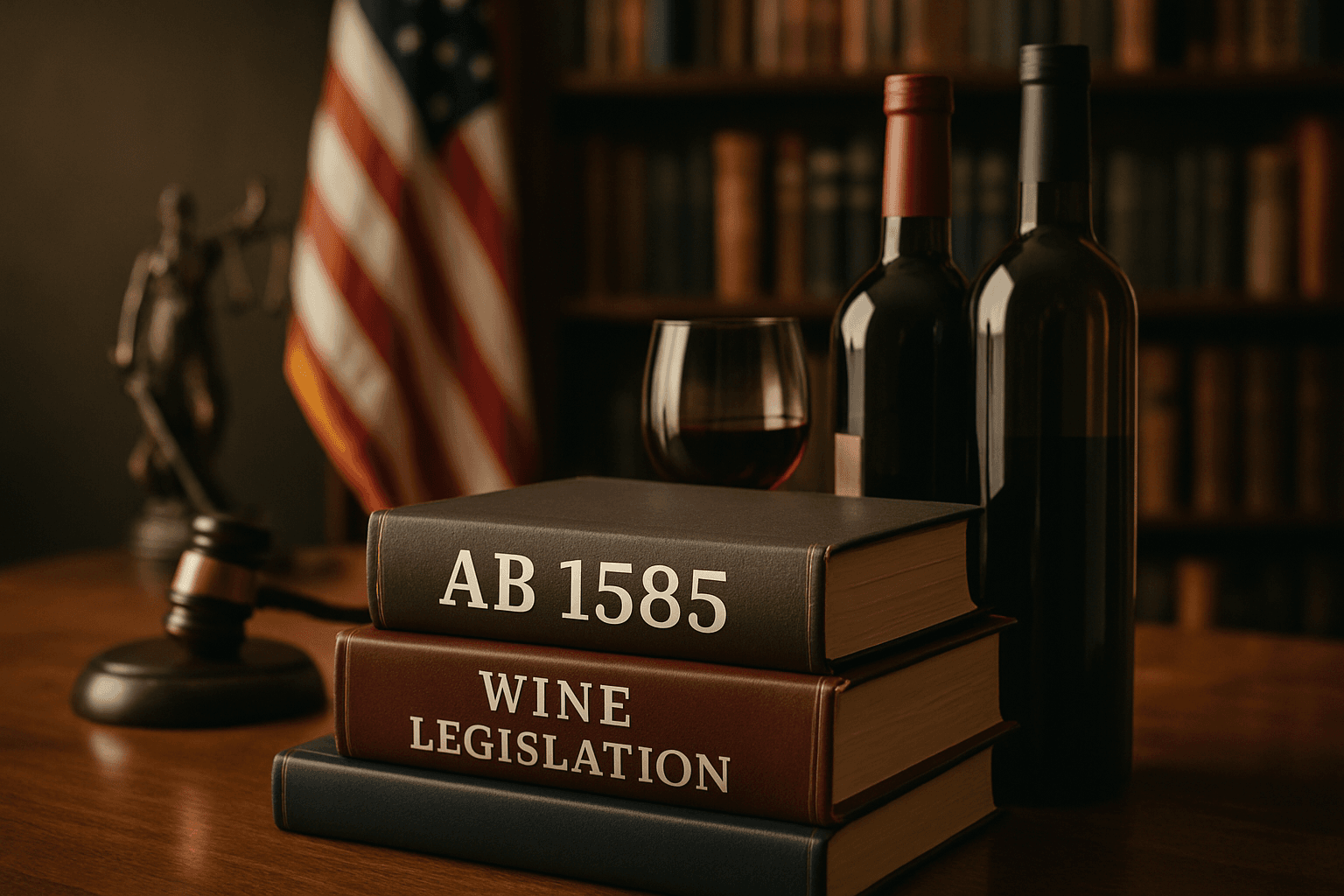
AB 1585 and the Push for New American Wine Legislation: What Liquor Retailers Need to Know Now
By Intentionally Creative9 min read
Listen to this article12:34
Schedule a free strategy call and Intentionally Creative will build a custom plan for you.
Schedule Your Free Strategy CallFree audit. No commitment.
Get a Free Audit. No commitment.
AB 1585 wine legislation could change what counts as 'American' wine. Here's how pending state and federal bills may affect your liquor license and retail ops.
You trust the labels on the bottles you sell. Your customers trust them even more. But what if one of the most basic labels in your wine section — "American" — doesn't actually mean what everyone thinks it means?
Right now, federal rules allow wineries to import bulk fermented juice from overseas, bottle it stateside, and call it American wine. No disclosure, no asterisk. AB 1585 wine legislation, currently moving through California's 2025–2026 session, would close that loophole by requiring 100% American-grown grapes for any wine carrying the "American" or "United States" appellation. It's a simple fix on paper — but the ripple effects for liquor retailers could be significant, touching everything from inventory sourcing to supplier relationships to day-to-day compliance.
Whether you run a single storefront in Sacramento or manage a multi-state retail operation, this bill — and the wave of related alcohol law changes rolling out alongside it — deserves your attention now, not after the rules change. Here's what's happening, what it means for your business, and exactly what you should be doing about it.
Under current federal rules, U.S. producers can import already-fermented bulk wine from countries like Chile and Australia, process and bottle it domestically, and slap an "American" label on the finished product. No requirement that a single grape was grown on American soil.
Discover how Provence transformed into a lifestyle brand. Learn provençal wine marketing tactics to boost regional Fr...
This loophole undercuts domestic growers who are actually farming American vineyards, and it misleads consumers who reasonably assume "American wine" means American grapes. For liquor retailers, it creates a hidden compliance and credibility risk — you're selling a product whose label doesn't mean what your customers think it means.
Co-sponsored by the California Association of Winegrape Growers (CAWG) and Family Winemakers of California, and introduced by Assembly Member Damon Connolly, the bill is straightforward: wines labeled with an "American" or "United States" appellation would need to be made from 100% American-grown wine grapes. Period.
The bill is currently in the 2025–2026 California Regular Session, with a committee hearing scheduled for April 2026 and a public comment deadline of April 10, 2026.
Independent stores can capture Syrah's momentum with smart displays, staff storytelling, and Old World/New World tast...
This isn't just a winery problem. As wine legislation continues to evolve — alongside new laws affecting liquor license holders, like the Type 93 Estate Tasting Event Permit taking effect January 1, 2026 — retailers need to think about what this means for inventory sourcing, supplier transparency, and compliance.
If the bill passes, some of the "American" wines on your shelves may no longer qualify for that label. Your suppliers will need to adjust — and so will you.
To understand why this legislation is gaining momentum, follow the money.
Discover how Uruguay's emerging wine export strategy can help independent liquor stores market lesser-known wine regi...
American grape growers can't compete on price with mass-produced foreign juice. They're dealing with higher labor costs, stricter environmental regulations, and the basic economics of farming in the U.S. When cheap bulk imports get bottled domestically and labeled "American," it creates a false price competition that legitimate producers simply cannot match. American farmers are getting squeezed out of their own market.
AB 1585 would fix this by mandating 100% American-grown grapes for any wine carrying a domestic appellation — a straightforward change with massive implications.
This flood of imports has contributed to a significant domestic grape glut. Oversupply drives prices down, threatens farmer livelihoods, and distorts what "value wine" actually means at retail.
The practical concern for you: if this legislation passes, those budget "American" wines could face relabeling, reformulation, or removal from shelves entirely. Understanding these compliance dynamics now — before any deadlines hit — means smarter buying decisions today instead of scrambling tomorrow.
AB 1585 isn't happening in a vacuum. California is rolling out several alcohol-related bills in the same session, and together they're creating a multi-front compliance landscape that every liquor retailer needs to understand.
Starting January 1, 2026, wineries can apply for the new Estate Tasting Event Permit (Type 93), giving them fresh ways to host consumer-facing events on their properties. For retailers, this matters because it opens another direct-to-consumer channel. Every bottle sold at an estate tasting event is a bottle that didn't move through your store. If you sell a lot of California wine, this could quietly shift purchasing behavior over time.
AB 720 allows wineries to host tastings and events directly in their vineyards. That's a significant expansion that could further erode retail foot traffic for wine sales, especially in wine-heavy California markets.
Meanwhile, expanded on-sale license privileges — like allowing Type 41/42 licenses to sell shochu — signal that California is broadly rethinking how alcohol licenses work. The regulatory ground is shifting under everyone's feet. Retailers who stay current will have an edge over those who don't.
The cumulative effect of these changes could reshape your competitive landscape quickly. Bulk wine imports currently labeled as "American" may disappear from shelves. Direct-to-consumer channels are expanding. License categories are evolving.
Staying informed isn't optional anymore — it's a competitive advantage.
The core tension behind AB 1585 is that the problem it's trying to fix is fundamentally federal. The TTB sets appellation rules, and those rules currently allow imported bulk wine to wear a domestic label.
The bill would mandate 100% American-grown grapes for any wine carrying a domestic appellation — a direct challenge to federal standards. Federal reform moves slowly, so California is doing what California does: going first.
If you follow wine legislation trends, you know the pattern: California acts, other states follow, and eventually federal agencies feel the pressure.
The practical takeaway for retailers: even if you're outside California, your suppliers probably aren't. Changes to compliance requirements in California ripple through the national supply chain. If you operate across state lines, this bill deserves a spot on your watch list now.
You don't need to wait for a committee vote to start protecting your business. Here's what smart operators are doing today.
The bill's sponsors are actively requesting industry input, and retailers rarely speak up — which means your voice carries outsized weight. If you have a position on AB 1585, submit a public comment letter before the April 10, 2026 deadline. Keep it brief, specific, and focused on how the legislation impacts your business operations. Letters received before the committee hearing become part of the official record.
AB 1585 wine legislation signals something bigger than a single labeling fix — a fundamental shift in how American wine is defined, labeled, and regulated. That shift has real consequences for what you stock, how you sell it, and how you stay compliant.
10+ years helping liquor retailers and beverage brands grow through data-driven digital marketing. Learn more
If the bill passes, some of the wine on your shelves right now could become a compliance problem. Products made with imported bulk juice but carrying a domestic appellation label could face pulls, supplier relabeling, or full replacements.
If you stock a significant volume of value-priced "American" wines — and most independent retailers do — start auditing now. Identify which SKUs carry the "American" or "United States" appellation and dig into where the grapes actually come from. The bill's committee hearing is scheduled for April 2026, so the window to get ahead of this is open but narrowing.
This is a conversation you need to have with your distributors — directly and on the record. Ask whether the wines they sell under American appellation labels are made entirely from domestically grown grapes. Get it in writing.
One thing worth noting even if you're outside California: AB 1585 wine legislation targets a federal-level labeling loophole. If it passes, it could set precedent for new laws in other states or prompt federal action from the TTB (Alcohol and Tobacco Tax and Trade Bureau — the agency that sets appellation rules). This isn't just a California problem.
Intentionally Creative specializes in digital marketing strategies that drive real results. Let us show you what's possible.
Schedule a CallThe retailers who win here are the ones who treat new legislation as a competitive advantage, not just a headache. Know what's coming. Prepare your operations. Use transparency as a selling point with customers who increasingly care about what's actually in the bottle.
We'll continue tracking AB 1585 and related developments — bookmark this page and check back as the April 2026 hearing approaches.
Your next move: Start with the checklist above. Audit your inventory, call your distributors, and if this bill matters to your business, make your voice heard before April 10, 2026. The retailers who prepare now won't be the ones scrambling later.