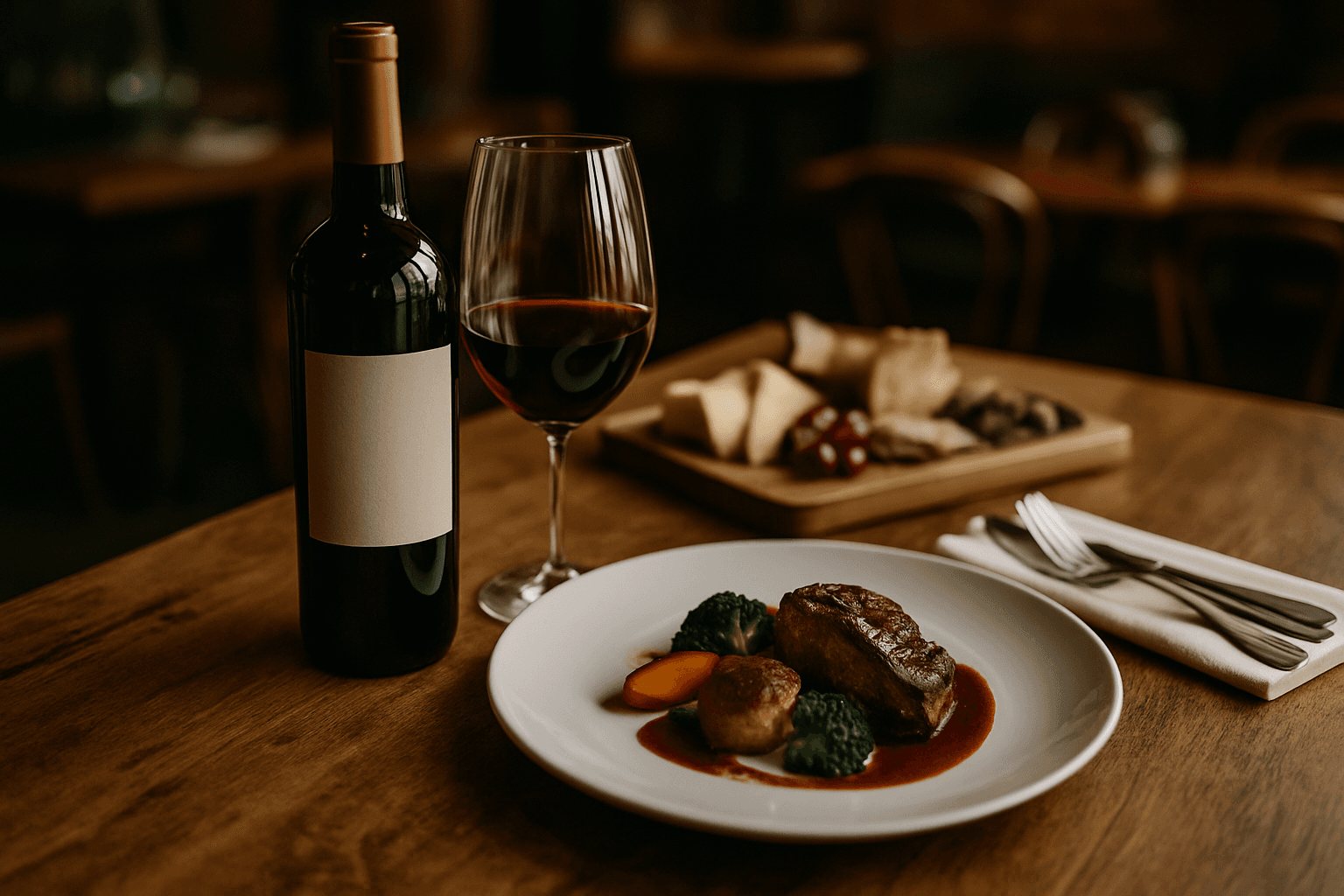
Beyond the Menu: How to Build a Wine and Food Pairing Program That Drives Premium Bottle Sales
By Alden Morris12 min read
Listen to this article16:22
Schedule a free strategy call and Intentionally Creative will build a custom plan for you.
Schedule Your Free Strategy CallFree audit. No commitment.
Get a Free Audit. No commitment.
Learn how to build a wine and food pairing program that boosts premium bottle sales. Practical strategies for liquor retailers and beverage operators.
You know the moment. A customer walks into your store, stands in front of your wine section for a full minute, picks up a bottle, puts it back, and repeats the cycle three more times. They're not browsing—they're paralyzed by choice. Finally, they grab something familiar and familiar only, pay, and leave. That $75 Malbec that would've made their ribeye dinner sing? Still on the shelf.
This scenario plays out in liquor stores across the country every single day. And it doesn't have to.
The most successful wine retailers aren't just stocking bottles—they're solving problems. They're closing the gap between "what wine do I want?" and "what wine will make tonight's dinner better?" That gap is exactly where a wine and food pairing program lives. Done right, it's not a marketing gimmick or a staffing burden—it's the engine that turns hesitant browsers into confident buyers, one-time purchasers into loyal regulars, and routine bottle grabs into premium sales. If you've been treating your wine section as a passive inventory exercise rather than an active selling opportunity, you're leaving real money on the shelf.
In this guide, we'll walk through everything you need to build a wine and food pairing program that actually works: from the foundational principles that make pairings click, to practical frameworks your staff can use on the floor, to marketing strategies that move bottles and events that build community. Whether you're running a boutique bottle shop or a high-volume liquor retailer, these strategies will help you turn expertise into revenue.
10 wine club marketing tactics that reduce the 40% year-one cancellation rate and boost member spending at your liquo...
Modern wineries and restaurants are increasingly designing wines with food as the intended experience. This shift is raising customer expectations for wine programs across retail, creating both a challenge and an opportunity for independent stores.
For liquor retailers, implementing a wine and food pairing program isn't just a nice-to-have—it's a competitive differentiator. The fundamental principle is simple: stellar wines can be diminished by wrong pairings while approachable wines can shine with the right match. This directly impacts your bottom line. When your customers experience this principle firsthand, they're more likely to return, spend more on premium bottles, and trust your recommendations.
Co-merchandisers suggest focusing on one aspect of the food-wine equation and using the other to supplement the dominant product. This practical approach makes building your program manageable, even with limited staff or space.
Discover how Provence transformed into a lifestyle brand. Learn provençal wine marketing tactics to boost regional Fr...
Top wine retailers understand that wine and food pairing involves exploring fundamental principles of taste and flavor profiles. They don't just stock bottles—they create experiences.
A strategic pairing program transforms transactional bottle purchases into memorable shopping experiences that justify premium pricing. When customers leave your store knowing exactly what to pair with their Malbec or Sauvignon Blanc, you've turned a one-time buyer into a loyal customer.
This isn't just marketing—it's a premium wine sales strategy that builds lasting customer relationships.
Independent stores can capture Syrah's momentum with smart displays, staff storytelling, and Old World/New World tast...
Most people assume wine and food pairing means matching a Chardonnay with chicken or Pinot Noir with salmon. But true pairing goes deeper than that.
According to Coursera's educational content ↗, wine and food pairing involves exploring fundamental principles of taste and flavor profiles—not just matching grape varieties to protein. A dish is more than its main ingredient. Success comes from understanding how sweet, salty, sour, bitter, and umami elements interact together.
This shifts your thinking from "what wine goes with salmon?" to "what wine complements this entire flavor profile?" Your wine and food pairing program should educate staff on these taste principles so they can make informed recommendations that elevate the dining experience.
The real challenge is keeping things simple for customers. As Daily.sevenfifty.com reports ↗, co-merchandisers suggest focusing on one aspect of the food-wine equation and using the other to supplement the dominant product—this prevents overwhelming customers with complexity.
The payoff is significant. Reddit r/AskCulinary discussions ↗ among wine enthusiasts note that stellar wines can be diminished by poor pairings while approachable wines can shine with the right match. When your team understands this approach, they can confidently suggest pairings that drive your premium wine sales strategy—whether you're building a restaurant wine program or a retail-focused wine pairing marketing initiative.
Now that you understand why pairing matters and how it works, let's talk about building the actual framework.
When developing a wine and food pairing program, flip the traditional approach. Instead of starting with your wine inventory, start with what your customers are actually cooking. Map your bottles against the meals they likely pair them with—grilled meats, pasta with tomato sauce, cheese boards, seafood, and vegetarian dishes. This exercise reveals natural pairing opportunities hiding in plain sight within your existing stock.
According to co-merchandising best practices, effective pairing programs focus on one element of the food-wine equation and use the other to complement it. Rather than trying to pair every wine with everything, let the dominant dish or wine lead the conversation. This keeps your recommendations clear and actionable.
As Reddit's culinary community ↗ has discussed, stellar wines can be diminished by poor pairings while approachable wines can shine with the right match. Your job isn't just selling premium bottles—it's connecting customers to the right bottle for what they're actually eating.
Structure your wine and food pairing program around 3-5 core pairing categories. These give your program structure without overwhelming staff or customers. Common categories include:
Build displays and staff recommendations around complementary flavor profiles. A customer selecting a ribeye shouldn't see your entire red section—they should see the two or three bottles that will genuinely elevate their meal. This focused approach becomes a powerful premium wine sales strategy, because when the pairing makes sense, trading up feels like an easy decision.
Your team is trained, your categories are set, and your staff is asking the right questions. Now it's time to bring the concept to life in ways that drive purchases beyond the one-on-one interaction.
Co-merchandisers suggest focusing on one aspect of the food-wine equation and using the other to supplement the dominant product. For liquor stores, wine is typically your dominant product—position complementary foods nearby to trigger impulse pairings. Think specialty cheeses near your Pinot Noir selection, or charcuterie boards displayed beside premium cured meats and your corresponding reds.
This approach works because stellar wines can be diminished by wrong pairings while approachable wines can shine with the right match, according to Reddit r/AskCulinary ↗. When customers see the pairing concept in action at your store, they're more likely to invest in a premium bottle knowing they'll have the full experience at home.
Nothing sells a wine and food pairing program like hands-on experience. Host tasting events where customers sample 2-3 curated combinations that demonstrate the principle in action. A bright Sauvignon Blanc alongside fresh goat cheese, or a bold Cabernet with a perfectly marbled steak—these pairings teach through taste.
Wine and food pairing involves exploring fundamental principles of taste and flavor profiles, as noted by Coursera ↗. Your events don't need sommelier-level complexity—just confident guidance that helps customers understand why certain combinations work. Each guest leaves with purchase intent and the knowledge to execute it.
Provide simple takeaway pairing guides customers reference at home. A laminated card or recipe sheet keeps your store top of mind when they're planning their next dinner party—and returning to buy those bottles.
In an era where customers expect instant answers and personalized recommendations, technology can extend your program's reach. But knowing when to lean on tools—and when to rely on human expertise—is the difference between efficiency and genuine connection.
AI-powered wine pairing technology is emerging as a practical tool to bring sommelier-level expertise to venues that couldn't otherwise support it—especially valuable for operations with larger inventories or self-service environments like wine walls and tasting bars. According to Coursera ↗, the wine and food pairing process involves exploring fundamental principles of taste and flavor profiles—a complex knowledge set that AI can help make accessible at scale.
When evaluating whether to incorporate these tools into your wine and food pairing program, consider your environment. Technology makes the most sense when customers need guidance outside peak hours, when your staff can't be everywhere at once, or when you're helping customers navigate unfamiliar wine regions.
Here's where most operators get it wrong: they let convenience replace connection. Co-merchandisers suggest focusing on one aspect of the food-wine equation and using the other to supplement the dominant product—the kind of nuanced thinking that requires human judgment.
Technology works best as a support tool, not a replacement for knowledgeable staff who can read customer preferences in real-time. As Reddit's culinary community ↗ often notes, stellar wines can be diminished by poor pairings while approachable wines can shine with the right match.
For your premium bottle sales strategy, prioritize human connection. When a customer is considering a $60+ bottle, they deserve a conversation, not a touchscreen recommendation. That's where personalized service justifies higher price points and builds the trust that keeps customers coming back.
10+ years helping liquor retailers and beverage brands grow through data-driven digital marketing. Learn more
You can have the best-curated selection and the most beautifully organized floor displays, but if your team can't articulate why a pairing works, you're leaving sales on the table. Your wine and food pairing program lives or dies by the people selling it.
The good news? You don't need a certified sommelier on every shift to build confidence and consistency. Resources like Wine Folly ↗ and platforms such as Coursera ↗, which covers fundamental principles of taste and flavor profiles, prove that systematic pairing approaches can be taught to any motivated team member.
Stop overwhelming staff with every wine's entire tasting notes. Instead, focus on teaching one dominant pairing element per wine category. According to co-merchandising best practices, the most effective approach is to focus on one aspect of the food-wine equation and use the other to supplement it. Train your team on two or three high-confidence pairings per category—wines become memorable when staff can confidently say, "This Malbec pairs beautifully with grilled ribeye." That certainty translates directly to your premium wine sales strategy.
Arm your team with questions, not just knowledge. Empower staff to ask customers about tonight's dinner rather than defaulting to preference questions like "Do you like red or white?" This shifts the conversation from abstract preferences to actionable recommendations. As Reddit's culinary community ↗ notes, stellar wines can be diminished by poor pairings while approachable wines can shine with the right match—your team becomes the bridge between customer and experience. When staff can paint a picture of how a bottle will elevate a specific meal, you're no longer selling wine. You're selling an outcome.
Intentionally Creative specializes in digital marketing strategies that drive real results. Let us show you what's possible.
Schedule a CallUse tech to handle volume. Use your team to close premium sales.
Your wine and food pairing program is only as strong as your ability to measure its impact on your bottom line. Without clear metrics, you're guessing—which is exactly the kind of approach that keeps independent operators from capturing premium margins.
The most straightforward way to validate your program: compare average bottle price before and after implementing pairing recommendations. If your team is consistently guiding customers toward higher-priced bottles through thoughtful suggestions, that lift tells the story for you.
Equally important is identifying which pairing combinations convert most frequently. Track which food-and-bottle pairings your staff recommends most often, then monitor whether those recommendations result in actual purchases. Your top performers deserve prime placement and should inform your ordering decisions.
Co-merchandisers suggest focusing on one aspect of the food-wine equation and using the other to supplement the dominant product. When customers experience that synergy firsthand, they remember it.
The most valuable feedback comes from conversations at the point of sale. Satisfied pairing customers often return for related bottles and recommend the experience to others. Train your team to listen for these signals and log them—returning customers and referrals are your strongest proof points that your wine and food pairing program is building long-term revenue, not just one-time sales.
Building a wine and food pairing program isn't about becoming a restaurant or staging elaborate tastings every weekend. It's about a simple mindset shift: stop selling wine as a product and start selling it as part of an experience. When a customer leaves your store knowing exactly what to pour with their Saturday night steak, you've given them something more valuable than a bottle—you've given them confidence, context, and a reason to come back.
The retailers winning on premium wine sales aren't the ones with the deepest cellars or the flashiest signage. They're the ones whose teams ask the right questions, make confident recommendations, and connect bottles to meals. Every element in this guide supports that goal: the fundamentals that teach how pairing works, the framework that structures what you recommend, the training that empowers your team, the marketing that draws customers in, the technology that scales your reach, and the metrics that prove your results.
Start where you are. Pick one pairing category, train your team on two confident recommendations, and put it to the test. Measure what happens. Refine. Then expand. A great wine and food pairing program isn't built in a week—but it's absolutely built one conversation at a time.
Your customers are already standing in front of your wine section, wondering what to buy. Give them a reason to choose the bottle that will make tonight better.