Bo Barrett and the Legacy of Chateau Montelena: What Retailers Should Know About This Iconic Estate
By Alden Morris31 min read
Listen to this article36:44
Schedule a free strategy call and Intentionally Creative will build a custom plan for you.
Schedule Your Free Strategy CallFree audit. No commitment.
Get a Free Audit. No commitment.
Discover how Bo Barrett's 40+ years at Chateau Montelena shape the wines retailers should stock today. Portfolio breakdown, pricing strategy, storytelling tips, and customer talking points for this iconic Napa estate.
Picture this: a bottle sits on your shelf with a story enshrined in the Smithsonian Institution, a Hollywood film behind it, and four decades of consistent winemaking under one family's watch. Now picture your sales associate telling the same 1976 anecdote every customer has already heard. That gap — between what Chateau Montelena actually offers retailers and how most shops pitch it — is costing you margin and repeat purchases.
Chateau Montelena carries a level of built-in cultural cachet that money cannot manufacture. Founded in 1882 by Alfred Tubbs — who bankrolled the estate with a fortune made selling rope to gold miners and sailors — the winery ranked as Napa's fourth-largest producer by 1896. The 1973 Chardonnay's upset victory at the 1976 Judgment of Paris didn't just put Montelena on the map. It accelerated Napa Valley's fine wine revolution by an estimated 20 years, according to Club Oenologique ↗. The 2008 film Bottle Shock cemented that origin story for a mainstream audience.
That recognition is rare. You stock hundreds of labels your staff has to hand-sell from scratch. Montelena walks in with homework already done — educated wine buyers know the name before they read your shelf talker.
Yet most retailers default to reciting the Paris tasting as if it were the entire value proposition. It isn't. And leaning on it exclusively creates a problem far worse than underselling.
Here's the contrarian truth: the Judgment of Paris story, over-relied upon, functions as a liability. It anchors Chateau Montelena in 1976 and risks making a living, evolving estate feel like a relic — something you'd find in a documentary, not in your weekend dinner plans.
Discover how Provence transformed into a lifestyle brand. Learn provençal wine marketing tactics to boost regional Fr...
Consumers under 45 have no emotional connection to a tasting that happened before their parents met. Framing Montelena as a historical curiosity alienates the very premium buyers — quality-driven, authenticity-seeking — who should be your core audience for this bottle. Robert Parker called Bo Barrett the "Cal Ripken of winemakers" for delivering a 30-year track record with no duds, as noted by Decanter ↗. That kind of consistency is the real selling point.
Wine retailers should stock Chateau Montelena because the brand delivers a rare combination of instant name recognition, proven quality under Bo Barrett's 44-plus years of continuous winemaking, and a price-to-prestige ratio that few Napa estates can match. Barrett has served as head winemaker since 1982 and CEO since 2013, making him one of the longest-tenured leaders in the valley. The family nearly lost the estate to a 2008 sale — the financial crash preserved their independence, and with it, a consistency of vision that corporate-owned labels struggle to replicate. The winery's Smithsonian-enshrined heritage gives your staff an effortless conversation starter, while the current portfolio — not a museum piece — gives customers a reason to come back. Stock it for the story. Reorder it for the wine.
Bo Barrett's four decades of quiet, disciplined work — not a single event from 1976 — is what makes this brand viable on your shelf in 2026. This guide reframes the Montelena pitch accordingly: lead with the living winery, the current vintage quality, the family stewardship that survived near-sale and succession. Use the Paris story as a powerful supporting detail, not the headline.
The recommendation: Train your floor staff to open with Bo Barrett and close with the Judgment of Paris — not the other way around. The history earns credibility. The winemaker earns the second bottle.
Independent stores can capture Syrah's momentum with smart displays, staff storytelling, and Old World/New World tast...
What does it mean when a single winemaker has touched every vintage a storied estate has produced for over five decades?
Bo Barrett has been winemaker at Chateau Montelena since 1982 and CEO since 2013, making him one of the longest-tenured leaders in Napa Valley. He has been involved in every single vintage since 1972 — 44-plus years and counting — starting with manual labor: crushing grapes and running the hand-bottling line before ascending to winemaker and ultimately chief executive. Robert Parker called him the "Cal Ripken" of winemakers for a 30-year track record with no duds. His father Jim Barrett revived the estate in 1972 after winemaking had ceased for nearly two decades following Prohibition, and Bo was there from day one, building the operation with his hands before ever directing it with his palate. That continuity is not inherited prestige — it is earned authority, vintage by vintage, for over half a century.
Bo wasn't watching from the sidelines during the 1973 Chardonnay vintage that won the 1976 Judgment of Paris. He was a young cellar worker, physically making the wine that would accelerate Napa's fine wine revolution by an estimated 20 years. He didn't just inherit the legacy. He crushed the grapes that created it. And the talent runs deeper than one person — Bo is married to Heidi Barrett, the winemaker behind the first vintage of Screaming Eagle, one of Napa's most respected consultants ↗. That household represents a concentration of winemaking expertise that has no real parallel in American wine.
Winemaker turnover is rampant. Corporate acquisitions shuffle talent like playing cards. Bo's tenure stands in sharp contrast, and retailers should understand exactly why that matters to their bottom line:
Discover how Uruguay's emerging wine export strategy can help independent liquor stores market lesser-known wine regi...
Bo's winemaking favors restraint over extraction, balance over blockbuster scores, and ageability over instant gratification. According to Decanter's profile of Barrett ↗, his approach produces wines that reward cellaring but remain approachable on release — a rare combination that solves a real retail problem.
Here's the practical implication: vintage variation at Montelena is narrow. The 2018 and the 2022 Cabernet share a recognizable DNA. Your staff can recommend any recent vintage with confidence, which eliminates the "vintage roulette" problem that plagues hand-sell recommendations on other producers. That means less training time, fewer awkward moments at the register, and stronger repeat purchases from customers who trust that the next bottle will deliver the same experience as the last one.
The answer to the question above is straightforward: Bo Barrett's 50-year presence at Chateau Montelena isn't a biographical curiosity — it's a commercial asset. For retailers, his tenure translates directly into product reliability, a compelling floor story, and a wine philosophy that makes every vintage a safe recommendation. Stock it, sell it with conviction, and let the consistency do the work.
Picture a rope salesman standing on the San Francisco docks in the 1850s, watching miners and sailors hand over fistfuls of gold dust for the lines they needed to stake claims and rig ships. That rope salesman was Alfred Tubbs, and the fortune he built from those transactions funded something far more enduring than cordage — a stone castle tucked into the hills above Calistoga that would, more than a century later, change the trajectory of American wine.
Tubbs broke ground on A.L. Tubbs Winery in 1882, constructing the Gothic stone château that still anchors the property. By 1896, the estate ranked as Napa's fourth-largest winery — a genuine powerhouse in an era when California wine meant bulk jug production, not collector bottles. The property earned a spot on the National Register of Historic Places, a designation shared by vanishingly few Napa wineries and one worth mentioning to any customer who cares about provenance.
Then Prohibition gutted everything. Winemaking at the estate ceased for nearly two decades, and the property drifted through a succession of owners who used it for everything except its intended purpose. The revival didn't come until 1972, when Jim Barrett — a Los Angeles attorney with more conviction than capital — pooled resources with partners to purchase the neglected estate. His ambition was blunt: make wine that could stand next to the best Burgundy and Bordeaux on the planet. He had three vintages to prove himself right.
Chateau Montelena was founded in 1882 by Alfred Tubbs, who built his fortune selling rope during the California Gold Rush. The estate became one of Napa Valley's largest wineries by the 1890s before Prohibition shut down production for nearly two decades. Jim Barrett revived the property in 1972, and just four years later, the winery's 1973 Chardonnay defeated top French white Burgundies at the famous 1976 Judgment of Paris — a blind tasting organized by British wine merchant Steven Spurrier. That winning bottle now sits in the Smithsonian's permanent collection. The event legitimized California as a world-class wine region and, according to Club Oenologique ↗, accelerated Napa's fine wine revolution by an estimated 20 years. Bo Barrett, Jim's son, took over as winemaker in 1982 and has led the estate as CEO since Jim's death in 2013, making him one of Napa's longest-tenured winery leaders.
Most retail staff lead with the wrong story. They open with "Have you seen Bottle Shock?" or launch into a history lecture about the 1976 Judgment of Paris — and watch the customer's eyes glaze over. The Judgment of Paris is a closer, not an opener. Flip the script, and you'll sell more wine.
Your staff doesn't need a wine degree. They need a framework. Here's one that works every time:
"This is from one of Napa's most consistent estates — same winemaker for over 40 years, family-owned, never sold out. Oh, and they're also the winery that beat France in 1976."
That last line lands like a punchline because it is one. Bo Barrett has been making wine at Chateau Montelena since 1982 and serves as CEO since 2013 — Robert Parker called him the "Cal Ripken" of winemakers, a nod to his unbroken track record with no duds across decades ↗. Lead with that credibility. The Paris story hits harder as a reveal than as a pitch.
What to do instead of opening with history:
Not every customer responds to the same hook. Match the story to the buyer standing in front of you.
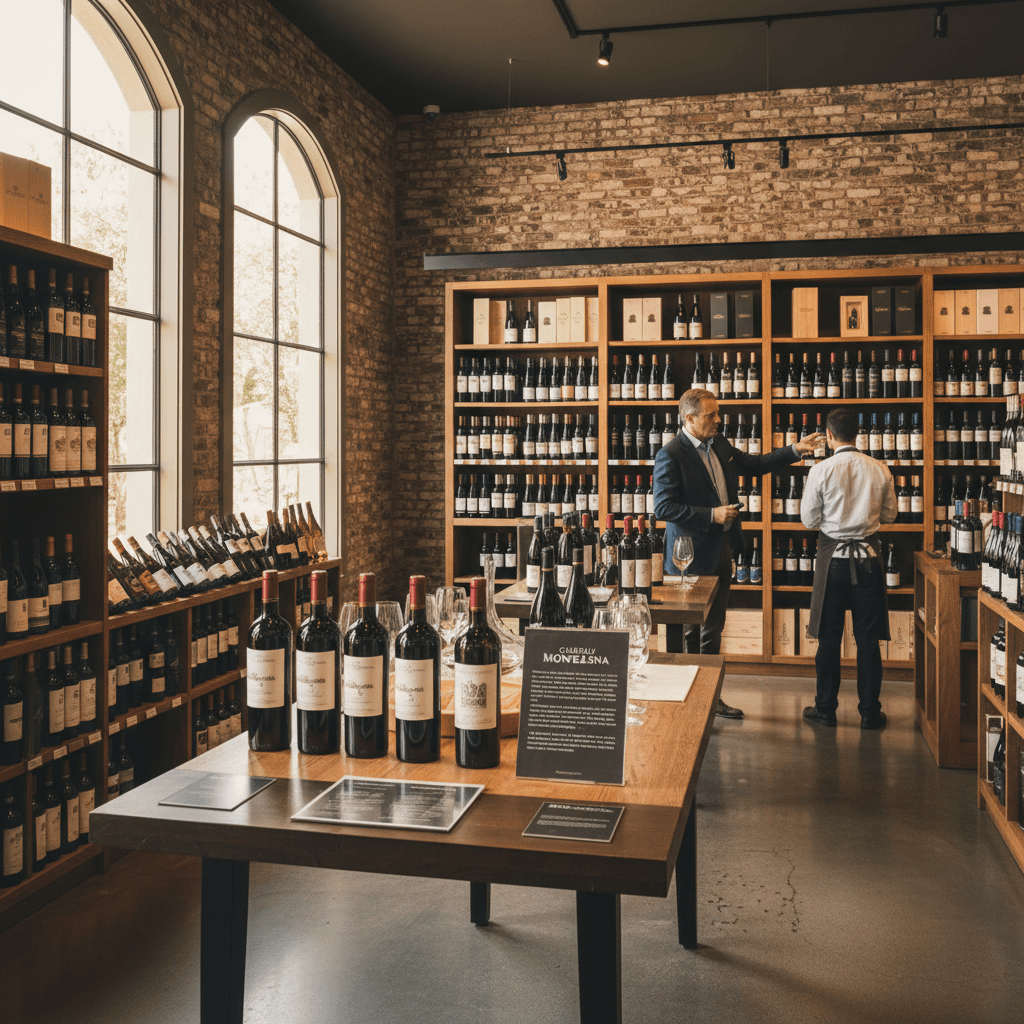
Start with the Estate Cabernet Sauvignon the next time a customer asks about Chateau Montelena — it's the anchor of the portfolio and the wine that sparks the most questions. Here are the four you'll hear most often, with answers that sell.
Yes. Bottle Shock (2008) dramatized the 1976 Judgment of Paris, where the 1973 Chateau Montelena Chardonnay beat out white Burgundy's finest in a blind tasting that changed American wine forever. But here's your real selling line: "The winemaker who was there in 1976 is still making the wine today." Bo Barrett arrived at the estate in 1972, became head winemaker in 1982, and has held the role for over four decades — one of the longest tenures in Napa Valley history ↗. The movie gets them curious. Bo's 44-plus years of continuous involvement closes the sale. Don't let the conversation end at Hollywood trivia; pivot straight to what's in the bottle right now.
Frame it this way: Chateau Montelena is family-owned, estate-driven, and made by the same winemaker since 1982. Name another Napa Cabernet at a comparable price point where all three of those things are true. Most corporate-owned competitors at $50–$150 rotate winemakers every five to eight years, chasing styles and scores. Robert Parker called Bo Barrett the "Cal Ripken" of winemakers — a 30-year track record with no duds, according to Club Oenologique ↗. That consistency is a real cost driver, not a marketing story. If your customer flinches at the Cabernet price, put the Riesling or Zinfandel in their hands — both deliver the Montelena pedigree at a friendlier entry point.
10+ years helping liquor retailers and beverage brands grow through data-driven digital marketing. Learn more
Here's the retail reframe that separates good hand-selling from lazy storytelling: the Judgment of Paris happened 50 years ago. Use it as proof of pedigree, not as your primary pitch. You wouldn't sell a 2024 Mercedes by leading with Karl Benz inventing the automobile. The Paris victory gets the customer's attention — what you say next closes the sale.
The era that matters most to your shelf is 1982 to present. That year, Bo Barrett formally took the winemaker role and began a systematic overhaul of the Cabernet Sauvignon program that Robert Parker would later acknowledge by calling him the "Cal Ripken" of winemakers — 30-plus consecutive vintages with no duds. Forty-four years of continuous involvement at a single estate is almost unheard of in Napa, where winemaker turnover rivals that of NFL head coaches.
Bo's quiet shift from Chardonnay-famous winery to Cabernet-flagship estate mirrors Napa Valley's own evolution from white-wine curiosity to the global epicenter of collectible Cab. Retailers can use Montelena as a microcosm of that larger story — and the near-sale to Michel Reybier (owner of Bordeaux's Château Cos d'Estournel) in 2008, which collapsed when the financial crisis voided the deal, only sharpens the narrative. This family chose to stay. That decision, more than any trophy from 1976, defines what Chateau Montelena means on your shelf today.
Most retailers make the same mistake with Chateau Montelena: they lead with the Estate Cabernet. It's the obvious play — prestige label, triple-digit price tag, built-in story. It's also the wrong move. The smarter shelf strategy starts at the other end of the portfolio, with two wines most customers don't even know Montelena makes.
Chateau Montelena's dry Riesling — typically retailing under $35 — is one of Napa Valley's best-kept secrets. In a region drowning in Cabernet Sauvignon, a bone-dry, mineral-driven Riesling from an estate that beat Burgundy at its own game in 1976 is a pitch that writes itself. The wine delivers white peach, wet stone, and a racy acidity that puts most Alsatian imports at the same price to shame. At under $35, this is a revelation — and a conversation starter that gets new customers through your door.
The Zinfandel deserves equal attention. Sourced from old-vine sites, it runs deep with brambly dark fruit, black pepper, and a savory streak that separates it from the jammy Zin stereotype. This wine proves Montelena is a complete winery, not a one-varietal act. Stock it next to the Riesling and you've built a $25–$40 entry ramp into one of Napa's most storied estates. Get a customer hooked here, then walk them up to Chardonnay and Cabernet. That's a portfolio ladder — and most retailers ignore it because they skip straight to the flagship.
Here's your talking point, distilled to one sentence: This is the estate that beat Burgundy in 1976 — and the current wine is better than what won that tasting. That's not hyperbole. Bo Barrett has been refining this Chardonnay since 1982, over four decades of continuous winemaking at a single property. According to Club Oenologique ↗, Robert Parker once called Barrett the "Cal Ripken" of winemakers — a 30-year track record with no duds. That streak now stretches past 40 years.
The style runs cool and restrained compared to the opulent, butter-bomb Napa Chardonnays that dominate most retail shelves. Think crisp citrus, green apple, subtle oak integration, and a flinty minerality closer to Meursault than Carneros. Retailing in the $50–$65 range, it occupies a sweet spot: roughly half the price of entry-level white Burgundy from comparable producers, with more consistency vintage to vintage. For customers recoiling from $90+ Puligny-Montrachet, this Chardonnay isn't a consolation prize. It's an upgrade.
The Estate Cabernet is where Chateau Montelena's prestige converts to margin. Retailing north of $100, this wine carries the full weight of the brand — structured, dark-fruited, built on firm Calistoga tannins and a backbone that demands five to fifteen years of cellar time. Black currant, graphite, dried sage, and a brooding intensity that rewards patience.
But here's the critical retail insight: this wine works best as a destination, not a starting point. A customer who has already tasted the Riesling's precision or the Chardonnay's restraint arrives at the Estate Cabernet understanding what Montelena stands for. That context justifies the price and builds the kind of brand loyalty that drives repeat purchases. Push the cellar-worthiness angle hard — encourage customers to buy by the half-case for aging. That single recommendation can double your case volume on a SKU you're already stocking.
Chateau Montelena produces five core wines — a dry Riesling, old-vine Zinfandel, Napa Valley Chardonnay, Estate Cabernet Sauvignon, and a limited Cabernet — and retailers should stock three to four SKUs to tell the full brand story. The optimal assortment runs Riesling or Zinfandel as the entry point ($25–$40), the Napa Valley Chardonnay in the mid-tier ($50–$65), and the Estate Cabernet as the anchor ($100+). This structure creates a portfolio ladder that converts first-time buyers into collectors. The Riesling and Zinfandel acquire customers cheaply; the Chardonnay trades on the 1976 Judgment of Paris legacy as a Burgundy alternative; the Estate Cabernet delivers prestige margins and case depth through aging-driven multi-bottle purchases. Group all Montelena wines together on the shelf rather than siloing by varietal — the brand narrative is the organizing principle, not grape variety.
One merchandising move that pays dividends: rotate your entry-level Montelena pick by season. The Riesling dominates from May through August — crisp, dry, perfect patio wine with a pedigree story. Swap in the Zinfandel for fall and holiday tables, where its weight and spice profile match the food. The Chardonnay sells year-round without effort. And the Estate Cabernet? Feature it during November–December gift season and at collector events, where the 1976 backstory and cellar-worthy profile justify the spend. According to Bo Barrett's own biography ↗, the estate's philosophy has always prioritized balance and longevity over flash — a selling philosophy your staff can echo at every price tier in the lineup.
Intentionally Creative specializes in digital marketing strategies that drive real results. Let us show you what's possible.
Schedule a CallThe history buff: Go deep. Alfred Tubbs founded the estate in 1882 with money earned selling rope to Gold Rush miners and sailors. By 1896, it ranked as Napa's fourth-largest winery. The 1973 Chardonnay that won in Paris now sits in the Smithsonian. The property holds a listing on the National Register of Historic Places. These details reward curiosity — use them.
The quality-driven buyer: Skip the history and talk about the wine. Bo Barrett has touched every vintage since 1972. The winery was nearly sold to Michel Reybier — the owner of Château Cos d'Estournel — in 2008, but the financial crisis killed the deal and preserved its independence. According to Decanter ↗, that near-miss only sharpened the family's commitment to long-term quality over short-term profit. Parker's "Cal Ripken" comparison isn't nostalgia — it's a verdict on consistency.
The younger or adventurous buyer: Do not lead with Cabernet. Start with the Riesling or the Zinfandel. Emphasize family independence and range. This customer wants to discover something their friends haven't posted about yet. Frame Montelena as the insider pick, not the establishment choice.
The gift buyer: This is where the Paris story earns its keep. "A bottle from the winery that changed wine history" — that sentence does the selling for you. It fits on a gift card. It justifies the price point without explanation.
Three errors kill Montelena sales on the floor:
Don't open with Bottle Shock. The 2008 film dramatized the story, but it was a mediocre movie — and leading with it signals that your staff has nothing deeper to offer. Serious wine buyers will mentally downgrade the recommendation.
Don't position Montelena as a nostalgia play. Calling it a "historic" or "collector" brand alienates the everyday premium buyer spending $40–$75. This is a working winery producing current-vintage wines of real merit, not a museum piece.
Don't oversell the Cabernet while ignoring the portfolio. The Estate Cabernet gets the headlines, but the Chardonnay carries its own legacy, and the Riesling builds relationships with customers who come back monthly rather than annually. You're leaving revenue and repeat visits on the table every time you skip the rest of the lineup.
Wine retail staff should talk about Chateau Montelena by leading with its current quality and winemaker credentials before mentioning its famous history. Bo Barrett has served as winemaker since 1982 and CEO since 2013, giving him one of the longest tenures in Napa Valley — a fact that signals stability and consistency to any buyer. Staff should mention that the estate remains family-owned and has never changed hands, then use the 1976 Judgment of Paris victory as a secondary credibility point rather than the primary pitch. For history-minded customers, details like the 1882 founding and the Smithsonian bottle resonate. For quality-focused buyers, Robert Parker's "Cal Ripken" comparison speaks volumes. For gift purchases, "the winery that changed wine history" closes the sale. Staff should avoid referencing the film Bottle Shock as an opener and should never reduce the brand to its Cabernet alone — the full portfolio drives repeat business.
The Estate Cabernet drinks well young but rewards patience: 15–25 years in proper storage. The Chardonnay ages gracefully for 5–10 years, which surprises customers conditioned to think California Chardonnay is a drink-now proposition. Riesling and Zinfandel sit in the 3–7 year window. Bo Barrett's winemaking philosophy emphasizes structure — firm tannins, balanced acidity, restrained oak — and that translates directly into ageability. This is a genuine differentiator against the wave of modern Napa wines engineered for 95-point instant gratification. Smart retailers use aging potential as a volume driver: "Buy three — drink one now, open one in five years, forget about the third until 2040."
Skip the vague "pairs well with food" language. Be specific. The Riesling is electric with sushi, Thai green curry, or a charcuterie board — its acidity cuts through richness and heat. The Zinfandel owns BBQ ribs, braised short ribs, and Friday night pizza. Chardonnay pairs beautifully with roast chicken, butter-poached lobster, or creamy mushroom pasta. And the Estate Cabernet? Prime rib, a dry-aged ribeye, or a wedge of aged Comté. Confident, specific pairing recommendations turn browsers into buyers — and they give customers a reason to come back and tell you how dinner went.
The four most common customer questions about Chateau Montelena wines center on the winery's connection to the 2008 film Bottle Shock, whether the wines justify their premium pricing, how long each wine can be cellared, and what foods pair best with the portfolio. Retailers should know that the film is based on the true story of the 1976 Judgment of Paris, where Chateau Montelena's 1973 Chardonnay defeated top French Burgundies in a blind tasting. The pricing reflects family ownership since 1972, estate fruit, and Bo Barrett's unbroken tenure as winemaker since 1982 — factors that most corporate-owned Napa competitors cannot match. The Estate Cabernet ages comfortably for 15–25 years, the Chardonnay for 5–10, and the Riesling and Zinfandel drink best within 3–7 years. Pairing recommendations should be specific and confident: Riesling with sushi, Zinfandel with BBQ, Chardonnay with roast chicken, Cabernet with prime rib.
Keep a printed pairing card near the Chateau Montelena shelf — it answers the food question before staff even open their mouths, and it moves bottles while you're busy with another customer.
Before: Your staff says, "This is the wine that beat France in 1976," the customer nods politely, buys a $15 Malbec, and walks out. After: Your staff says, "This family has had the same winemaker for 44 years — Bo Barrett doesn't miss. Start with the Riesling, and when you're ready, the Cabernet will change how you think about Napa." That customer comes back three times.
The gap between those two scenarios is training, portfolio strategy, and a shelf talker rewrite. Here's your playbook.
The Judgment of Paris is your supporting evidence, not your headline. If your staff pitch starts and ends with a Chardonnay from five decades ago, you're selling a museum exhibit, not a wine. Bo Barrett has been winemaker since 1982 and CEO since 2013 — one of Napa's longest-tenured leaders ↗. Robert Parker called him the "Cal Ripken" of winemakers for a 30-year track record with no duds. That's your story.
Do this week: Rewrite your shelf talker. Lead with "Family-owned. Same winemaker since 1982. Every vintage, no exceptions." Drop the Paris story to the second paragraph.
If you only stock the Cabernet, you're leaving money on the counter. The Riesling and Zinfandel exist for a reason — they're your customer acquisition tools priced to convert browsers into buyers.
A ladder works because it gives your staff somewhere to guide people. "You liked the Riesling? The Zin is your next step. Then we talk Cabernet." That's a relationship, not a transaction.
Print three things: the 30-second pitch from Section 5, the FAQ answers from Section 6, and the portfolio comparison from Section 4. Hold a 15-minute staff huddle before your next weekend shift. That's it.
As Bo Barrett told Club Oenologique ↗, the winery's identity runs through consistency and family commitment — not a single competition result. Your team needs to internalize that distinction.
"Your competitor down the street stocks the same bottles. The difference is whether your team can sell the story or just point at the shelf. Which one are you?"
The best retail strategy for selling Chateau Montelena wines starts with reframing the narrative away from the 1976 Judgment of Paris and toward Bo Barrett's 44-year tenure as winemaker — a consistency story no competitor can match. Stock at least two SKUs, using the Riesling or Zinfandel as an accessible entry point at eye level and the Estate Cabernet Sauvignon as a trade-up destination. Train staff to deliver a 30-second pitch rooted in family ownership, winemaker longevity, and current quality rather than historical trivia. Retailers who build a portfolio ladder and invest 15 minutes in team training convert single-bottle buyers into repeat customers across multiple price points. Chateau Montelena sells itself once your team stops treating it like a history lesson and starts treating it like what it is: a family-run estate producing benchmark Napa wines every single vintage since 1982.
Your move: Pick one action from this playbook and execute it before close of business today. Rewrite the shelf talker, place the Riesling order, or schedule the huddle. One action, this week. The bottles are already on your shelf — now give your team the tools to move them.
Chateau Montelena gained international fame when its 1973 Chardonnay won the legendary 1976 Judgment of Paris, a blind tasting where California wines beat top French Burgundies and Bordeaux. But the estate's relevance extends well beyond that milestone. Today, Chateau Montelena is regarded as one of Napa Valley's premier producers, anchored by its Estate Cabernet Sauvignon and a Chardonnay program that emphasizes a restrained, age-worthy style rare among California whites. For retailers, the brand offers a compelling combination of historic prestige, consistent critical acclaim, and a story that practically sells itself on the shop floor.
Bo Barrett has been involved with Chateau Montelena for over 50 years, first growing up on the estate when his father Jim Barrett purchased it in 1972, and later serving as winemaker and CEO. His continuity at the helm has ensured a remarkably consistent house style, particularly the estate's hallmark of balanced, structured wines built for longevity rather than chasing trends. For retailers, Bo's personal brand carries significant weight — he is a recognizable figure in the wine world, featured in the 2008 film Bottle Shock, and his long tenure signals authenticity and commitment that resonates with collectors and educated consumers alike.
The portfolio centers on four wines. The Estate Cabernet Sauvignon is the flagship, sourced entirely from the Calistoga estate and typically priced in the premium Napa tier — it appeals to collectors seeking age-worthy, terroir-driven reds. The Napa Valley Chardonnay is fermented without malolactic conversion and aged without new oak, making it a standout recommendation for customers who say they "don't like California Chardonnay." The Zinfandel, sourced from select Napa and Sonoma vineyards, offers a more accessible entry point and strong by-the-glass potential. A small-production Riesling rounds out the lineup as a conversation-starter and a way to showcase the estate's range beyond red wine.
The 1976 Judgment of Paris is one of the most recognizable narratives in wine history — it was the tasting that changed the world's perception of California wine overnight. Retailers can use it as a powerful hand-sell tool: a simple line like "This is the estate that beat France in a blind tasting and put Napa Valley on the map" immediately creates intrigue and justifies the price point. The story also lowers the barrier for less experienced buyers who may not know Napa appellations but respond to a compelling origin story. Pairing a shelf-talker or end-cap display with this narrative can meaningfully lift sell-through, especially around key gifting seasons.
Yes, Chateau Montelena remains under Barrett family control. In 2008, the family considered a sale to the French luxury conglomerate that owns several Bordeaux estates, but ultimately decided to keep the winery independent — a decision that reinforced their commitment to legacy over profit-taking. Today, the estate is overseen by a family-led board, and Bo Barrett's continued involvement ensures that winemaking decisions remain driven by quality rather than corporate targets. For retailers, family ownership is a proven authenticity selling point: it signals long-term thinking, estate integrity, and the kind of personal accountability that resonates strongly with consumers increasingly skeptical of corporate wine brands.