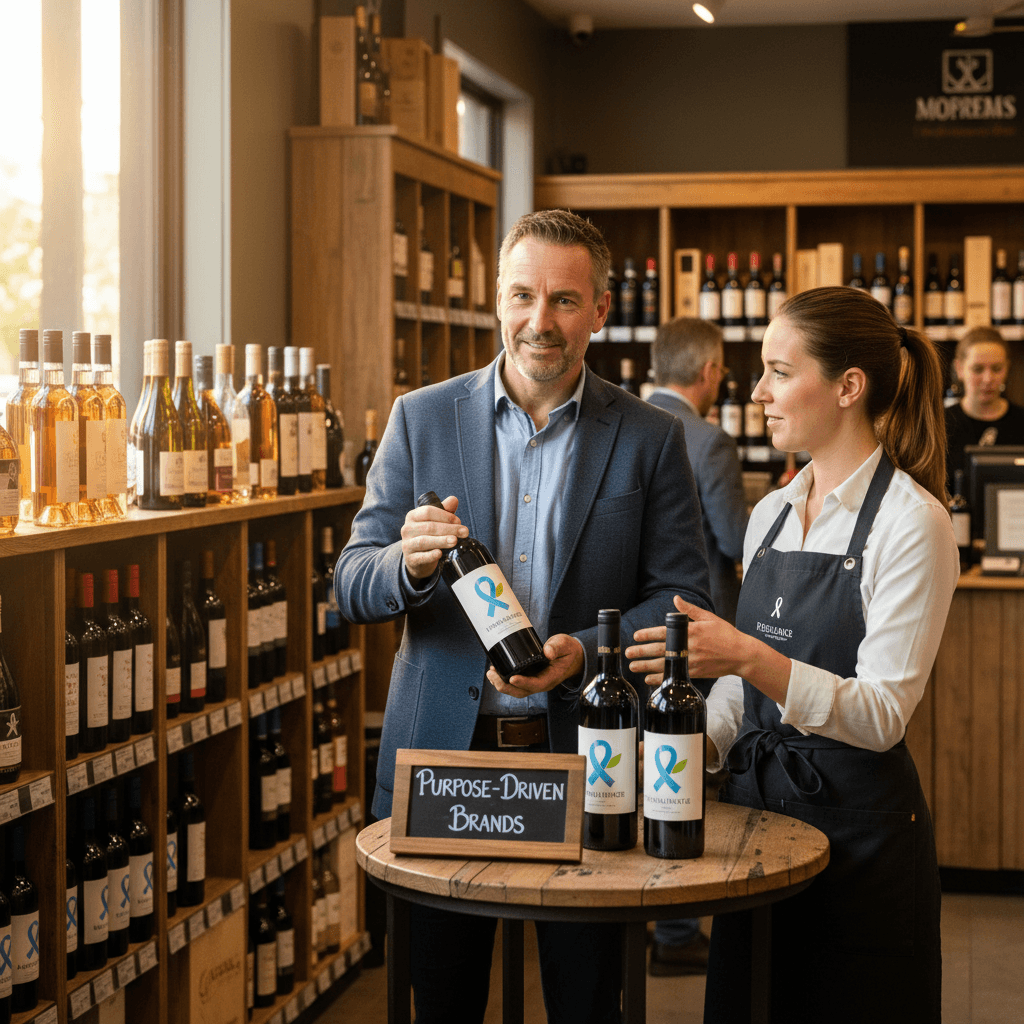
Cause Marketing in the Bottle Shop: What L'Angolo Estate's Mental Health 'Resilience' Wine Teaches Retailers About Stocking and Promoting Purpose-Driven Brands
By Intentionally Creative12 min read
Listen to this article17:03
Schedule a free strategy call and Intentionally Creative will build a custom plan for you.
Schedule Your Free Strategy CallFree audit. No commitment.
Get a Free Audit. No commitment.
Discover how cause marketing in liquor retail drives sales and loyalty. Learn to stock and promote purpose-driven brands like L'Angolo Estate's Resilience wine.
Here's a question worth sitting with: what if the next bottle that transforms your sales floor isn't the one with the highest score or the splashiest label — but the one with a mission behind it? Cause marketing in liquor retail has quietly moved from "nice idea" to "measurable business strategy," and the retailers paying attention are already seeing the payoff. The rest are wondering why their shelves all look the same as the shop two blocks over.
L'Angolo Estate's Resilience wine — an Australian bottle built from the ground up to fund mental health initiatives — is one of the clearest examples of what this shift looks like in practice. It's not a limited-edition gimmick or a holiday tie-in. It's a commercially viable product with a cause baked into its DNA, and it offers a blueprint for how independent retailers can stock, merchandise, and promote purpose-driven brands without sacrificing margin or credibility.
In this post, we're breaking down the full picture: the consumer data that makes the case, the real-world revenue numbers, the merchandising tactics that work, the regulatory lines you need to respect, and a concrete action plan you can start executing this week. No fluff. No guilt trips. Just a strategy guide for turning purpose into profit.
Let's skip the warm-and-fuzzy preamble. You're running a business. You need bottles that move off shelves, not collect dust while making the world a better place. Totally fair.
But here's the thing: cause marketing in liquor retail isn't charity — it's strategy. And the numbers back it up.
10 wine club marketing tactics that reduce the 40% year-one cancellation rate and boost member spending at your liquo...
Today's shoppers — particularly Millennials and Gen Z — actively choose brands aligned with social causes. This isn't a hunch. Forbes has reported that social good "moves this generation" and that trust is now the real currency driving purchase decisions in food and beverage. These aren't fringe buyers, either. They're your growing customer base.
And they're spending. The US alcohol industry is one of the largest consumer goods sectors on the planet, with marketing expenditures so massive they've drawn dedicated NIH research. In a landscape that crowded, differentiation through purpose isn't a gimmick — it's a competitive edge.
Consider this: Southeastern Grocers raised $368,000 in a single holiday cause marketing campaign at the retail level. That's real revenue generated by connecting products to something customers care about. Mental health awareness wine taps into one of the most prominent social causes of the 2020s — and Forbes reporting suggests issues like mental health rank particularly high in driving consumer purchase intent.
This isn't a stretch. Colangelo & Partners — one of the most respected communications firms in the beverage space — has described wine and spirits as a natural fit for cause-based branding and sales models. The social nature of drinking, the storytelling baked into every label, the emotional connection people already have with their favorite bottles — it all lends itself to purpose-driven wine brands that actually resonate.
Discover how Provence transformed into a lifestyle brand. Learn provençal wine marketing tactics to boost regional Fr...
And here's a practical detail worth knowing: TTB regulations don't require pre-approval of alcohol advertisements, giving you real flexibility to create cause-marketing messaging at the point of sale without a federal review bottleneck.
So what does stocking cause-related alcohol brands actually look like in practice — and does it pay off? Let's start with one brand that's doing it right.
L'Angolo Estate isn't slapping a ribbon on a label and calling it a day. The Australian winery created its Resilience wine with a specific mission baked into the brand from the start: raising awareness and funds for mental health support. A portion of proceeds goes directly toward mental health initiatives, making every bottle sold a small act of advocacy.
This matters for your shelves because cause marketing works best when the story is authentic — not bolted on as an afterthought. Resilience is the product. The cause isn't a seasonal promotion. It's the reason the wine exists.
Discover 10 proven SMS marketing strategies for liquor stores that drive customer loyalty. Learn compliance tips, seg...
In a US alcohol market where marketing spend runs into the billions, a genuine differentiator like this cuts through noise that bigger budgets alone can't solve.
Not all causes carry equal weight with today's shoppers. Mental health sits near the top of the list in the 2020s — driven by post-pandemic awareness, reduced stigma, and a generational willingness to talk openly about wellbeing.
We've seen this playbook work before. Purpose-driven wine brands like McBride Sisters Collection leveraged their founders' story — diversity, equity, social impact — into a nationally distributed powerhouse. The lesson? When the narrative is real and the product delivers, retailers don't have to choose between doing good and moving units.
Resilience follows that same trajectory. It's positioned not as a charity project but as a commercially viable bottle with a story compelling enough to stop a customer mid-aisle. That's the kind of stocking decision that pays off in both margin and customer loyalty.
Let's talk numbers. Because if cause marketing doesn't move bottles, it doesn't matter how noble the mission is.
Remember that Southeastern Grocers campaign — $368,000 raised in a single holiday season? That wasn't just charitable impact. It was proof of customer willingness to spend more when a purchase feels meaningful. And it happened in the grocery/liquor space, not some niche boutique environment.
Now scale that thinking down to your store. You don't need six figures to win. You need a shelf that tells a story your competitor's shelf doesn't.
Purpose-driven wine brands aren't competing by outspending the big guys — they're competing by out-mattering them. As Forbes has noted, combining corporate efforts with charitable causes generates both sales lift and genuine community goodwill. It's not charity or commerce. It's both, working together.
The Women of the Vine & Spirits Foundation has called cause-related marketing "a unique opportunity to make a lasting impact on the beverage alcohol industry." This isn't a trend with an expiration date. It's an emerging subcategory with legs.
For the skeptics — and I respect the skepticism — stocking cause-related alcohol brands isn't virtue signaling. It's differentiation.
Purpose creates preference. Preference creates repeat visits. Repeat visits create margin. When a customer connects emotionally with a brand on your shelf, they're not price-shopping it at the chain store down the road. They're coming back to you — because you gave them a reason to.
A great bottle on the shelf is only half the equation. The other half? Getting the word out in ways that actually move product and build loyalty.
According to Ansira's research, community engagement and email marketing consistently rank among the top-performing strategies in liquor retail marketing. Both channels align naturally with promoting a mental health awareness wine like Resilience.
Stop guessing when to promote. The calendar does the work for you:
Partner with a local nonprofit and everybody wins. The retailer gets foot traffic, the brand gets visibility, and the nonprofit gets funding. That's cause marketing liquor retail operators can execute without a massive budget.
Let's address the elephant in the room: cause marketing in liquor retail operates inside one of the most regulated industries in the country. The good news? It's absolutely doable — you just need to know the lines.
The Federal Alcohol Administration Act governs what brands and retailers can say in marketing materials, including signage, displays, and advertising. Any cause-related messaging you put in front of customers needs to comply with both federal and state rules.
Here's the headline that should make you exhale: TTB regulations do not require pre-approval of alcohol advertisements. That means you have real flexibility to create cause-marketing messaging at the point of sale without waiting on a federal review process. In an industry where the big players spend billions on marketing, that flexibility is a genuine competitive advantage for independents.
Practical guardrails are simple:
A well-executed cause campaign around a brand like Resilience has real upside. Protect that upside by getting the compliance piece right from the start.
One final recommendation: if you're planning a large-scale cause campaign, consult your distributor's compliance team or a beverage attorney before you launch. A few hundred dollars in legal review upfront saves thousands in fines and pulled materials later. That's not caution — that's just good business.
10+ years helping liquor retailers and beverage brands grow through data-driven digital marketing. Learn more
Here's a reality check: Movendi International's research confirms the alcohol industry leans heavily on in-store advertising to close the sale. The decision happens at the shelf, not at home on the couch. That means your merchandising choices aren't just operational — they're your most powerful marketing channel. When it comes to cause-related brands like Resilience, how you display them matters as much as whether you carry them.
Start by creating a dedicated "Bottles That Give Back" or "Purpose-Driven Picks" section. This curated mini-collection groups purpose-driven wine brands and socially conscious spirits together, making the cause story impossible to miss — even for the shopper who's in and out in four minutes.
This isn't just feel-good merchandising. It's the same principle that drove those six-figure retail cause campaigns: give customers a visible reason to care, and they'll reward you at the register.
Dedicate an end cap to the story. Then let the story do the selling.
Here's your tactical playbook:
Since TTB regulations don't require pre-approval of alcohol ads, you have real flexibility to craft this messaging without a federal review bottleneck. (More on compliance guardrails below — don't skip that section.)
A bottle of Resilience next to a simple card explaining the mental health mission doesn't need a hard sell. The narrative creates its own pull.
Intentionally Creative specializes in branding strategies that drive real results. Let us show you what's possible.
Schedule a CallKeep it simple. Your customers are busy — and so are you.
Here's a framework that works:
Purpose-driven content gets shared. Sales emails don't. Post the same story-driven content on social media, tag the brand and your nonprofit partner, and let the algorithm reward the engagement.
No overthinking required. Here's your checklist:
Stocking cause-related alcohol brands isn't charity — it's smart category management. It differentiates your store, attracts values-driven shoppers, and hands your team a story competitors can't copy.
Cause marketing in liquor retail isn't about being altruistic at the expense of your P&L. It's about recognizing that the market has shifted — and that the retailers who stock, merchandise, and promote purpose-driven brands now are building the kind of customer loyalty and store identity that no discount rack can replicate. L'Angolo Estate's Resilience wine is just one example, but it's a compelling one: a real product, with a real mission, positioned in a cause category that today's consumers actively seek out.
You don't need to overhaul your entire inventory. You need one smart addition to your shelf, one story worth telling, and one reason for a customer to choose your store over the next one. That's the whole play.
Need help building a cause marketing strategy tailored to your store? Reach out to Intentionally Creative — we'll help you turn purpose into profit.