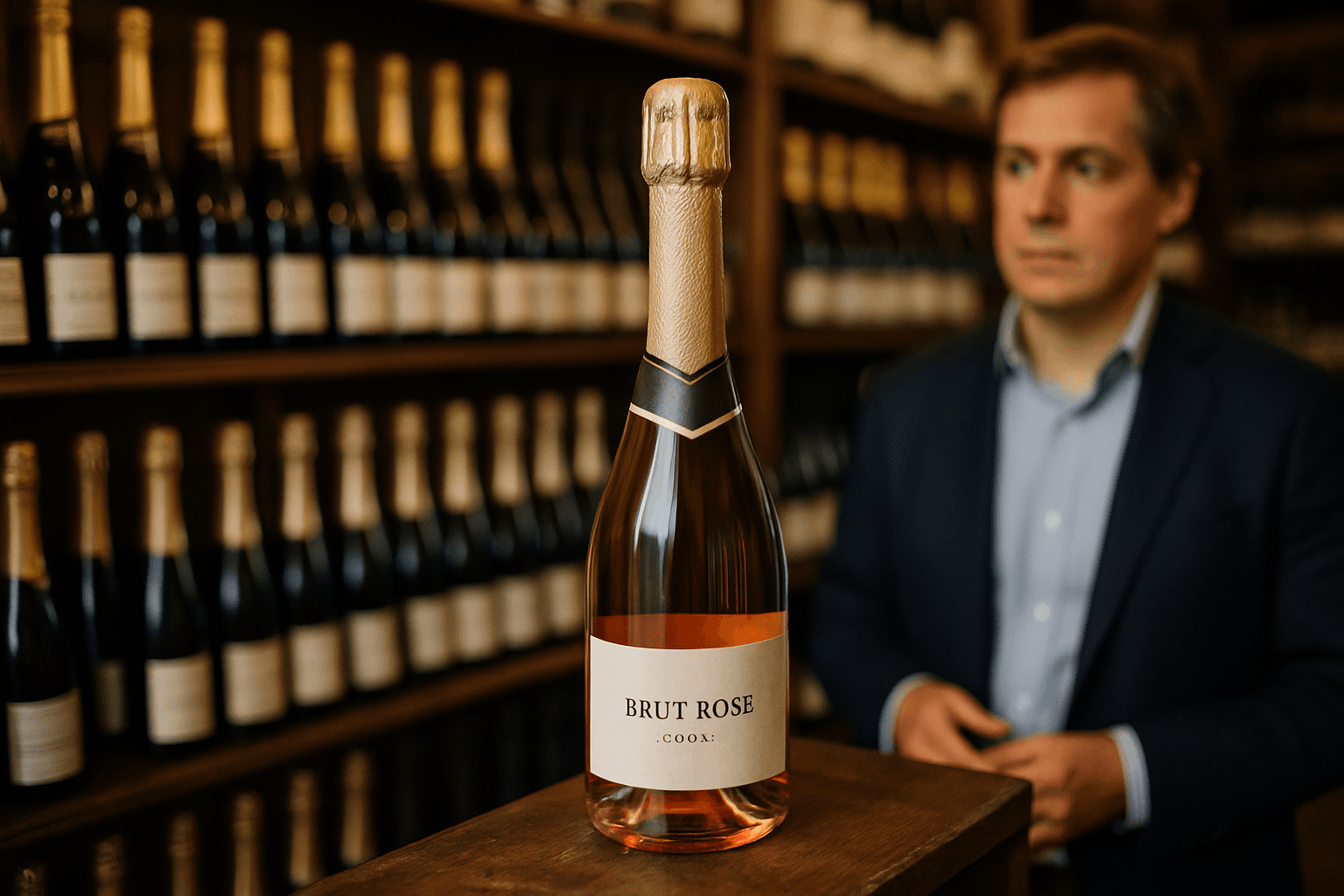
Gusbourne Brut Rosé 2020: Why English Sparkling Wine Deserves Shelf Space in Your Store
By Intentionally Creative10 min read
Listen to this article13:18
Schedule a free strategy call and Intentionally Creative will build a custom plan for you.
Schedule Your Free Strategy CallFree audit. No commitment.
Get a Free Audit. No commitment.
English sparkling wine retail is booming. Here's why Gusbourne Brut Rosé 2020 at ~$30 deserves a spot on your shelves — and how to sell it.
There's a category shift happening in sparkling wine — and most independent retailers are still sleeping on it. English sparkling wine has quietly moved from "interesting conversation piece" to "legitimate profit center," and the bottle leading that charge right now is the Gusbourne Brut Rosé 2020. At roughly $30, it undercuts Champagne rosé by a wide margin while delivering the same traditional-method quality. That's not a gimmick. That's a business opportunity.
Here's the reality: your best customers — the ones who spend $30–$50 on a bottle without blinking — are bored. They've done the Champagne rotation. They've explored Crémant. They're ready for the next thing, and English sparkling wine is it. The chalk-rich soils of Kent share more in common with Champagne's terroir than most people realize, and producers like Gusbourne are making wines that prove it in the glass.
This post breaks down everything you need to make a smart stocking decision — the category trends, the wine itself, the pricing math, how to source it, and exactly how to sell it once it's on your shelf. If you've been waiting for the right moment to add English sparkling wine to your lineup, this is it.
Five years ago, stocking English sparkling wine meant fielding confused looks from customers. Today? It means you're ahead of the curve — and probably outsmarting your competition.
Discover how Provence transformed into a lifestyle brand. Learn provençal wine marketing tactics to boost regional Fr...
The category has shifted from novelty shelf-filler to a legitimate, growing segment. Major platforms like Wine.com, WSJ Wine, and Wine-Searcher now list English sparkling wines alongside Champagne and Prosecco [VERIFY — confirm these platforms feature dedicated sections vs. general listings]. That's not a fluke. That's market validation.
The producer landscape tells the real story. Names like Chapel Down, Harrow & Hope, Windsor Great Park, and Gusbourne aren't hobbyist operations — they're premium brands with serious investment behind them. Windsor Great Park's Sparkling Rosé 2022 commands roughly $150 per bottle [VERIFY — confirm wholesale/retail pricing], proving the category has genuine high-end potential. Meanwhile, the Gusbourne Brut Rosé 2020 — a blend of 59% Chardonnay, 29% Pinot Noir, and 12% Pinot Meunier — hits retail around $30. That's an accessible entry point for curious customers and a healthy margin opportunity for you.
Here's what makes this category such a smart play right now: it sits at the intersection of two trends that aren't slowing down — premium rosé and discovery-driven wine buying. Your adventurous customers are already hunting for something beyond the usual Champagne-Prosecco-Cava rotation.
Independent stores can capture Syrah's momentum with smart displays, staff storytelling, and Old World/New World tast...
And here's the kicker for independent operators: big-box retailers haven't fully leaned into English sparkling wine yet. That gap is your advantage. Stocking bottles like the Gusbourne Brut Rosé 2020 (releasing March 2026 [VERIFY — confirm exact release date]) isn't just differentiation — it's positioning your store as the place where serious wine drinkers shop first.
The category is real. Now let's look at what actually makes Gusbourne worth the shelf space.
This is a bottle that sells itself — once your staff knows the story. And the story starts with what's actually inside.
Discover how Uruguay's emerging wine export strategy can help independent liquor stores market lesser-known wine regi...
Gusbourne Brut Rosé 2020 is built from the same three grapes that define Champagne: Chardonnay (59%), Pinot Noir (29%), and Pinot Meunier (12%). It's made using the traditional method — meaning the second fermentation happens inside the bottle, not in a tank. That distinction matters to the customers who care, and it's a detail worth putting on your shelf-talker.
Here's the quality-control angle that really sets it apart: every grape is estate-grown on south-facing vineyards in Kent. No sourced fruit, no blending from outside suppliers. For educated wine buyers, that single-estate detail signals serious commitment to quality — and in a category still new enough to spark genuine curiosity, it's a compelling talking point.
In the glass, expect a pale pink color with a light, delicate mousse — elegant without being intimidating. The flavor profile hits strawberries, raspberries, redcurrants, and rhubarb. It's approachable enough for the casual rosé drinker picking up a bottle for Saturday night, yet complex enough to impress the wine enthusiast who's tried everything from Reims to Épernay.
Gusbourne combines traditional-method winemaking with modern technology and cutting-edge viticulture. That quality narrative gives your staff real confidence when hand-selling. At roughly $30, it sits in a sweet spot — premium enough to feel special, accessible enough to move. For context, some English sparkling rosés push well past $100 per bottle, so Gusbourne represents genuine value in the category.
Quality and story are great — but you're running a business. Here's where the math gets interesting.
Let's talk numbers — because that's what actually matters when you're deciding what earns shelf space.
The Gusbourne Brut Rosé 2020 lands at approximately $30 per 750ml (ex-tax) at US retail. For a traditional-method sparkling wine with classic Champagne grapes, that price point is genuinely compelling.
Most Champagne rosés start at $40 and climb quickly past $60. Gusbourne sits in that gap perfectly. You're offering customers a legitimate trade-up from Prosecco or Cava — without the sticker shock of Champagne. It's the "I want something special but I'm not spending $55" bottle, and every store needs more of those.
For English sparkling wine retail, this is the entry point that actually moves product. You're not asking customers to take a $60 gamble on an unfamiliar category. You're asking them to spend $30 on something with a great story and serious quality credentials.
The English sparkling wine category has real range. While Gusbourne anchors the accessible-premium tier, bottles like Windsor Great Park's rosé prove there's ultra-premium potential here too — with pricing that rivals prestige Champagne.
What does that mean for you? Strong margins. A distinctive origin story and virtually no local competition means you're not racing to the bottom on price. Gusbourne gives you something competitors likely don't carry — and that's where margin lives.
Convinced on the numbers? Good. Here's exactly how to get this bottle into your store.
Good news: sourcing Gusbourne Brut Rosé 2020 isn't a scavenger hunt. The distribution path is clear, and if you're already working with the right importer, you might be one phone call away.
Getting a great bottle on the shelf is only half the battle. The other half? Making sure the right customers actually see it. English sparkling wine retail is still new enough in the US that placement decisions will make or break your sell-through.
Here's the single biggest mistake stores make: they create a separate "English wine" section somewhere between the German Rieslings and the South African Chenin Blancs. Nobody's browsing there when they're shopping for a celebration bottle.
Place Gusbourne Brut Rosé 2020 directly alongside your Champagne and premium sparkling wines. That's where the customer with $30–$50 to spend on bubbles is already looking — and at roughly $30, it sits at a compelling price point right next to Champagne rosés running $45–$70+.
During spring and summer, cross-merchandise it in your premium rosé section too. Rosé demand peaks from April through August, and a sparkling rosé with strawberry and raspberry notes is an easy impulse add when someone's already in a pink wine mindset.
With a March 2026 release date [VERIFY], the Brut Rosé 2020 is a perfect candidate for a "New Arrivals" or "Staff Picks" end-cap display. Novelty drives trial purchases — use it while you've got it.
Keep your shelf-talker punchy and benefit-driven:
"Same grapes as Champagne. Same traditional method. Half the price. Made in England."
That's it. That stops people mid-aisle.
For staff talking points, train your team to lead with three things:
The Gusbourne Brut Rosé 2020 isn't a hard sell — you just need to put it in front of the right people. Think:
Here's your built-in conversation starter: most customers have no idea England produces world-class sparkling wine. That surprise factor alone moves bottles.
Feature it as a "discovery pick" in your email newsletter — one paragraph, one photo, done. Post a 30-second tasting note video on Instagram or TikTok (mention the Champagne-grape blend — wine nerds eat that up). If you have a tasting bar, pour it by the glass. Trial kills hesitation.
Seasonality is your friend. Position Gusbourne Brut Rosé 2020 for Mother's Day, bridal showers, summer entertaining, and holiday gifting. Sparkling rosé plays across every occasion — making it a reliable year-round performer, not seasonal dead weight.
Yes — if you want a differentiated, margin-friendly sparkling rosé that gives customers something to talk about.
At ~$30 per bottle, Gusbourne Brut Rosé 2020 hits the sweet spot: premium enough to protect your margins, accessible enough to actually move. English sparkling wine retail is a growing category with real staying power — not a passing trend. Some English sparkling rosés already command ultra-premium pricing, proving the category's ceiling keeps rising. Getting in early gives you first-mover advantage.
10+ years helping liquor retailers and beverage brands grow through data-driven digital marketing. Learn more
Gusbourne is distributed stateside through Broadbent Selections — the same importer you probably know for their Madeira and Portuguese wine portfolio. That means adding English sparkling wine doesn't require chasing down a niche broker or navigating a complicated direct-import process. If Broadbent is already in your distributor network, this is a natural extension of a relationship you've already built.
Contact your Broadbent rep and ask three things: market availability, case minimums, and whether there's intro pricing or POS materials for the release.
Smart stock tip: Start with one to two cases. Position it as a staff pick or featured new arrival. Test customer response before going deeper. That's how you build an English sparkling wine section without tying up capital on a guess.
Once the bottles arrive, the real work begins. Where you place them — and how your team talks about them — will determine whether this is a one-time experiment or a permanent addition to your lineup.
Intentionally Creative specializes in digital marketing strategies that drive real results. Let us show you what's possible.
Schedule a CallGreat placement and trained staff will get the first bottle off the shelf. Building a repeat customer base around this wine takes knowing exactly who you're selling to.
The playbook is simple: source it through Broadbent Selections, place it next to your Champagne, arm your staff with the story, and let the wine do the talking. The stores that build their English sparkling wine presence now — while the big boxes are still catching up — are the ones that will own this category with their customers for years to come.
Your action step: Contact Broadbent Selections this week, order a trial case, and position it next to your Champagne. Let the wine do the rest.