How Rising Temperatures Are Reshaping Wine Supply Chains: What San Diego County's Heat Crisis Signals for Retail Buyers
By Intentionally Creative10 min read
Listen to this article13:16
Schedule a free strategy call and Intentionally Creative will build a custom plan for you.
Schedule Your Free Strategy CallFree audit. No commitment.
Get a Free Audit. No commitment.
Wine supply chain disruption heat is accelerating. Learn how rising temperatures impact wine quality, pricing, and what smart liquor retailers should do now.
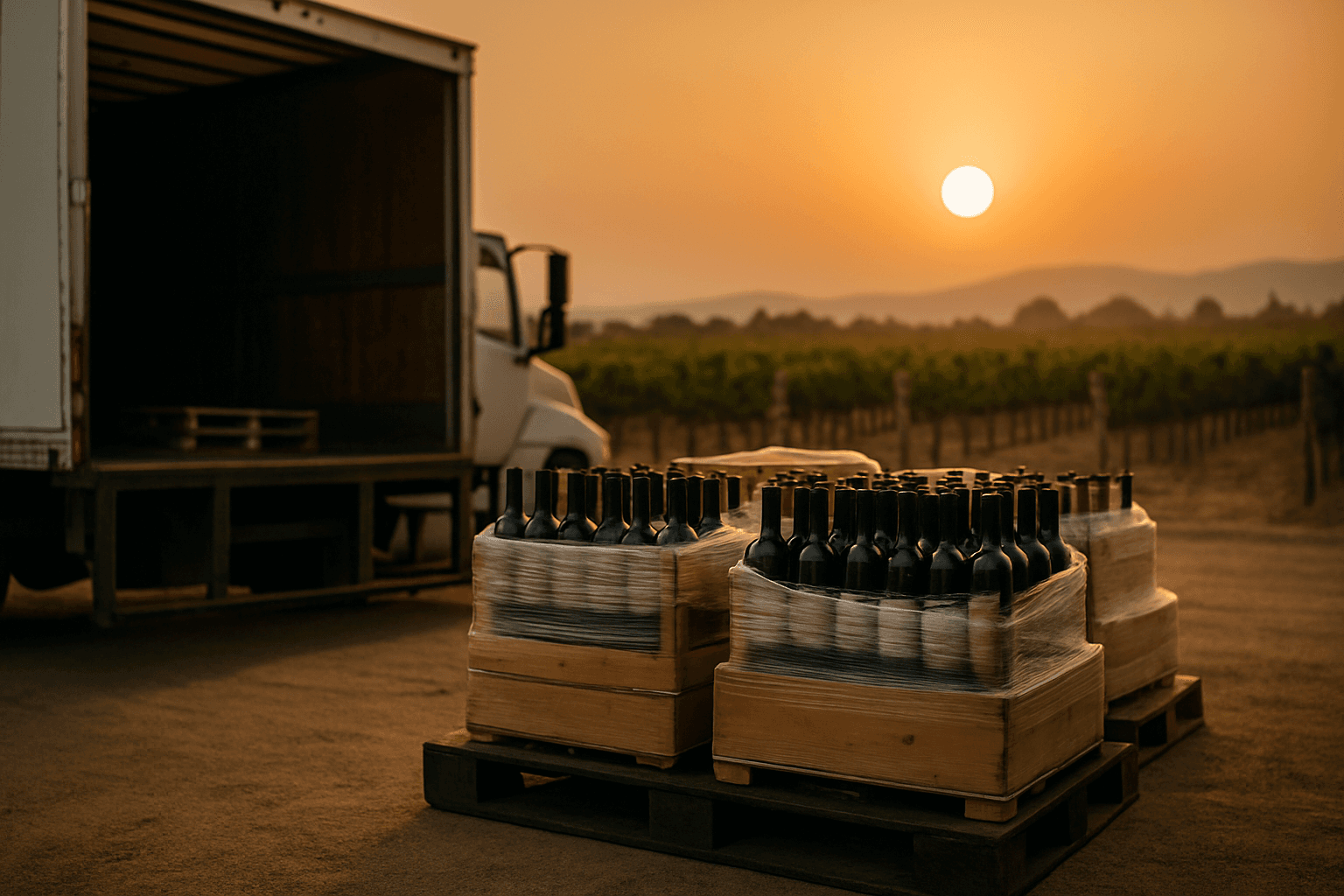
Picture this: it's mid-July, and a pallet of imported Côtes du Rhône is sitting on a delivery truck outside your store. The truck's interior hit 115°F an hour ago. Meanwhile, the vineyard that produced those bottles just harvested its grapes three weeks earlier than any year on record — and the winemaker isn't sure the fruit had time to develop the flavor profile your customers expect. Welcome to the new reality of wine retail, where heat is squeezing your business from both ends — the vineyard and the loading dock.
This isn't a problem reserved for sommeliers and climate scientists. It's a profit-and-loss problem, a customer satisfaction problem, and an inventory management problem rolled into one. And if you're running a liquor retail operation in San Diego County — one of the hottest last-mile delivery corridors in the country — you're feeling it sooner and harder than most.
What follows is a practical, data-backed breakdown of what's happening, what it means for your shelves and margins, and exactly what you can do about it right now. Just the information you need to buy smarter, protect your inventory, and stay ahead of a market that's shifting faster than most retailers realize.
Here's a number worth sitting with: under severe climate scenarios, 85% of the world's current wine regions could become unsuitable for the grape varieties they've grown for generations [VERIFY: commonly attributed to Morales-Castilla et al., 2024 — confirm exact framing and source]. If global temperatures climb by 4°C, the map of global wine production gets redrawn entirely.
Discover how Provence transformed into a lifestyle brand. Learn provençal wine marketing tactics to boost regional Fr...
That's peer-reviewed science — and it has direct implications for what you can stock, what you'll pay for it, and how your customers experience wine when it finally reaches their hands.
Rising temperatures are reshaping the wine industry at every stage. On the production side, UC Davis research shows that decades of gradual warming actually improved wine grape quality for a while — warmer nights and longer seasons helped grapes develop richer, more complex flavors. But that trend has a ceiling. Many of the world's top wine regions are now approaching or crossing the tipping point where heat stops helping and starts destroying.
On the logistics side, the damage continues after harvest. Warehouse and delivery truck interiors regularly exceed 100°F during summer months, putting every bottle in transit at risk of heat damage. For San Diego County retailers, this isn't theoretical. It's Tuesday.
Independent stores can capture Syrah's momentum with smart displays, staff storytelling, and Old World/New World tast...
And 2025 has already brought some of the earliest grape harvest dates on record across multiple global regions [VERIFY: confirm specific regions and data source for 2025 harvest timing], signaling that the pressure is accelerating.
The wine on your shelves is changing — literally. Before a single bottle ships, rising temperatures are altering what grapes taste like at the source.
Here's what heat stress actually does to grapes, in plain terms: they ripen faster than they develop flavor complexity. Sugar spikes, acid drops, and you end up with boozy, flat wines instead of balanced ones. Higher alcohol, less character.
Discover how Uruguay's emerging wine export strategy can help independent liquor stores market lesser-known wine regi...
That Pinot Noir your customers loved three years ago? It may taste noticeably different today. This isn't a hypothetical — it's already showing up in vintage-to-vintage variation across major regions.
Southern European producers are fighting back with new irrigation systems, shade structures, and planting at higher altitudes. Smart moves, but expensive ones — and those costs are flowing straight through to wholesale pricing.
The retail takeaway: Buyers who understand these shifts don't get caught off guard. You can ask better questions when your distributor rep shows up, spot quality changes before your customers complain, and position your store as the one that actually knows what's in the bottle.
But vineyard-level changes are only half the story. What happens after the grapes are picked and bottled introduces an entirely different set of risks — ones that hit even closer to home.
Most conversations about climate and wine focus on what's happening in the vineyard. But wine supply chain disruption from heat doesn't end at harvest. It follows the bottle all the way to your receiving dock.
At sustained high temperatures, wine doesn't just get warm — it gets damaged. Prolonged heat exposure "cooks" wine, dulling flavors and accelerating aging. In severe cases, you'll see pushed corks and leaking bottles — obvious damage that represents the tip of a much larger quality iceberg.
Research has also confirmed that even temperature fluctuations during maritime shipping cause measurable quality degradation [VERIFY: identify and cite the specific 2024 study on temperature fluctuation and wine/liquor quality in dry shipping containers]. The damage isn't always visible. It's often subtle enough that customers just think your selection isn't great — and they shop somewhere else.
San Diego County retailers face a unique double threat. Imported wines travel through some of the hottest shipping corridors in the U.S., and local delivery trucks operate in extreme summer heat. Port delays compound the problem — a two-day backup in August isn't just an inconvenience. It's potential inventory damage sitting in a steel container under direct sun.
Here's a practical gut-check: if your receiving dock faces west and you're accepting deliveries at 2 PM in July, you may already be losing product quality before bottles hit the shelf. The last mile is where retail buyers have the most control — and the most to lose.
So the wine is changing at the source, and it's getting damaged in transit. You can probably guess what comes next: all of that shows up on your cost sheets.
With wine supply chain disruption from heat already reshaping what's available, what it costs, and whether it arrives in sellable condition, here's what smart retail buyers are doing today.
1. Audit your receiving and storage conditions. Walk your warehouse during peak summer hours with a thermometer. If temps regularly exceed 75°F, you're quietly degrading product quality on every bottle in the building. Even a $30 digital thermometer with max/min readings gives you actionable data. You can't fix what you don't measure.
2. Shift your delivery windows. Talk to your distributors about early morning drop-offs during summer months. Afternoon deliveries mean bottles have been sitting in trucks that function like ovens. This is one of the simplest protective moves you can make — and it costs you nothing.
3. Build inventory from cooler-climate and emerging regions now. Relying on the same sourcing playbook year after year is increasingly risky as traditional regions face mounting heat pressure. Explore English sparkling wines, high-altitude Argentine Malbecs, or cool-climate Oregon Pinot Noirs. Position it as curation, not compromise. Customers are more open to discovery than you think.
4. Watch harvest reports and vintage data closely. Auto-reordering the same SKUs year after year? That era is ending. Vintage variation is increasing dramatically. Subscribe to trade publications, ask your reps pointed questions about growing conditions, and taste before you commit.
5. Educate your floor staff — then let them sell with it. Train your team to explain why certain wines taste different this year, why you're stocking new regions, and why your storage practices matter. The UC Davis research on warming and quality tipping points is a compelling story for curious customers. This positions your store as the local authority — not just another shelf of bottles. Knowledge sells.
The supply-side pressures we've covered — vineyard heat stress, logistics damage, rising costs — are already changing what consumers reach for.
Heat-stressed vineyards produce higher-alcohol, fruit-forward wines. A growing segment of wine buyers is responding by seeking lighter, lower-ABV options from cooler climates. If your shelves don't reflect that shift, you're leaving sales on the table.
Meanwhile, the "drink local" and sustainability movements are converging with climate awareness. Customers increasingly want to know the story behind the bottle — where it came from, how it was made, and whether the producer is adapting to changing conditions. Retailers who can answer those questions build loyalty that price alone can't buy.
Smart buying now means tracking regional climate data and vintage quality reports alongside your POS numbers. The retailers who combine sell-through data with supply-side intelligence — harvest timing, regional weather patterns, logistics risk — will make better purchasing decisions and carry less dead inventory.
Here's the good news: you can pivot faster than chains. Test emerging cool-climate regions in small quantities. Adjust inventory seasonally for heat risk. Tell a better story on the shelf and on social media. Independent retailers who act on these trends — rather than waiting for customers to stop buying — will capture loyalty early and hold it.
10+ years helping liquor retailers and beverage brands grow through data-driven digital marketing. Learn more
Southern European drought has pushed wine and olive oil prices sharply upward. Compressed harvests from early ripening mean lower yields. If you're importing from southern France, Spain, or southern Italy, expect continued upward pressure on wholesale costs through the foreseeable future.
When Bordeaux has a bad vintage, buyers don't just shrug. Demand shifts to alternatives — Rioja, Barossa, Willamette Valley — and those prices climb too. Rising temperatures create a ripple effect that reshapes the entire pricing landscape, not just one region's allocation sheet.
Smart buyers are diversifying now. England, Oregon's higher elevations, Tasmania, and Patagonia are producing genuinely exciting wines as warming accelerates their viticultural development. These aren't consolation prizes — some of the most interesting bottles in the market right now are coming from regions that barely registered a decade ago.
Your retail playbook: Lock in allocations early. Build relationships with distributors carrying emerging-region wines. Watch harvest reports the way you watch your P&L — because they are your P&L now.
Understanding the problem is step one. But you didn't read this far for a diagnosis — you want the prescription. Here's what the most forward-thinking retail buyers are already doing.
Intentionally Creative specializes in digital marketing strategies that drive real results. Let us show you what's possible.
Schedule a CallThose five moves will put you ahead of most of your competitors. But the retailers who really pull away are the ones paying attention to where the broader market is headed — and getting there first.
Wine supply chain disruption from heat is affecting the wines you can source, what you pay for them, and whether they arrive in sellable condition. The sourcing landscape is shifting as traditional regions face unprecedented pressure, logistics corridors bake product quality out of your inventory, and pricing ripples across every category on your shelves.
This isn't an environmental talking point. It's a margin protection issue. A product quality issue. A competitive advantage issue.
The retailers who build climate-aware buying strategies, diversify sourcing, protect their inventory from heat damage, and communicate their expertise to customers will be the ones thriving when the market looks completely different five years from now.
San Diego County retailers are on the front lines. That's a vulnerability — but it's also an opportunity to lead.
If you need help telling that story — positioning your store as the smart, informed choice and adapting your marketing to these shifts — that's exactly what we do at Intentionally Creative ↗.