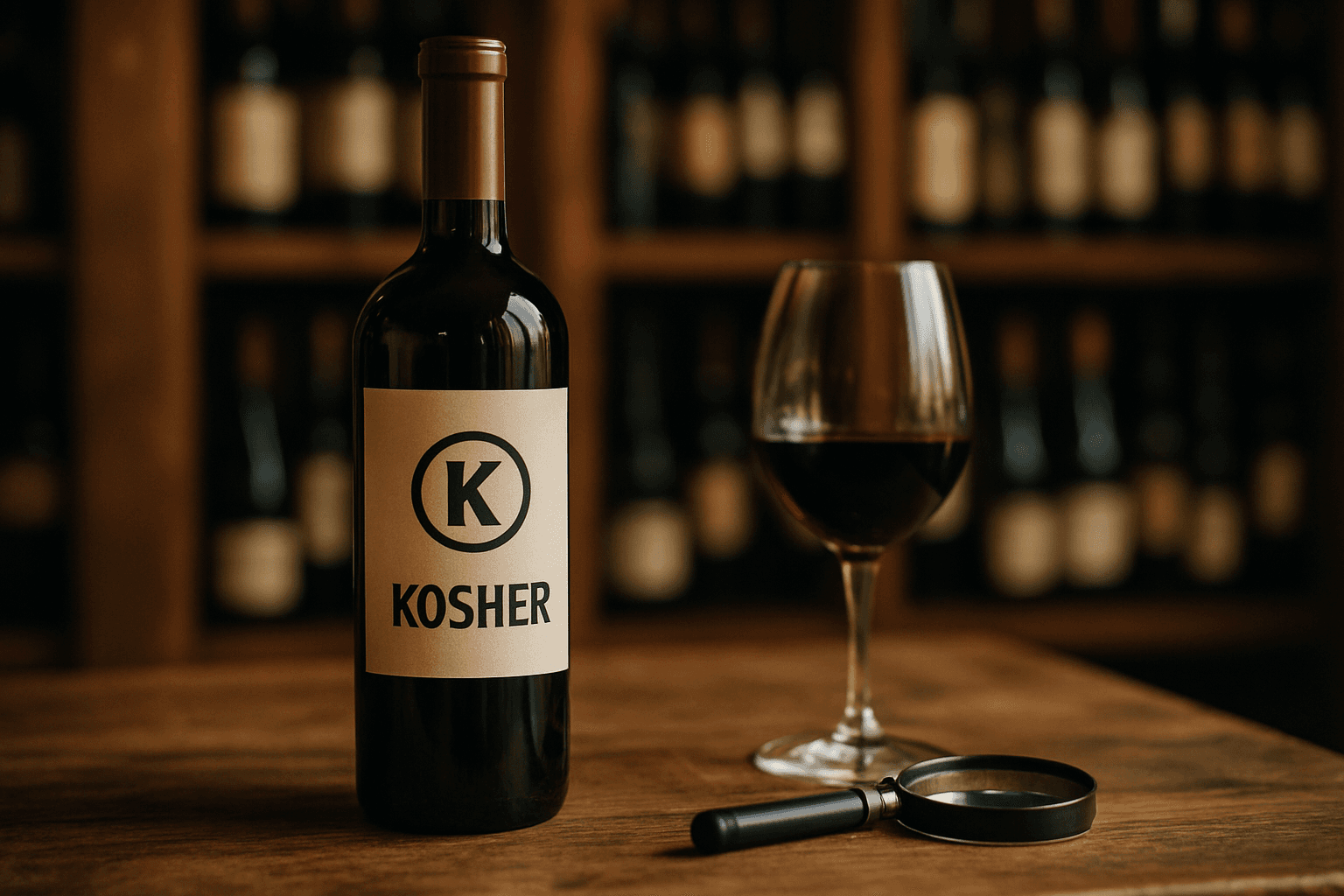
Israel's Kosher Wine Certification Crisis: What Shifting Rabbinate Rules Mean for Your Kosher Wine Selection and Pricing
By Intentionally Creative9 min read
Listen to this article13:10
Schedule a free strategy call and Intentionally Creative will build a custom plan for you.
Schedule Your Free Strategy CallFree audit. No commitment.
Get a Free Audit. No commitment.
Israel's kosher wine certification rules are splitting. Here's what liquor store owners need to know about new regulations, pricing shifts, and stocking strategy.
You built your kosher wine section carefully — curated the right labels, earned trust with observant customers, and carved out a category that delivers real margin. Now the ground underneath that section is shifting, and most retailers won't see it coming until bottles start collecting dust.
Israel's kosher wine certification system — the single most important regulatory framework governing what earns a kosher label on wine — is fracturing. For the first time in modern history, a credible alternative to the Israeli Rabbinate's monopoly has launched, and the ripple effects are already moving through the supply chain toward your shelves. New symbols on bottles, pricing volatility, confused customers, and a wave of non-Israeli producers racing to fill the gap — it's all in motion.
This isn't a story you can afford to file under "international news." If kosher wine touches your register — and given the category's growth, it probably should — here's exactly what's happening, what it means for your business, and the concrete moves to make right now.
With over 1,000 kosher wines now available through online retailers like KosherWine.com, the category is far from niche. And the rules governing which wines earn that kosher label are splitting in two.
Here's something most liquor store owners don't realize: getting a kosher stamp on wine isn't like certifying a box of crackers. According to Haaretz reporting, the Israeli Rabbinate's wine oversight has been described as the most severe of all kosher certifications — period. [VERIFY: specific Haaretz source]
Discover how Provence transformed into a lifestyle brand. Learn provençal wine marketing tactics to boost regional Fr...
Why? Wine holds deep religious significance in Jewish law. Every step of production — from who touches the grapes to who operates the equipment — falls under scrutiny. That level of oversight creates real friction for Israeli winemakers trying to bring product to market. It drives up costs, limits production flexibility, and directly impacts the pricing you see on your shelves.
For years, winemakers had exactly one option: work within the Rabbinate's framework or don't sell certified kosher wine. Full stop.
That monopoly cracked in June 2025. [VERIFY: exact launch date and scope of Tzohar's wine-specific program]
The Tzohar Rabbinical Organization launched an alternative supervision program specifically for wineries — the first major institutional challenge to the Rabbinate's grip on Israeli wine. This isn't some fringe group making noise. Tzohar is a recognized rabbinical organization, and they've been explicit about their goal: bridging what they call a "religious divide" that the Rabbinate's hardline approach has created.
Independent stores can capture Syrah's momentum with smart displays, staff storytelling, and Old World/New World tast...
Read between the lines and the message is clear — the Rabbinate's rules have alienated moderate kosher-observant consumers and winemakers alike. Tzohar is betting there's a market for certified kosher wine that doesn't require navigating the most restrictive certification process in the kosher food world.
This isn't a policy tweak. It's a formal institutional split in who gets to decide what counts as kosher wine in Israel — and that has downstream consequences for every bottle that reaches your store.
If you're thinking this is just an overseas regulatory spat, think again. The shifting rules in Israel are already creating waves that will reach your shelves — and your customers — sooner than you'd expect.
Multiple certification bodies — OU, OK, STAR-K, and now Tzohar — are competing for authority in the kosher wine space. That means new, unfamiliar hechsher (certification) symbols may start appearing on Israeli bottles hitting your distributor's portfolio.
Discover how Uruguay's emerging wine export strategy can help independent liquor stores market lesser-known wine regi...
And here's the business case for paying attention: OU Kosher has noted that kosher certification gives products a "competitive edge that makes it sell faster." [VERIFY: specific OU source] If your customers lose confidence in an unfamiliar symbol, your shelf velocity on Israeli wines takes a hit.
Your kosher-buying customers will start asking questions. Which symbols are legitimate? Is this bottle still kosher enough for Passover? Can I trust this new label?
Your staff needs answers before those questions arrive. Because in this category, confusion doesn't lead to curiosity — it leads to a lost sale.
Here's the thing about regulatory chaos: it creates openings. And smart producers outside Israel are moving fast.
While Israeli wineries navigate the fallout from shifting certification rules, producers in France, the U.S., and beyond are quietly expanding their kosher footprint.
In November 2025, Château Jupille Carillon relaunched as the first fully kosher-converted Bordeaux château under Orthodox Jewish ownership. [VERIFY: specific details of this conversion and ownership] That's not a coincidence. That's a calculated bet that demand for quality kosher wine from outside Israel's regulatory framework is only growing.
The move signals something bigger than one estate's business plan. It tells us that serious winemakers see kosher designation as a growth category worth the investment — even with the heavy compliance burden that wine certification demands.
Château Jupille Carillon isn't alone. Fifth-generation winemaker Rachel Lipman pursued kosher certification in mid-2025, proving that established producers recognize the value despite regulatory uncertainty. [VERIFY: Rachel Lipman's identity and certification pursuit — unable to confirm this claim]
This geographic diversification matters for your business. More sourcing regions mean potentially more stable supply chains, better pricing leverage, and bottles that don't rise or fall with a single country's bureaucratic decisions.
The bottom line for retailers: the crisis is pushing quality production outward — and that's arguably a net positive for your shelves.
The certification landscape is shifting. Here's how to stay ahead of it instead of scrambling to catch up.
If Israeli bottles make up the bulk of your kosher selection, you're carrying concentration risk you don't need. Start broadening now — French, Californian, Argentine, and other New World kosher wines are increasingly available and increasingly good.
Here's a concrete move: consider building a small "New World Kosher" endcap or dedicated section featuring non-Israeli options. It's a merchandising angle that signals to your kosher customers that you're paying attention. With developments like Château Jupille Carillon's Bordeaux conversion, the quality story writes itself. These aren't consolation picks — they're legitimate wines that happen to carry kosher certification.
Also, review your current inventory mix. If you're sitting on heavy Israeli stock, understand that some of those bottles could face certification-related reputational questions as the rules continue to evolve. Balance your exposure.
Your kosher customers know the difference between an OU symbol and a STAR-K. Does your staff? Create a simple one-page reference sheet covering the major hechsher symbols — OU, OK, STAR-K, and the new Tzohar program. Explain that kosher wine certification is uniquely strict compared to other food categories. Your team should understand that, because knowledgeable staff builds trust and drives repeat purchases.
Don't wait for your rep to call with bad news about pricing or discontinued SKUs. Pick up the phone first. Ask direct questions: Are any Israeli SKUs at risk? Are they onboarding new kosher producers from other regions? Getting ahead of this conversation puts you in control of your shelf — not your distributor.
Start with what you already have: your POS data. Compare velocity on Israeli kosher wines against your non-Israeli SKUs. If Israeli bottles are slowing while everything else holds steady, consumer confidence is shifting — and it's tied to the certification upheaval. That's your early warning.
Watch the trade press and your distributor reps closely. Expect announcements about Israeli wineries switching certifiers as Tzohar gains traction. Meanwhile, keep an eye on new kosher options emerging from unexpected regions.
At the register, listen for customer questions about specific certification symbols. Confusion there means you need better staff training and signage — fast.
Finally, watch online platforms. If major retailers start sorting by certification body instead of region, the market is officially fragmenting, and your pricing strategy needs to adapt accordingly.
The Israeli kosher wine certification split is real, it's happening now, and it will hit your shelves. But retailers who get ahead of this win.
Demand isn't the problem — the kosher wine category continues to grow. Your selection just needs to keep pace with shifting rules and new realities.
Diversify your sources. Train your staff on what different certifications mean. Stay tight with your distributors on pricing changes. The stores treating this as a merchandising opportunity — not a headache — will capture market share while competitors scramble.
Here's your move this week: Pull your kosher wine sales data from the last 90 days, identify your Israeli-to-non-Israeli ratio, and have one honest conversation with your distributor about what's coming. That single afternoon of work puts you months ahead of the retailers who'll be reacting to this crisis instead of profiting from it. The certification landscape is being rewritten — make sure you're holding the pen on your own shelves.
10+ years helping liquor retailers and beverage brands grow through data-driven digital marketing. Learn more
Here's the reality: the compliance burden on kosher winemakers is significant. Every step from grape to glass requires rabbinical oversight, and stricter rules only add layers of cost.
Those costs don't evaporate. They roll downhill — from winery to importer to distributor to you. If your selection leans heavily on Israeli labels, expect wholesale price pressure in the coming months.
But here's where it gets interesting. Competition between certifying bodies could eventually push production costs down for winemakers. That's the long game.
Short term? Expect uncertainty. Wineries navigating dual certification systems face added administrative and compliance costs while the landscape shakes out. That means inconsistent distributor pricing over the next 6–12 months. Watch your invoices closely — early awareness gives you real negotiating leverage when costs fluctuate.
Long term, the market has room to self-correct. Non-Israeli kosher wines are already creating competitive pressure. Bordeaux, California, and Argentine producers give you concrete alternatives — potentially at price points that protect your margins.
You have options. Use them strategically while Israeli certification costs find their new normal.
Intentionally Creative specializes in digital marketing strategies that drive real results. Let us show you what's possible.
Schedule a CallProactive retailers set the terms. Reactive ones get whatever's left.