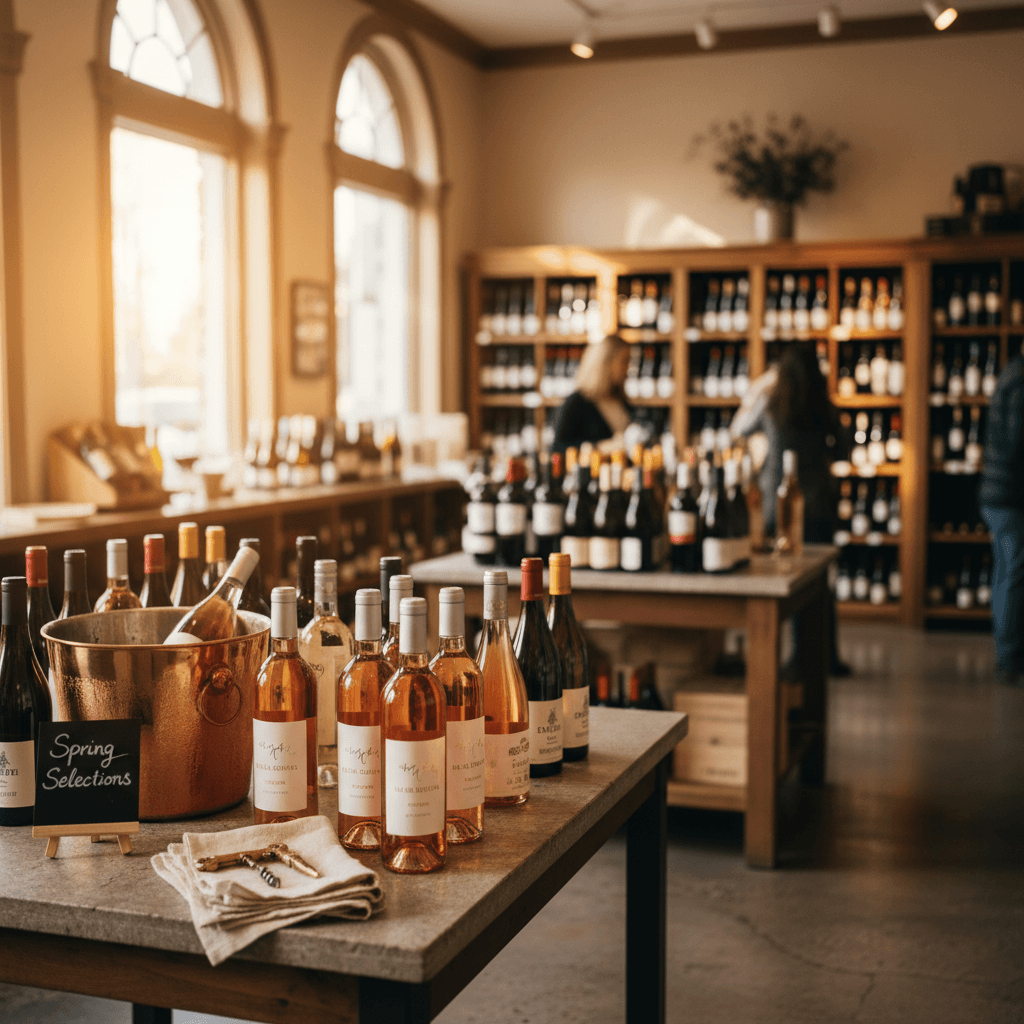
Spring Wine Buying Guide 2026: What Independent Retailers Should Stock Now
By Alden Morris40 min read
Listen to this article46:52
Schedule a free strategy call and Intentionally Creative will build a custom plan for you.
Schedule Your Free Strategy CallFree audit. No commitment.
Get a Free Audit. No commitment.
Spring 2026 wine buying guide for independent retailers: top rosé, white, natural, and sparkling picks, tariff-smart sourcing strategies, price tier tables, and a downloadable buy sheet to stock your shelves for the season.
The season that separates the smart buyers from the scrambling ones has arrived.
Picture this: it's a warm April evening, you're standing in your shop rearranging the front table — swapping out the big Napa Cabs and brooding Barolos for rosé, Vinho Verde, and pét-nat. You've done this ritual every spring for years. But this year, the boxes arriving at your back door cost 15–20% more than they did last March, and your customers are already flinching at shelf prices.
The annual rotation toward lighter, chilled, lower-alcohol styles is as reliable as daylight saving time. Rosé sales spike. Crisp whites fly. Spritzy reds and pétillant naturel find their moment. None of that has changed.
What has changed is everything underneath it. A 15% tariff on EU wine imports now hits roughly 80% of all imported wine entering the U.S., according to U.S. trade data ↗. That's not a rounding error — it's a structural cost shock rippling from Burgundy to your Beaujolais shelf. Domestic production offers no easy escape either; U.S. wine output has declined steadily since 2019, squeezed by drought, wildfire smoke damage, and labor shortages tied to tighter immigration enforcement.
The big players feel it too. Constellation Brands stock has cratered 41% over the past twelve months while the S&P 500 climbed 12%. LVMH's wine and spirits division managed just 1% organic growth in Q3 2025. When the giants stumble, independents face real margin pressure — but also real opportunity.
Spring 2026 marks the most consequential buying season for independent wine retailers in at least a decade. A 15% tariff on EU imports — covering approximately 80% of imported wine sold in the U.S. — has triggered expected price increases of 15–20% across both imported and domestic categories. Domestic production has declined year over year since 2019, eliminating the usual fallback. Consumer demand hasn't collapsed, but it has sharpened: buyers are trading down in price while trading up in selectivity, rewarding shops that curate with intent. As SevenFifty Daily reports ↗, economic factors — not stylistic trends — now drive purchasing decisions. Retailers who treat this spring as a strategic inflection point rather than a routine seasonal refresh will capture share from competitors still buying on autopilot. The fine wine market is, as Decanter analysts describe it, "bumping along the bottom," creating rare value-buying windows, including 2021 Bordeaux bottles now trading below their original ex-château release prices.
10 wine club marketing tactics that reduce the 40% year-one cancellation rate and boost member spending at your liquo...
This isn't a trend roundup. You won't find vague advice about "leaning into sustainability" or "exploring new regions."
This guide is built for independent wine shop buyers, sommeliers moving into retail, and small-chain owners making spring allocation decisions right now — with real money and limited storage. Every recommendation includes margin math. Every category section names specific bottles. A downloadable buy sheet at the end gives you a printable cheat sheet for your next distributor meeting.
Here's the structure: we start with the economic and consumer trends shaping the season, then move category by category — rosé, white, orange, sparkling, value red — with specific picks at three price tiers. After that, margin optimization tactics and a ready-to-use buy sheet.
Grab a glass of something crisp and keep reading. Your spring order depends on it.
What happens when the cost of every French rosé on your shelf jumps nearly two dollars before you even touch your markup calculator?
Discover how Provence transformed into a lifestyle brand. Learn provençal wine marketing tactics to boost regional Fr...
That's the reality of spring 2026. The 15% tariff on EU wine imports has landed, and it hits harder than the headline number suggests. Take a $12 wholesale French rosé — a bread-and-butter SKU for most indie shops. That bottle now lands at $13.80 minimum. Run it through your standard margin, and retail climbs past $19. You just lost the $15–$17 sweet spot where that wine actually moved. Multiply this across your French, Italian, and Spanish sets, and you're staring at a problem: the EU supplies 80% of all imported wine ↗ entering the U.S. This is not a problem confined to your Burgundy shelf. It's your entire import book.
Across the board — imported and domestic — expect prices to climb 15–20% through the back half of the year as cascading cost pressures ripple through the supply chain.
But here's the twist nobody's talking about at the high end: fine wine is bumping along the bottom. According to Decanter's 2026 investment outlook ↗, 2021 Bordeaux has dropped below ex-château release prices. If you have customers buying in the $50–$150 range, this is a counter-intuitive gift — the tariff math still works when the underlying asset is already discounted 20–30% from peak.
Forget the doom narrative. The consensus view — tariffs hurt everyone equally — is wrong. Here's why your shop has a structural edge over the big-box guys right now:
Independent wine retailers hold a decisive structural advantage over big-box competitors during the 2026 tariff cycle. Large national chains rely on centralized purchasing, locked-in planograms, and pricing agreements that take months to renegotiate — they cannot swap out a tariff-impacted French Côtes du Rhône for a tariff-free Argentine Malbec in a matter of days. Independent shops can. They maintain direct relationships with small importers, react to cost shifts in real time, and curate a rotating selection that turns tariff disruption into a discovery-driven shopping experience. Where a big-box store absorbs the 15% EU tariff as a flat price increase passed to the consumer, an indie retailer pivots the assortment itself — stocking Southern Hemisphere alternatives, buying discounted fine wine below release prices, and telling a story no algorithm-driven shelf set can replicate. The retailers who treat this moment as a buying opportunity, not a crisis, will take share.
Independent stores can capture Syrah's momentum with smart displays, staff storytelling, and Old World/New World tast...
The reflexive answer to "EU wine got expensive" is "just stock more domestic." That logic doesn't survive contact with the data.
U.S. wine production has declined steadily since 2019. Domestic producers face their own squeeze: labor shortages driven by tighter immigration enforcement, rising glass costs, container shipping rates that haven't returned to pre-2020 levels, and persistent drought across California and Oregon. Constellation Brands — the bellwether — has seen its stock drop 41% over the past twelve months while the S&P 500 rose 12%. That's not the profile of an industry ready to absorb displaced European demand.
The real beneficiaries sit in the Southern Hemisphere. Chile, Argentina, South Africa, and Portugal enjoy favorable trade terms with zero or minimal tariff exposure. Their production costs run 30–50% below comparable French or Italian wines. And quality? It's not 2010 anymore. Portugal's Douro and Alentejo reds are pulling 90+ scores from every major critic. A $13 Alentejo blend drinks like a $25 Southern Rhône — and right now, it prices like one too compared to tariff-inflated alternatives.
These origins slot directly into the $10–$18 retail range being vacated by marked-up French and Italian bottles. As Wine Business research ↗ confirms, that price band drives the highest velocity for independent retail. Portugal is not an emerging story. It's a now story. Stock it, staff-pick it, and build an endcap around it before your competitors figure out the same math.
The answer to this tariff cycle isn't panic, and it isn't patriotic buying. It's strategic sourcing from the origins that deliver the best price-to-quality ratio on the planet — and right now, that means looking south.
A buyer for a 1,200-square-foot shop in Portland told me last month she'd reworked her entire spring floor plan around one number: 15%. That's the tariff now sitting on every EU wine import entering the U.S., and since the EU supplies roughly 80% of America's imported wine according to ustradenumbers.com ↗, the ripple effects touch almost every category on your shelves. She didn't panic. She got surgical. Here's how to do the same, category by category, so your spring lineup stays compelling without bleeding margin.
Independent retailers should prioritize five wine categories for spring 2026: dry rosé sourced from Chile, South Africa, and domestic producers like Oregon and Central Coast; crisp whites led by Chilean Sauvignon Blanc, Vinho Verde, and Albariño; chillable light reds including South African Cinsault and Chilean País; natural and alternative wines, especially pét-nat and domestic orange wines; and sparkling options beyond tariff-hit Prosecco and Champagne, such as South African Cap Classique and Australian méthode champenoise. The 15% EU tariff, which affects 80% of U.S. wine imports, makes Southern Hemisphere and domestic sourcing essential for protecting the $12–$18 price tier where most spring volume moves. Retailers who pivot sourcing now—while keeping two or three premium EU anchors per category for credibility—will capture consumers trading across origins but not down in quality.
Every spring, rosé owns your front table. That won't change. What changes is where it comes from. Provence rosé pricing will jump 15–20% at retail, pushing bottles that sat comfortably at $14.99 into the $17–$19 zone—a psychological wall for the casual rosé buyer grabbing a Tuesday-night bottle. Your move: keep two or three Provence anchors at $20+ for the loyalists who won't flinch, then aggressively fill the $12–$16 tier with alternatives that deliver the same pale, dry, mineral-driven profile consumers trained their palates on.
Chilean rosé from the Maule and Itata valleys is your best bet here. These wines hit every mark—bone-dry, salmon-pink, with a saline minerality that reads "expensive" at $13 retail. South African rosé from Swartland offers similar optics with a touch more red-fruit generosity. Domestically, Oregon rosé (particularly from Pinot Noir) and Central Coast bottlings deliver Provence-adjacent elegance with zero tariff exposure and a "local" story that resonates on shelf cards. Don't sleep on Navarra rosé from Spain—yes, it carries the 15% tariff, but baseline pricing is so low that a $10 landed-cost bottle still retails under $15 after the hit. And Malbec rosé from Argentina is quietly trending: vivid color, dry finish, and a varietal name shoppers already trust. Stock it. Recommend it cold. Watch it move.
Forget the myth that you need 50 SKUs to build a credible spring wine program. You don't. You need 18 — chosen with surgical precision to cover every price tier, dodge tariff exposure where possible, and give your staff bottles they'll actually want to hand-sell. With the 15% tariff on EU imports now hitting 80% of America's imported wine supply, according to ustradenumbers.com ↗, every slot on your shelf carries real financial weight. Here are the exact bottles that earn their place.
The 18 best wines for independent retailers to stock in spring 2026 span five categories — rosé, white, light red, natural/alternative, and sparkling — and prioritize tariff-free origins like Chile, South Africa, and domestic producers without sacrificing quality. Standouts include Raats Original Chenin Blanc from Stellenbosch ($9–$11 wholesale, extraordinary QPR), Stolpman 'Love You Bunches' Rosé from Santa Barbara ($11–$13, indie shop credibility), Graham Beck Brut Rosé from South Africa ($10–$12, Champagne quality at Prosecco pricing), and Marcel Lapierre Morgon as a tariff-adjusted credibility anchor at $16–$18. The list balances volume movers like Cono Sur Bicicleta Rosé at $7–$9 wholesale with cult hand-sells like Las Jaras 'Sweet Berry Wine.' Twelve of the eighteen picks carry zero EU tariff exposure, protecting margins as prices rise 15–20% across the board.
Pick 1: Cono Sur Bicicleta Rosé, Chile — $7–$9 wholesale. Your volume anchor. Bone-dry, watermelon and white peach, snappy acidity. Retail at $11.99 for a 35%+ margin. Available through most major distributors. This is your "stack it high, watch it fly" rosé — tariff-free, sub-$10 retail possible if you want to get aggressive on price.
Pick 2: Mullineux Rosé, Swartland, South Africa — $14–$16 wholesale. Provence-style but with more texture and guts. Dried herb, blood orange, saline finish. Retail at $22–$24. Decanter and the serious wine press adore this producer. No EU tariff. This is your staff-pick rosé — the one your best employee reaches for when a customer says "I want something like Provence but more interesting."
Pick 3: Miraval Rosé, Provence, France — $13–$15 wholesale (tariff-adjusted). Yes, it's tariffed. Stock it anyway. Brand recognition alone drives turnover that most rosés can't match. Pale salmon, citrus blossom, restrained and elegant. Retail at $22–$25. The margin is thinner post-tariff, but velocity compensates. Your premium anchor — every rosé display needs a recognizable name at the top.
That bottle of Whispering Angel on your shelf? It's not there to make you rich. It's there to get people through the door. With the 15% tariff on EU wine imports now hitting 80% of America's imported wine supply, your Provence rosé, your Sancerre, your Prosecco — they're all costing you more. Accept slimmer margins on these anchors (30–35%) and deploy them strategically: they're bait, not the catch.
The catch sits right next to them. A Leyda Valley Sauvignon Blanc from Chile at a 45% margin. A Stellenbosch Chenin Blanc from South Africa pushing 50%. Place these Southern Hemisphere discoveries adjacent to the familiar EU bottles on your shelf or in a shared display. The customer's eye lands on the Sancerre they know. Their hand picks up the $14 Chilean bottle your staff tagged with a "Spring Staff Pick" shelf-talker. Industry data shows those staff pick tags convert browsers to buyers at a 15–20% higher clip than untagged bottles — that's not a trivial lift on a Tuesday afternoon.
Your best spring play is the bundle. Build a "3 for Spring" mixed pack: one anchor (the Prosecco they came for), two discoveries (that juicy Argentinian Torrontés, that South African Grenache rosé). Price it at a slight discount to buying all three individually. You protect the perceived value of the anchor, you introduce two high-margin bottles they'd never have tried, and you move three units instead of one. That's the margin math that keeps independent shops alive while prices rise 15–20% across the board.
Build a "Patio Season" table near your entrance this week — not next month, this week. Rotate it every seven days. Fresh inventory on the table signals a shop worth revisiting, and repeat foot traffic is the single hardest thing for an independent to generate.
Your tastings should do double duty: educate and sell. Run a "Sancerre vs. Leyda Sauvignon Blanc" side-by-side pour. Frame it as a tariff-swap pairing — the $22 French classic against the $13 Chilean challenger. Let customers taste the difference (or lack of it) and draw their own conclusions. According to SevenFifty Daily ↗, comparative tastings that tell a story outperform single-producer pourings in both engagement and same-day sales.
10+ years helping liquor retailers and beverage brands grow through data-driven digital marketing. Learn more
Sauvignon Blanc drives spring white-wine volume, full stop. The question is which Sauvignon Blanc. Sancerre and Pouilly-Fumé, your traditional prestige picks, now carry tariff-inflated shelf prices that make the value proposition wobbly. Chilean Sauvignon Blanc from Casablanca and Leyda fills that gap with startling precision—bright grapefruit, wet-stone minerality, and a laser focus that rivals $25 Loire bottles at $12 retail. South African Sauvignon Blanc from Elgin and Constantia pushes even closer to the Sancerre profile, with a flinty tension and restrained tropical note. At those prices, these wines are a revelation.
Vinho Verde from Portugal deserves a dedicated shelf slot this spring. According to Seven Fifty Daily ↗, Portuguese wines continue gaining traction among U.S. consumers, and Vinho Verde sits in a sweet spot: sub-$12 retail, slight spritz, low alcohol, and a refreshment factor that makes it an instant warm-weather grab. It's untariffed under current trade frameworks and already critic-approved. Buy deep on this one.
Albariño from Rías Baixas carries the EU tariff, but here's my verdict: absorb the margin hit. This category punches so far above its price class—briny, textured, with an almond-skin finish that haunts you—that losing a dollar per bottle to keep it stocked preserves credibility your shop can't afford to lose. Grüner Veltliner from Austria sits in the same boat: tariffed, but with a loyal consumer base and no credible Southern Hemisphere substitute for that white-pepper, snap-pea crunch. Hold your allocation. Wild cards worth a case each: Greek Assyrtiko, all volcanic tension and crushed-chalk minerality, and Malagousia, a floral aromatic white that stops people mid-sip. Verify tariff exposure with your importer—sourcing channels outside EU trade agreement scope may keep these duty-free.
Chillable reds aren't a fad anymore—they're a permanent category, driven by under-40 buyers who treat red wine like a year-round proposition rather than a winter ritual. Cru Beaujolais from Morgon and Fleurie remains the credibility anchor here. These wines are tariff-pressured, yes, but skipping them signals to your most engaged customers that you've surrendered to spreadsheets over taste. Stock selectively: three to four crus, chosen by producer reputation, not appellation breadth.
Then fill the shelf around them with tariff-free alternatives that deliver the same juicy, low-tannin, serve-it-cold profile. South African Cinsault from Swartland is the standout—cranberry-red, silky, with a dusty spice that feels lifted and alive. At $13–$15, buy two cases minimum. Chilean País from Itata and Bío Bío valleys offers a rustic, earthy counterpoint: think dried herbs, wild strawberry, and a finish that tastes like sunbaked clay. Argentine Criolla rounds out the Southern Hemisphere picks with a translucent, almost rosé-adjacent lightness.
Domestic options are strong and getting stronger. Oregon Gamay has earned its place alongside Beaujolais, and California Valdiguié—a grape most consumers have never heard of, which is precisely what makes it a discovery buy—delivers raspberry-pomegranate brightness at $16 retail. Finger Lakes Cabernet Franc, served at cellar temperature, shows a peppery, Loire-like elegance that rewards the curious shopper. Merchandising tip that pays for itself: create a dedicated "Chill These Reds" shelf section. Print tasting notes that specify "serve at 55°F" and watch basket sizes climb.
Natural wine generates traffic. Period. The customer who walks in for a cloudy, funky-labeled bottle of pét-nat also leaves with olive oil, crackers, and a bottle of something else. As Imbibe Magazine's guide to top wine shops ↗ consistently highlights, the strongest independent retailers build destination status around curated natural selections. This isn't niche—it's a margin and foot-traffic engine.
Pét-nat (pétillant naturel) is your spring impulse-buy category. Fun labels, approachable price points ($14–$20), and a built-in social-media aesthetic that younger consumers photograph and share without prompting. Stock domestic producers wherever possible—small natural winemakers in California, Oregon, and New York increasingly sell direct to retail, cutting out distributor margin and giving you exclusivity your competitors at the chain store across the street can't touch.
Orange wines deserve a permanent, labeled section. Georgian amber wines remain untariffed and carry thousands of years of winemaking narrative—that's a shelf-talker that writes itself. Domestic orange wines are expanding rapidly, with skin-contact Pinot Gris from Oregon and Gewürztraminer from the Finger Lakes offering accessible entry points. Australian orange wines round out your sourcing options with clean, fruit-forward expressions. According to The Wine Concierge ↗, 2026 wine labels increasingly feature interactive elements and sustainability information—stock bottles that tell a story on the label, because that transparency converts browsers into buyers.
Sparkling is where the tariff hits hardest and most visibly. Prosecco and Champagne—your two highest-volume sparkling categories—both carry the 15% EU surcharge, and these are bottles where consumers remember the old price. A Prosecco that jumped from $12.99 to $15.49 feels wrong to the shopper who bought it every Friday for two years. You need alternatives ready on the same shelf, at the old price point.
South African Cap Classique (méthode champenoise, zero tariff) is the single best sparkling value on the planet right now. Graham Beck Brut at $15 retail delivers biscuity, fine-bead complexity that embarrasses Champagnes at twice the price. Stock it as your everyday tier ($12–$18) workhorse. Spanish Cava carries the tariff but starts from such a low base that even post-tariff pricing keeps most bottles under $16—still a value play, just a tighter one. Domestic sparkling from Gruet in New Mexico (consistently excellent, $15–$18) and California méthode champenoise producers fills the celebration tier ($25–$40) with no import risk whatsoever.
Australian sparkling deserves special attention. Treasury Wine Estates—whose dividend yield sits at a striking 8.70%, reflecting the company's cash-generating power—produces sparkling wines that offer serious quality at tariff-free pricing, and Australia remains one of the top global producers with increasing focus on premium fizz. Crémant from Alsace, Loire, and Burgundy is tariffed but still retails at roughly half the price of entry Champagne; even after absorbing the 15% hit, a $16 Crémant d'Alsace competes against $35 Champagne. Keep it, but reposition it on shelf as "French sparkling, Champagne quality, half the price." Build your sparkling section across three clear tiers—everyday, celebration, prestige ($50+)—and make sure at least two of those three tiers have a tariff-free option front and center.
Eighty percent of U.S. imported wine comes from the EU, according to ustradenumbers.com ↗ — and every bottle now carries a 15% tariff surcharge. That single number reshapes your entire pricing architecture. The retailers who thrive this spring won't be the ones who slap a blanket markup across the store. They'll be the ones who treat each price tier as a distinct battleground with its own rules of engagement.
Your margin strategy should look radically different at $10 than it does at $50. Here's the framework that separates profitable independents from the ones bleeding cash to absorb tariff costs:
| Tier | Price Range | Strategy | Target Margin |
|---|---|---|---|
| Entry | $8–$14 | Tariff battleground. Fill with Chilean, Argentine, South African, Portuguese wines. Pure volume driver. | 30–35% |
| Core | $15–$24 | Your profit engine. Blend tariff-free Southern Hemisphere with selective EU picks where you absorb modest margin compression. | 38–42% |
| Premium | $25–$45 | Less price-sensitive buyer. Maintain EU allocation — Cru Beaujolais, Albariño, Crémant all belong here. | 40–45% |
| Cellar/Prestige | $50+ | Opportunity zone. 2021 Bordeaux sitting below ex-château prices. Pre-2009 Bordeaux, classic Rhône, aged Super Tuscans. | 35–40% |
The Entry tier is where you'll feel the most pressure. Prices across the board are expected to rise 15–20%, and your $12 Côtes du Rhône just became a $14 bottle that tastes like a $12 bottle. Don't fight that math. Swap it. A Chilean Carménère or a South African Chenin Blanc at $11 retail delivers better QPR and protects your margin.
The Core tier is where you make your money. A well-curated $18–$22 shelf mixing Malbec from Mendoza, Verdejo from Rueda (absorb a point or two on that tariff), and Sauvignon Blanc from Marlborough gives customers range without requiring a spreadsheet to stay profitable.
The real story sits at the top. Decanter's 2026 fine wine outlook ↗ describes the market as "bumping along the bottom" — and that's a gift. 2021 Bordeaux has dropped below original release prices. Buy deep. At $55–$75 retail, these bottles represent the kind of value that builds a store's reputation for a decade.
Independent wine retailers should build their spring 2026 pricing around four distinct tiers, each with a different margin target and sourcing strategy. The $8–$14 entry tier demands tariff-free origins — Chile, Argentina, South Africa, Portugal — targeting 30–35% margin on volume. The $15–$24 core tier, your most profitable, should blend Southern Hemisphere wines with selective EU bottles at 38–42% margin. Premium ($25–$45) buyers tolerate the tariff pass-through; maintain your EU allocations here at 40–45% margin. The $50-plus prestige tier is a buying opportunity: 2021 Bordeaux trades below ex-château prices, and pre-2009 vintages carry consumption-driven demand rather than speculative pricing. Target 35–40% on cellar selections. This tiered approach protects total store margin while shifting volume toward tariff-free origins where competition with big-box retailers is winnable.
For every EU wine you cut or reduce, identify a 1:1 style substitute from a tariff-free origin. Be surgical about it:
The swap only works if your staff can sell it. Train them on what SevenFifty Daily ↗ calls "bridge language" — the skill of guiding a customer who walks in asking for Sancerre toward that Leyda Sauvignon Blanc without making them feel traded down. The phrase "same winemaking philosophy, different postcode" works better than "it's just as good."
One more move worth stealing from the best independents profiled by Imbibe ↗: add a "Tariff Tracker" shelf tag or QR code next to affected bottles. A short note — "This wine's price reflects a 15% import tariff. Here's a comparable bottle we love at the original price point." — turns a frustrating price hike into a trust-building moment. Transparency doesn't cost margin. Silence does.
Intentionally Creative specializes in digital marketing strategies that drive real results. Let us show you what's possible.
Schedule a CallPick 4: Stolpman 'Love You Bunches' Rosé, Santa Barbara, CA — $11–$13 wholesale. Domestic. Natural-leaning. Mourvèdre-based with a juicy, almost crunchy red-fruit character. Retail at $18–$20. Strong indie shop credibility and zero tariff risk. According to Imbibe Magazine ↗, shops known for curated domestic selections outperform on customer loyalty — this bottle is exactly that play.
Pick 5: Anselmo Mendes Muros Antigos Escolha, Vinho Verde, Portugal — $7–$9 wholesale. Tariff-free, textured, serious. Forget the fizzy, sweet Vinho Verde stereotype — this is Alvarinho with weight, stone fruit, and a mineral spine. Retail at $12–$14. Your best sub-$15 white by a mile.
Pick 6: Viña Leyda Sauvignon Blanc Reserva, Chile — $8–$10 wholesale. A Sancerre alternative at half the tariff-adjusted price. Cool-climate Chilean Sauv Blanc with grapefruit, jalapeño, wet stone. Retail at $13–$15 for healthy margins. Tell your Sancerre customers what they're really paying for at $25+ per bottle now.
Pick 7: Schloss Gobelsburg Grüner Veltliner Kamptal, Austria — $12–$14 wholesale. Tariffed. Irreplaceable. No other grape delivers this combination of white pepper, green apple, and lentil-like savoriness. Retail at $20–$22. Your category anchor for the "what goes with vegetables?" customer. Absorb the tariff hit — nothing else fills this slot.
Pick 8: Raats Original Chenin Blanc, Stellenbosch, South Africa — $9–$11 wholesale. The single best quality-to-price white wine available right now. Quince, beeswax, bright acidity, real depth. Retail at $15–$17. Tariff-free. As SevenFifty Daily ↗ notes, South Africa remains the most undervalued origin in the U.S. market — this bottle proves it. Buy deep.
Pick 9: A.A. Badenhorst 'Secateurs' Red, Swartland, South Africa — $8–$10 wholesale. Cinsault-dominant, chillable, red-fruited with a peppery lift. Retail at $14–$16. The perfect warm-weather red for customers who say they "don't like red wine in summer." Tariff-free.
Pick 10: Marcel Lapierre Morgon, Beaujolais, France — $16–$18 wholesale (tariff-adjusted). Your credibility anchor. The original natural Beaujolais — crushed violets, wild strawberry, granite minerality. Retail at $28–$32. Expensive post-tariff, but the loyal following makes this a guaranteed sell-through. Don't cut this to save margin; cut a lesser SKU instead.
Pick 11: De Martino Gallardia Cinsault, Itata, Chile — $10–$12 wholesale. Old-vine Cinsault from ungrafted centenarian vines. Cranberry, dried flowers, chalky tannins. Retail at $16–$18. The story sells itself — 100-year-old vines, no irrigation, tariff-free. This is your hand-sell hero in the light red category.
Pick 12: Bricoleur Pet-Nat Rosé, Sonoma, CA — $12–$14 wholesale. Domestic, fun label, social media magnet. Frothy, strawberry-forward, bone-dry finish. Retail at $20–$22. Photograph well, sell fast — the trifecta of modern indie retail.
Pick 13: Pheasant's Tears Rkatsiteli, Kakheti, Georgia — $11–$13 wholesale. The orange wine benchmark. Amber-hued, apricot and walnut, tannic grip from skin contact in qvevri. Retail at $18–$20. No EU tariff applies. For customers exploring skin-contact wines, start here.
Pick 14: Sucette 'Candy' Grenache, Barossa, Australia — $10–$12 wholesale. Low-intervention Grenache, tariff-free under current Australian trade terms. Raspberry, dried lavender, silky texture. Retail at $16–$18. A crowd-pleaser for the natural-curious who aren't ready for funky.
Pick 15: Las Jaras 'Sweet Berry Wine', Mendocino, CA — $10–$12 wholesale. Cult following. Guaranteed hand-sell. Light, juicy, zero pretension — the name tells you everything. Retail at $16–$18. Domestic, strong margin, and the kind of bottle that converts beer drinkers. Keep this stocked year-round.
Pick 16: Graham Beck Brut Rosé, Robertson, South Africa — $10–$12 wholesale. Cap Classique benchmark. Fine mousse, red berry, brioche notes that punch well above its price. Retail at $16–$19. Champagne quality at Prosecco pricing — and tariff-free. This is the single highest-margin sparkling wine you can stock this spring.
Pick 17: Gruet Brut, New Mexico, USA — $9–$11 wholesale. Domestic, consistent, overdelivers every vintage. Green apple, toasted almond, clean finish. Retail at $15–$17. Your everyday bubbles recommendation with zero tariff anxiety and reliable supply. According to Wine Business ↗, domestic sparkling is the fastest-growing fine wine segment — ride that wave.
Pick 18: Raventós i Blanc 'De Nit' Rosé, Conca del Riu Anoia, Spain — $14–$16 wholesale. Tariffed but transcendent. This producer left the Cava DO because the quality standards weren't high enough — that tells you everything. Onion skin color, wild strawberry, chalky minerality. Retail at $24–$27. Your staff favorite. The bottle your best people open at their own dinner parties.
Stock wines with labels that work for you. The 2026 trend toward interactive packaging — QR codes linking to food pairing videos, winemaker interviews, vineyard tours — turns the bottle into a silent salesperson. That QR code does the hand-selling when your staff is busy with another customer.
On the digital side, launch a "What We're Drinking This Week" email series featuring your spring picks. Keep it short: one bottle, one photo, one paragraph from someone on your team. This builds repeat purchase behavior faster than any discount code. And for social? Skip the polished brand content. A 45-second vertical video of you, the owner, opening a bottle behind the counter, swirling it, and saying "this Albariño smells like crushed seashells and white peach — $16, and it's the best thing I've tasted this week" will outperform any produced reel. Every single time.
Every bottle on your spring floor needs a 30-second story your team can tell without thinking. Origin. Why it's here this spring. What to eat with it. That's the framework — three beats, no script.
Independent wine retailers maximize spring margins by anchoring displays with recognizable EU wines like Provence rosé and Sancerre at 30–35% margins, then surrounding them with high-margin Southern Hemisphere discoveries from Chile, South Africa, and Argentina at 40–50% margins. Staff pick shelf-talkers boost conversion rates 15–20% over untagged bottles. A "3 for Spring" bundle — one anchor, two discoveries — moves more units at higher blended margin than individual bottle sales. Dedicated entrance displays rotated weekly, comparative in-store tastings framing tariff-driven alternatives, and a simple weekly email series featuring staff picks build the repeat traffic independent shops need. With EU imports facing a 15% tariff affecting 80% of U.S. imported wine and prices expected to climb 15–20%, the retailers who merchandise the story — not just the bottle — will capture both the curious browser and the loyal buyer this season.
Now, the tariff conversation. Customers will ask why their favorite Chablis jumped $4. Your staff needs a confident, non-apologetic answer: "The 15% tariff on European wines hit in 2025, and it's raising prices on everything from that region. But it's also pushed us to find wines we're genuinely excited about from places like Chile's Leyda Valley and South Africa's Swartland." No apology. No politics. Pivot to discovery.
The critical coaching point: never let your team frame Southern Hemisphere wines as "cheaper substitutes." A $15 Swartland Syrah with smoke, black olive, and crushed granite character isn't a consolation prize — it's a revelation at that price. Train your staff to sell excitement, not economy. The shops that get this right, as profiled by Imbibe Magazine's best wine shop picks ↗, share one trait: their teams talk about wine like they'd talk about a favorite restaurant. Personal, specific, enthusiastic. Give your people that permission, and the spring floor sells itself.
Before: You're standing in your stockroom at 6 a.m., scribbling bottle names on a legal pad, cross-referencing three distributor catalogs, and doing margin math on your phone calculator — while the 15% EU tariff eats into every line item you thought was locked in.
After: You pull our Spring 2026 Buy Sheet off the wall, and every pick, price range, margin target, and tariff-free swap is already mapped out. You place your orders before allocations dry up.
This isn't a wish list. It's a working document built for the buying desk:
"The retailers who win spring aren't the ones with the best palates — they're the ones with the best buy sheets," says a veteran buyer profiled by Imbibe Magazine's best wine shops roundup ↗. That tracks. Decisiveness beats deliberation every time.
Yes, there is a downloadable spring 2026 wine buying checklist designed for independent retailers. The free PDF buy sheet includes all 18 recommended bottle picks with wholesale price ranges, suggested retail pricing, and margin percentages pre-calculated. It features a category-by-category budget allocation template, a tariff-swap reference table mapping EU wines to tariff-free alternatives — critical given the 15% tariff now applied to EU imports — and a customizable "My Spring Order" worksheet. The checklist was built to address the economic pressures reshaping wine retail in 2026, where according to Wine Business ↗, cost management has overtaken trend-chasing as the primary buying driver. Retailers can download the PDF by entering their email below, and the document is formatted for printing so it can serve as a physical reference on the buying desk throughout the spring ordering season.
Drop your email below to grab the PDF instantly.
We're also hosting a spring buying webinar walking through every pick, every swap, and the margin math behind each recommendation — register here to reserve your spot.
One final point, and I won't sugarcoat it: spring buying windows slam shut fast. Small-lot Southern Hemisphere allocations from Chile and South Africa move in days, not weeks. Limited-production natural wines from the Jura or Canary Islands? Gone before your second email to the rep. The fine wine market is bumping along the bottom right now — Decanter reports ↗ 2021 Bordeaux trading below ex-château release prices — and that kind of value doesn't sit on allocation lists forever.
Download the sheet. Make your calls. Stock your shelves before your competitors do.
Spring 2026 will separate two kinds of independent wine retailers: those who moved fast and those who spent the season explaining why their shelves looked thin.
A 15% tariff on EU wine imports — covering 80% of all imported wine in the U.S. — has already started reshaping wholesale allocations. Prices will climb 15–20% by summer. That's not speculation. That's math. And the retailers who treat this disruption as a buying opportunity, not a reason to freeze, will take share from chain stores and timid competitors alike.
Here are your three non-negotiable moves:
1. Place your Southern Hemisphere orders this week. Argentine Malbec, South African Chenin Blanc, Chilean Cabernet — allocations are tightening as every smart buyer in the country chases the same tariff-free inventory. Waiting until April means buying leftovers at worse margins.
2. Train your staff on the tariff-swap story before the first warm weekend. Your floor team needs to explain why you're featuring a Stellenbosch Pinotage instead of a Côtes du Rhône — and make the customer excited about it, not confused. According to SevenFifty Daily ↗, staff education on sourcing shifts ranks among the top operational priorities for independent shops heading into the season.
3. Build your spring display and email campaign now. Not in April. Not when it "feels like spring." Now. The 2021 Bordeaux sitting below ex-château release prices? That's your "smart collector" endcap. The $12 Torrontés from Salta? That's your front-of-store impulse buy. Merchandise the story before your competitor copies it.
The single most important spring 2026 wine buying strategy for independent retailers is to aggressively pivot purchasing toward tariff-free Southern Hemisphere and domestic wines while EU import costs rise 15–20%. With a 15% tariff now applied to European wines that represent 80% of U.S. imports, retailers who shift allocation dollars toward Argentine, Chilean, South African, and Australian producers will protect margins and offer customers genuine value alternatives. This means placing orders immediately — not reactively — because Southern Hemisphere allocations are tightening fast. Pair this purchasing pivot with staff training that reframes the shift as curation rather than compromise. Consumers haven't stopped buying wine; Constellation Brands' 41% stock decline over twelve months signals category disruption, not category death. Independent retailers who move decisively on sourcing, storytelling, and merchandising this spring will capture the customers that big-box stores lose through slow, corporate decision-making.
The consumer hasn't stopped buying wine. They've stopped buying lazily. They want curation, story, value, and trust — everything an independent retailer exists to provide. Your big-box competitor can't pivot. You can. That's not a disadvantage — it's the whole game. Move now.
Burgundy, Barolo, and select Napa Valley Cabernet Sauvignons continue to show strong appreciation trajectories heading into 2026. Limited-production wines from established appellations remain the safest bets for value growth, particularly as global demand outpaces supply in top-tier French and Italian regions. Retailers who allocate even a small portion of their inventory to age-worthy, collectible bottles can attract higher-spending customers and improve overall margins.
Wines from Chile, Argentina, Australia, New Zealand, and South Africa remain tariff-free under current U.S. trade policy, making them highly attractive alternatives for price-sensitive buyers. Domestic wines from California, Oregon, and Washington obviously carry no import duties and should anchor any spring buying strategy. Retailers looking to maintain accessible price points in the $10–$20 range should lean heavily into these origins to offset margin pressure from tariffed European imports.
Rosé dominates spring sales, with the category growing roughly 8–10% year over year at independent shops as consumers shift to warmer-weather drinking. Crisp whites like Sauvignon Blanc, Albariño, and Vermentino also see a significant seasonal uptick between March and June. Sparkling wines—particularly Prosecco and domestic méthode traditionnelle—perform well as spring entertaining picks, so stocking a visible, well-priced selection near the front of the store can drive impulse purchases.
Rather than applying a flat 15% markup across all European wines, consider a tiered approach: absorb a portion of the tariff on high-volume, price-sensitive SKUs (like entry-level Côtes du Rhône) to stay competitive, while passing the full cost through on premium bottles where customers are less price-elastic. Transparent shelf signage that briefly explains tariff-related pricing can build trust and reduce sticker shock. Blending your European selection with tariff-free alternatives at similar price points gives customers choice without forcing them out of the category entirely.
Oregon Pinot Noir and Washington State Syrah consistently deliver strong margins in the $15–$25 retail range, often offering 35–40% gross margin compared to 25–30% on comparably priced imports. California's Central Coast—particularly Paso Robles blends and San Luis Obispo Chardonnays—provides excellent quality-to-price ratios that resonate with everyday buyers. Building relationships directly with smaller domestic producers can unlock exclusive SKUs and better wholesale pricing, giving your shop a differentiation edge that large chains cannot easily replicate.